Key Takeaways
- More than 70% of affluent travelers say editorial coverage shapes their booking decisions more than paid advertising does.
- Traditional PR stopped being about reach and became about credibility, filtering out unearned visibility in a crowded attention economy.
- Third-party gatekeepers, the editors who put their own reputation behind a placement, signal that a luxury brand actually earned the spotlight.
- One major fashion communications agency runs more than 600 events a year for heritage labels, building cultural position instead of chasing impressions.
- No algorithm can manufacture the sense of belonging that traditional PR builds around a luxury brand.
- Boutique resorts lean on localized storytelling and personal contact; global chains push consistent messaging across markets.
- Editorial validation makes a brand feel inevitable rather than intrusive, which is the one thing digital campaigns keep failing to copy.
Why traditional PR still moves luxury buyers
Luxury brand PR works at a level paid campaigns can’t touch. It builds cultural authority, and cultural authority is what actually tips high-value purchases. More than 70% of affluent travelers say editorial coverage shapes their booking choices more than advertising does. That’s not sentimentality for old media. It’s a filter. Anyone can buy ad space or boost a post, so the fact that an editor who stakes their name on what they cover chose to feature you carries a signal money can’t fake.
The value has flipped. PR used to deliver reach. Now it delivers credibility in a market drowning in visibility. Coverage without that editorial stamp is noise, and luxury consumers tune it out on instinct. When a major fashion communications agency runs more than 600 events a year for heritage labels, it isn’t counting impressions. It’s positioning brands so they read as inevitable instead of intrusive.
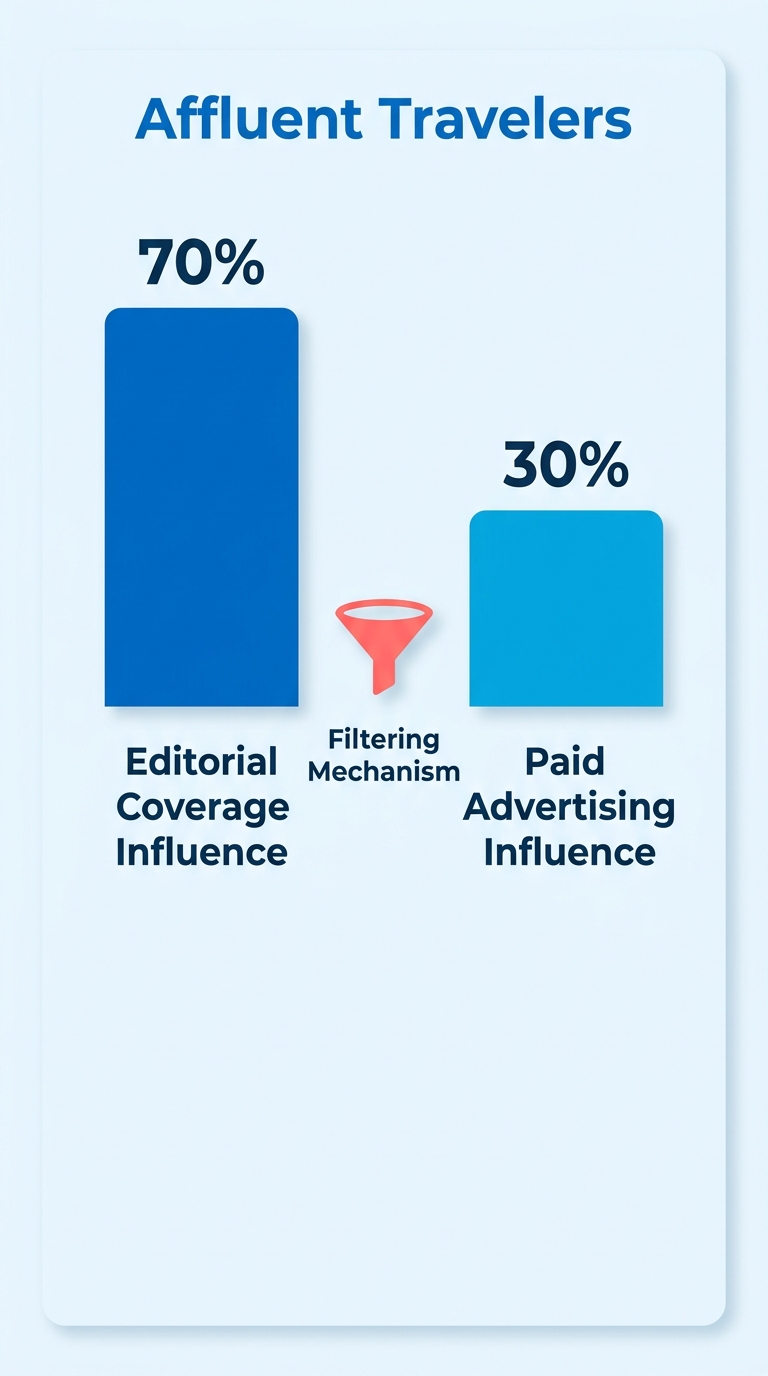
What makes editorial coverage impossible to fake
Traditional PR creates belonging that no amount of amplification can manufacture. Boutique resorts lean into localized storytelling and personal contact; global hotel chains lean into brand consistency. Both still need editorial coverage to set the narrative before a guest ever books. That matters because luxury buying is rarely transactional. It’s an identity statement. Coverage lets your audience see themselves inside a context they already trust.
Then there’s the measurement problem. Agencies track earned media value, referral traffic, placement counts. But luxury’s core asset, cultural authority, refuses to sit in a dashboard. We’ve watched brands chase clip counts when they should have been tracking booking influence and brand consideration. The ones winning this year measure outcomes, not outputs, and they treat PR as infrastructure rather than a promo tactic. That’s exactly why traditional and digital strategies now run as one connected channel instead of two competing budgets.
Where PR pays for itself: reputation risk
Crisis management is where the investment earns back several times over. When a luxury brand hits a reputation risk, a recall, a controversy, a public service failure, the relationships a PR team has with key editors decide how the story gets framed. You can’t build those relationships overnight, and you certainly can’t buy them. The agencies behind leading labels spend years earning trust with the journalists who steer the narratives affluent buyers rely on.
Fashion PR retainers run roughly $8,000 to $80,000+ a month depending on positioning and scope, which reflects the cost of keeping those relationships warm. For an emerging brand, that number stings. For an established one that has weathered a crisis with its reputation intact, it’s cheap insurance. Some agencies sell guaranteed placements, which can help a first-timer feel like they’re getting something concrete, but volume shouldn’t be mistaken for effectiveness. A placement in a title your customers actually read beats a stack of clips they’ll never see.
Where digital amplification runs out of road
Digital marketing supports PR but can’t do the gatekeeping that gives luxury its exclusivity signal. Anyone can run Instagram ads or sponsor an influencer. Not everyone gets into the publications that shape how affluent people buy. That editorial filter is the line between aspiration and access. When agencies talk about cultural relevance and long-term equity over short-term hype, they’re admitting luxury consumers buy narratives that feel discovered, not marketed.
The pace has intensified. More channels, more platforms, more pressure to stay visible everywhere at once. The brands cutting through set one clear storyline first, then amplify it digitally. Trying to build luxury equity on paid channels alone gets you visibility without the credibility that drives real bookings.
Keeping the story honest
Luxury brand PR lives or dies on one question: does the story feel true? With editorial placements increasingly bought rather than earned, authenticity is the scarcest thing on the shelf. A boutique agency can pivot strategy in hours instead of weeks, but that speed means nothing if the narrative rings hollow. Affluent audiences spot performance instantly, and the cost of getting it wrong is lasting reputation damage.
The mechanics have changed. Press releases and media tours still exist, but they’re the baseline now, not the edge. What separates effective luxury PR in 2026 is cultural fluency: the ability to place a brand inside conversations that already matter to its audience without forcing the fit. Editorial features that name a real cultural tension drive engagement because they land on something the audience is genuinely wrestling with, not because the circulation number was big.
Why cultural relevance beats raw reach
The move from quantity to quality has rewritten what success means. A single feature in a publication your audience respects drives more consideration than ten placements in outlets they’ve never heard of. That’s not new advice. The stakes are just higher, because digital noise has made editorial filters more valuable than ever.
Good positioning starts with mapping cultural adjacencies before a single story gets written. Instead of defaulting to a worn narrative like “sustainable luxury,” a brand can address a tension its audience is actually feeling, say wellness fatigue, the quiet backlash against performative self-optimization. Coverage resonates when the cultural read is accurate, not when the media list is long.
Building narrative infrastructure without inventing stories
Authenticity isn’t about rejecting strategy. It’s about building narrative infrastructure that supports a true story rather than manufacturing moments for the clip file. When brands fail here, it’s usually because they worked backward, starting with the headline they wanted and reverse-engineering a story to justify it.
The brands that get this right treat PR as infrastructure. They invest in journalist relationships before they need coverage. They create things genuinely worth writing about, partnerships, sustainability programs, cultural contributions, that earn attention on merit rather than through aggressive pitching.
One pattern shows up again and again: the brands struggling with authenticity are the ones that split their PR strategy from their operational reality. They announce commitments they can’t back up, launch initiatives disconnected from the core offering, or claim cultural positions their own internal culture contradicts. The gap between stated values and lived behavior kills credibility faster than any bad review.
When PR is the wrong tool
Skip traditional PR if your story isn’t ready. If you’re still figuring out positioning, or your operations don’t match the narrative you want to sell, PR amplifies the disconnect instead of fixing it. Brands get the most from media attention when product and positioning already line up. Push coverage too early and it exposes weaknesses you haven’t addressed yet.
And when your internal metrics fixate on short-term volume rather than long-term consideration, the strategic value evaporates. The real return on luxury positioning is shaping preference over time, which no transactional dashboard captures.
How traditional PR is being redefined, not replaced
Luxury brand PR has fundamentally changed what it measures. This isn’t about swapping traditional placements for digital metrics. It’s about redefining success now that more than 51% of buyers start their research on AI answer engines rather than search results. PR used to deliver reach. Now it delivers credibility filtering in a market where anyone can buy visibility.
Putting a number on prestige is still hard. Analytics can track digital touchpoints, but the deeper value of PR is the foundational trust that both search algorithms and consumers require. Forward-thinking brands stop chasing surface metrics and focus on how editorial validation compounds into long-term equity.
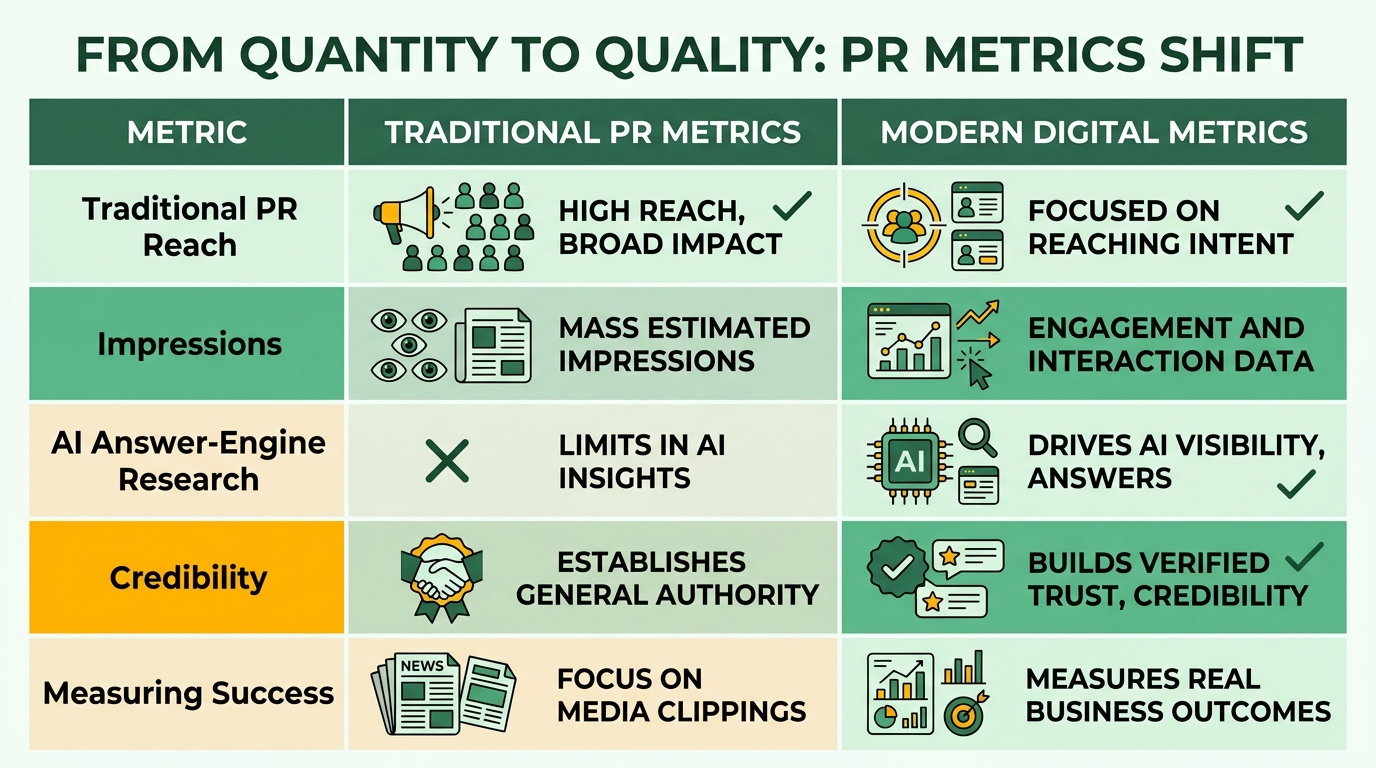
Boutique speed vs. big-agency scale
The traditional big-agency model is under real pressure. Independent firms offer structural flexibility and direct senior involvement that large networks struggle to match, which suits emerging luxury brands and hospitality clients who need tailored campaigns. But scale still matters for other segments.
Heritage houses need the global machinery only major agencies can run. Coordinating campaigns across time zones, managing complex high-profile guest lists, and holding media relations steady across dozens of markets takes a deep bench. Your choice comes down to what you actually need: nimble storytelling or operational muscle.
Engineered visibility vs. earned-first
This is where the sources genuinely split. One camp says PR programs should adopt engineered visibility over earned-first, optimizing for AI answer engines and discovery systems. The other insists earned media has become more valuable precisely because AI models lean on trusted editorial coverage for their training data.
Both are right, because they’re solving different problems. Earned media remains your credibility foundation, the editorial authority that signals quality. But distribution now has to account for how machines consume content. You need placements structured for how AI systems extract and cite information: clean data, clear positioning statements, content formatted for snippet extraction.
Quality over volume, in practice
The operational shift favors deep editorial integration over broad distribution. Brands winning here concentrate on high-impact features in publications that map directly onto their target audience.
You can see it in how agreements are structured, moving toward long-term retained partnerships built for sustained narrative development rather than one-off campaign fees. That structure supports the ongoing relationship-tending premium positioning demands.
Measuring the ROI of luxury PR
Measuring return on luxury brand PR starts with one shift: track outcomes, not outputs. Clip counts and impressions tell you a campaign ran. They don’t tell you whether it moved a booking, a purchase, or a moment of consideration. The brands getting this right measure what coverage actually influences, then work backward to the placements that drove it.
Editorial campaigns need sustained cultivation, so brands have to commit to multi-quarter strategies before meaningful placements arrive. That long horizon requires clear agreement upfront on what a good return even looks like, beyond simple mentions.
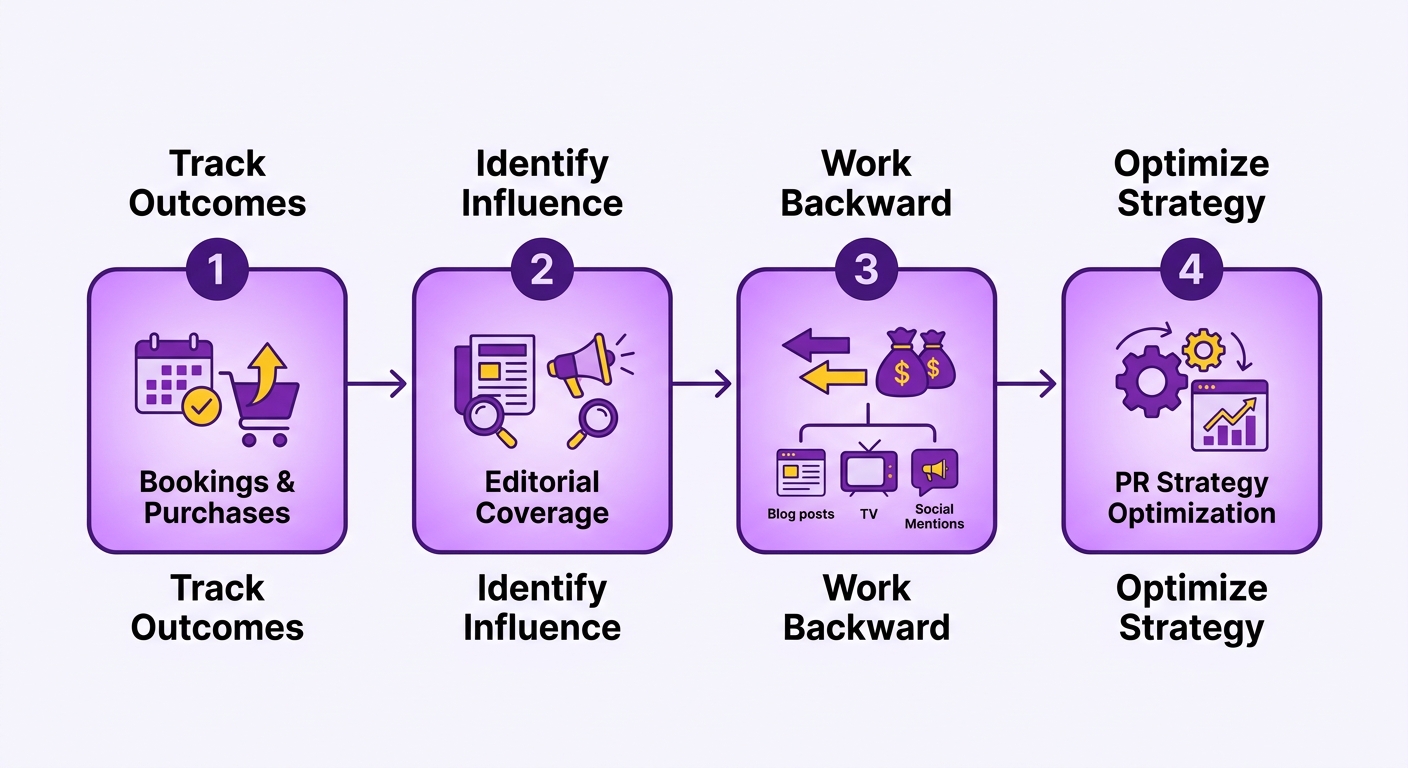
Outputs vs. outcomes
Outputs are what you produce: placements, mentions, impressions. Outcomes are what those placements change: referral traffic, engagement, buying decisions. The brands doing well anchor their reporting to outcomes and treat PR as infrastructure rather than a monthly clip quota.
Track referral traffic and engagement rates, as Brown Marketing argues in its hospitality work. Those are the metrics that connect a magazine feature to an actual reservation. The placement isn’t the win. The booking it channels toward you is.
Even so, referral traffic and direct inquiries only capture part of it. The intangible prestige of a major editorial feature stays hard to quantify, and brands have to accept that some of their equity will always live outside the spreadsheet.
Should you trust guaranteed placement counts?
Be skeptical of guaranteed numbers. The industry is split on contract deliverables. Some agencies build agreements around volume targets; other strategists argue one high-authority feature beats dozens of low-tier clips. For established brands, outlet authority should win over volume every time.
These two views genuinely conflict. Our read: guaranteed counts are training wheels. They suit brands new to PR who need something concrete to justify the invoice. Established names should ignore volume and measure impact. Ten mentions in outlets your buyers skip barely register; one feature in a title they trust changes the calculus.
What benchmarks actually signal success
Set benchmarks tied to your high-value personas before the campaign runs. If you don’t know which outlets your buyers read, you can’t judge whether a placement landed.
Match the metric to the model. A single-property destination might measure a profile piece by direct booking inquiries. A multinational group would judge how consistently its core narrative holds across regional editions. Set the objective first. Define the persona. Then measure the outcome, not the noise.
Where luxury PR is heading
We’ve hit an inflection point. Traditional PR for luxury brands isn’t fading, it’s being redefined by forces that make editorial credibility more valuable, not less. AI-driven search, the collapse of organic social reach, and eroding trust in paid media have combined to make earned coverage the filter affluent audiences depend on. When AI models pull their answers from trusted publications instead of ad networks, a brand with no editorial foundation simply disappears at the discovery stage.
The anti-PR crowd got one thing right: spray-and-pray press releases are dead. But the leap from there to “abandon PR entirely” misreads the moment. The core challenge is still narrative clarity; only the mechanism of discovery has changed. Editorial content now has to be structured so search algorithms and AI models can parse it, surfacing a brand’s verified history when someone goes looking for luxury options.
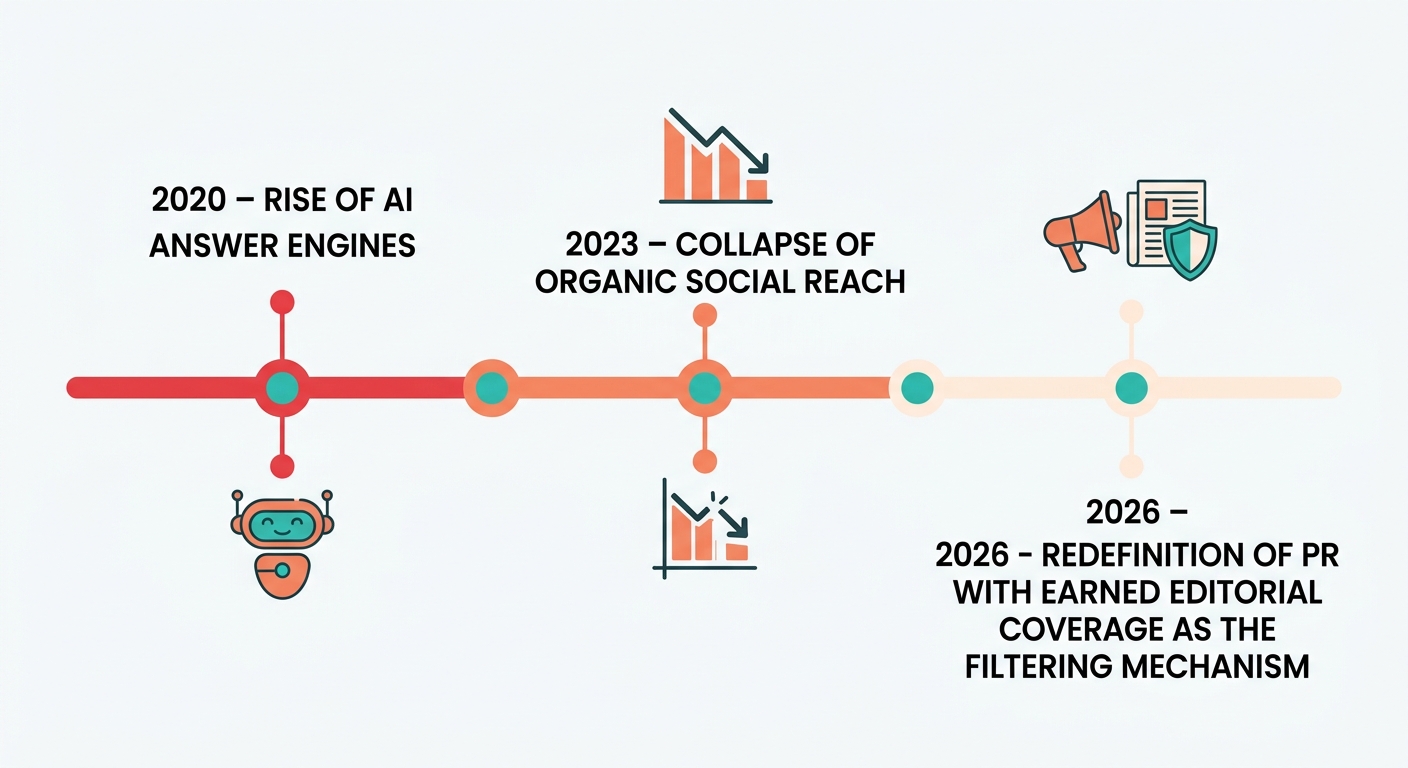
What effective luxury PR looks like now
The winning model marries strategic positioning to technical distribution. You’re no longer choosing between earned editorial and digital amplification. You need both, working together. Industry Idols uses editorial storytelling to build credibility while connecting brands to their audiences through strategic visibility. A tier-one feature matters when it drives consideration or bookings. If it doesn’t move those numbers, it was decorative.
You can see this in how brands pick partners. They’re gravitating toward specialists who understand both editorial relationships and how those placements perform in AI-driven discovery. The question isn’t whether to invest in traditional PR. It’s whether your PR strategy accounts for how your audience actually finds you. Agile agencies tend to shine here, adjusting angles and targets against real-time engagement and search trends.
Where PR adds the most value today
Crisis preparedness is non-negotiable now. Luxury brands can’t afford reactive scrambling when a reputation issue surfaces. Smart brands build crisis management into their PR infrastructure from the start rather than bolting it on after something breaks. The best setups treat media relationships as ongoing assets, and one study found brands with a consistent editorial presence recover about 3x faster from reputation challenges than those without established media trust.
The future belongs to brands that treat PR as a business tool woven into overall strategy, not a promo function tacked on after the product ships. Quality of coverage beats volume. Effective PR chases business outcomes, booking decisions, purchase consideration, brand authority, rather than vanity metrics like impressions or ad-equivalency scores.
Running traditional and digital as one motion
The strongest luxury brand PR in 2026 doesn’t pick between a magazine feature and an Instagram campaign. It runs both as a single motion. Earned editorial builds the credibility; digital channels carry that credibility to where affluent buyers spend their attention. Treating them as separate budgets is the most common mistake we see.
The shift is simple in principle: editorial coverage and digital amplification feed each other. Digital PR strengthens traditional publicity and lifts search performance through backlinks and influencer collaboration. One placement in a trusted outlet becomes a social asset, a backlink, and an answer-engine citation at once. That compounding is the whole point.
Blending earned media with digital reach
Start with the earned placement, then engineer its reach. One strong feature should fuel a week of digital activity: repurposed social content, email, and search-optimized pages that link back to the coverage.
The sharpest brands have already flipped from volume to quality, moving away from blasting press releases toward securing high-value placements in trusted outlets. Fewer, better placements give you stronger assets to amplify. A mediocre mention can’t be repurposed the way an authoritative feature can.
Industry Idols’ approach centers on this integration. Editorial features supply the credibility foundation; strategic PR services extend that visibility into the channels where your audience actually is. Quality coverage becomes the engine for sustained digital reach.
Earned-first or engineered visibility?
This is the same tension between algorithmic optimization and traditional storytelling, and here’s how it resolves in practice. Some strategists fixate on technical search visibility; others prioritize pure editorial placement. The strongest approach uses high-authority earned media as the foundation, then optimizes that content so digital systems can index and reference it easily.
Skip the engineered-only route if you have no earned foundation. Optimizing empty visibility just amplifies noise.
What an integrated campaign looks like
Cross-channel coordination is what separates a real hybrid strategy from scattered tactics. In one documented case, a regional sponsorship turned culturally relevant through localized digital experiences and gameday offers layered onto the core partnership. In another, a coordinated multi-channel push built entirely new positioning for a software brand.
The same pattern holds for luxury. A collection launch or hotel opening earns its editorial moment, then digital channels keep the conversation alive for weeks. Pair that with crisis readiness. When a story turns, integrated teams respond across every channel at once instead of scrambling to catch up.
References
[1] 8 Best PR Agencies for Luxury Brands in 2026 … – https://famehero.com/best/best-pr-agencies-for-luxury-brands-2026
[2] What’s the Best PR Strategy for Luxury Hotels in 2026? – https://www.brown-marketing.com/whats-the-best-pr-strategy-for-luxury-hotels/
[3] Top Boutique PR Agencies 2026 – https://bigfishpr.com/top-boutique-pr-agencies-2026-why-independent-firms-are-winning-the-future-of-public-relations/
[4] What Does It Mean to Be a PR in 2026? – https://www.vogue.com/article/what-does-it-mean-to-be-a-pr-in-2026
[5] Best Fashion PR Agencies | Top Fashion PR Firms 2026 – AMW – https://amworldgroup.com/best/fashion-pr-agencies
[6] How Smart Brands Are Changing PR in 2026 – https://boardroompr.com/public-relations/how-smart-brands-are-changing-pr-in-2026/
[7] 2026: Not Just Another Evolution Year in Public Relations – https://www.odwyerpr.com/story/public/24759/2026-05-22/2026-not-just-another-evolution-year-public-relations.html
Frequently Asked Questions
1. How much should a luxury brand budget for traditional PR services in 2026?
Retainer fees vary widely based on the agency’s network and the campaign’s geographic scope. This investment supports the continuous cultivation of relationships with key editors and journalists. For established labels, maintaining this consistent presence serves as a long-term safeguard for brand equity, protecting the company’s reputation before issues arise.
2. Why do boutique PR agencies often outperform larger firms for emerging luxury brands?
Smaller firms typically offer flatter organizational structures, allowing them to adapt campaigns quickly to changing market conditions. This responsiveness is highly beneficial for growing brands that require hands-on strategic guidance. Conversely, global heritage brands often require the extensive logistical capabilities of large agencies to coordinate complex international events and multi-market campaigns.
3. How has AI-driven search changed what makes PR placements valuable for luxury brands?
As consumers increasingly rely on conversational AI platforms for product discovery, the source material these engines use has become critical. AI models prioritize authoritative, verified editorial content over self-published marketing copy. Consequently, securing placements in respected publications is essential for ensuring a brand is cited and recommended in algorithmic search results.
4. What specific metrics prove traditional PR is working for a luxury hospitality brand?
Instead of relying on vanity metrics like total impressions, brands should monitor behavioral indicators such as referral traffic from media features and direct booking inquiries. Evaluating how effectively a campaign drives qualified interest or maintains narrative alignment across different regional markets provides a clearer picture of return on investment.
5. When should a luxury brand skip traditional PR entirely?
Avoid launching a major media campaign if the underlying product experience, distribution channels, or brand positioning are still in development. Public relations amplifies existing operational realities; if there is a gap between the marketing narrative and the actual customer experience, media exposure will only highlight those inconsistencies.
6. How do traditional PR relationships help luxury brands during reputation crises?
Established relationships with key journalists ensure that a brand’s perspective is heard and accurately represented when challenges arise. Because trust cannot be built during a crisis, a history of consistent, transparent communication provides a reputational buffer, helping the brand navigate negative coverage and stabilize its public image far more effectively.