Key Takeaways
- A Cartier watch staged in a welcome vignette can pull influencer and editorial coverage before a boutique hotel checks in its first guest.
- A guest’s review narrative starts at booking, so pre-arrival photography of luxury items primes the story they tell later.
- A weak opening can burn around $30,000 a day and take 18 months to recover from, which makes pre-launch press worth real money.
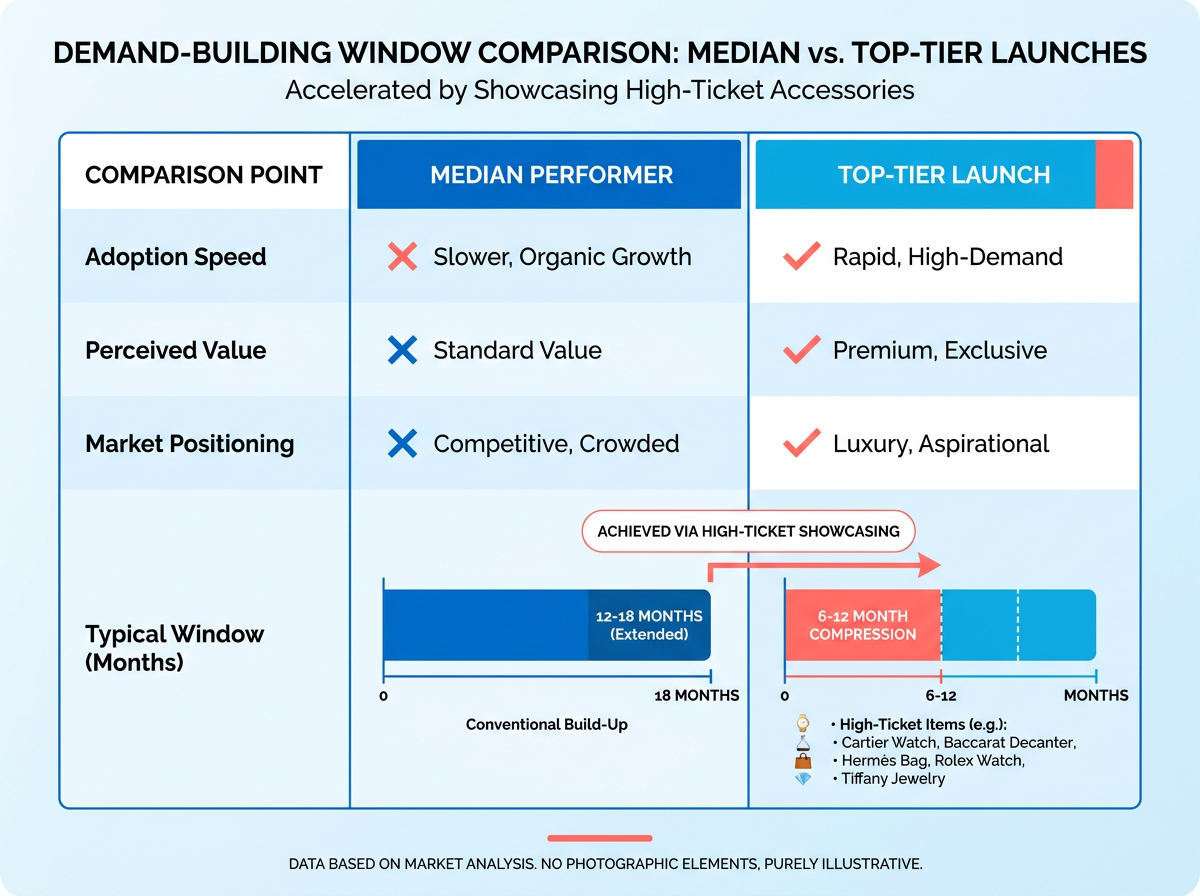
- A single photographed object, a vintage turntable, Murano glassware, a good timepiece, can compress the demand-building window traditional properties pay dearly for.
- The standard soft-open playbook leaves new properties fighting established competitors while they wait on organic buzz.
- High-ticket items shown in booking confirmations or pre-arrival guides become anchor points for editorial features audiences see before they book.
Why a Luxury Accessory Earns Coverage Before You Open
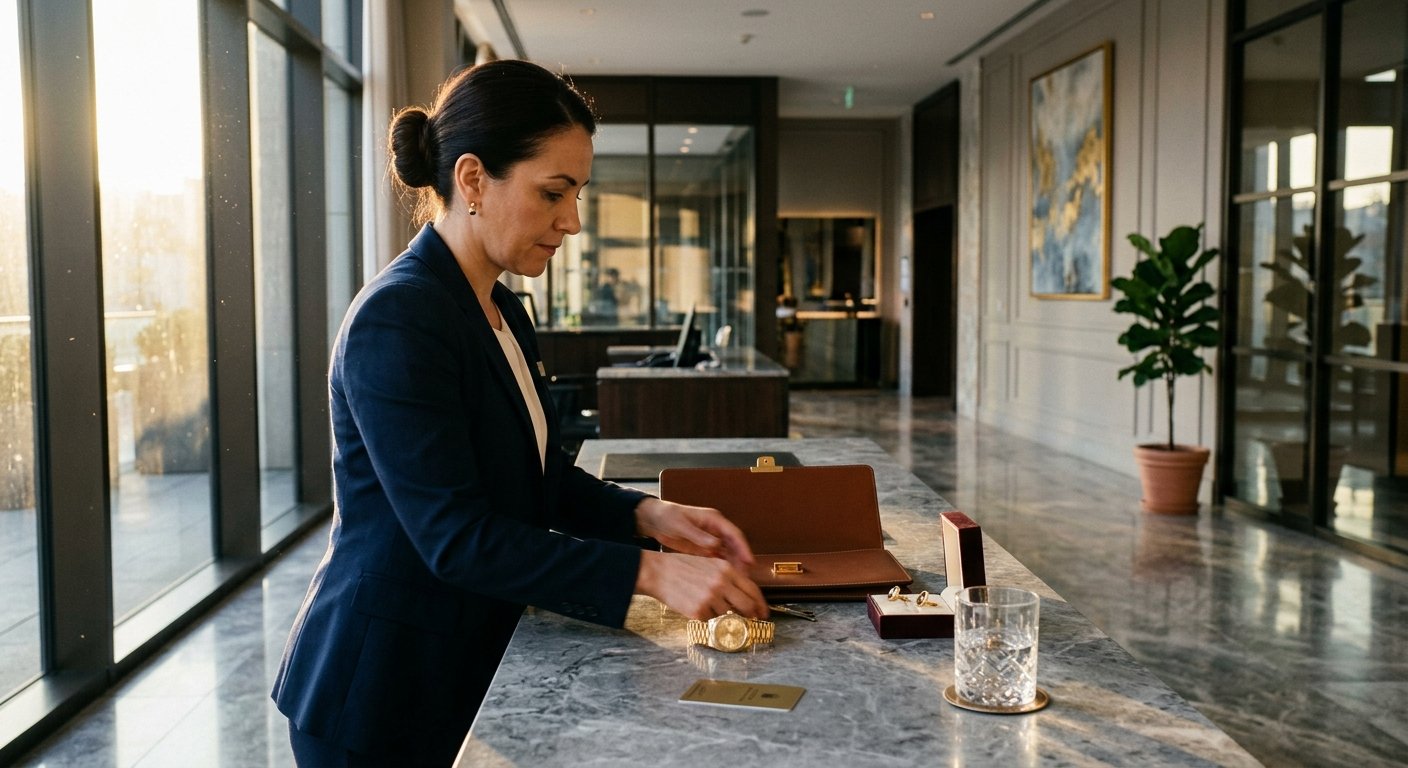
We’ve watched plenty of boutique hotel launches stumble through their first six months, spending marketing budget while they wait for word of mouth to catch up. The usual playbook, soft open, gradual ramp, hope for buzz, leaves a property grinding uphill against competitors who already have their audience. In our experience, high-ticket accessories change that math. A Cartier watch in a welcome vignette, or a timepiece photographed in your pre-arrival materials, gives influencers and editors a reason to cover you before a single guest arrives.
The Guest’s Story Starts at Booking, Not Checkout
Recent industry analysis makes the point that a guest’s review narrative begins the moment they book, not when they check out. That reframes how we think about in-room accessories. A high-ticket item photographed in your booking confirmation or pre-arrival guide seeds the story a guest will eventually tell. When that same object anchors an editorial feature or an interview, it becomes part of a brand narrative people meet well before they book. The accessory stops being décor and starts working as a review-priming device.
This is a direct answer to the delayed-launch problem hotel investors know too well. Early media interest helps offset the carrying costs of an empty building during the final stretch of construction. When editors run your curated items in a design roundup or a pre-opening preview, you build brand authority early. That lets you sell rooms at full rate from day one instead of leaning on steep launch discounts.
The Gap Between a Median Property and a Top Performer
Recent data shows pet-friendly rentals can generate 24% higher revenue per available night than standard properties. The number matters less than what it points to: specific, well-chosen amenities create measurable performance gaps. It isn’t about piling on features. It’s about picking the right signals. One property management team put it plainly: the difference between a median property and a top performer is often just a few key amenities.
Here’s where it gets counterintuitive. Research on branded amenities in hotels found that luxury properties see limited benefit from stamping recognizable brand names on toiletries or linens. Midscale properties are the ones that gain most from ingredient branding. The same logic runs the other way for high-ticket accessories: luxury guests don’t respond to logos, they respond to craftsmanship and provenance. Show the object and its story, not the label. A vintage Omega with a documented history tends to outperform a current-season Cartier sitting in a glass case.
So the balance holds when you separate the item from its branding. The accessory itself drives performance, which the Vello amenity-ROI data supports, but the logo adds little for guests who already assume quality. Pick objects that photograph well and carry a story you can actually share in your pre-arrival materials.
When You Should Skip This Entirely
Skip high-ticket accessories if your property targets extended-stay business travelers or corporate groups booking 30-plus nights. The Scottsdale and New Orleans case data shows those segments care about workspace ergonomics and reliable WiFi, not Instagram moments. Properties in that lane hit peak monthly revenues of $10,250 and $5,808 by nailing the functional basics, not by adding decorative flourishes.
Skip it too if your local market treats a given feature as a baseline requirement rather than an upgrade. Analysis of Arizona luxury rentals found heated pools read as standard there, not luxury, so adding one changes nothing. Same logic for accessories. A high-ticket item only signals commitment when it clears your market’s baseline and is staged with intent. Don’t spend on something your competitors already offer as standard.
And this only pays off when you can control the pre-arrival narrative. If you list exclusively through platforms that block your communication before check-in, the accessory loses its story-seeding power. It works best when you can shape the story yourself, through editorial features, interviews, and press releases that reach the right audience before anyone arrives.
Choosing the Accessories Worth Showcasing
Early editorial interest depends on assets that stand out in a crowded pitch inbox. Instead of another round of standard room renderings, a boutique property can lead with high-character design elements that give editors something to look at. A pair of Baccarat crystal decanters or a rare vintage map, photographed in pre-arrival materials, hands a design editor a tangible hook. They can write about your aesthetic direction while the lobby is still under construction.
The hard part is telling which accessories signal real commitment and which read as generic luxury filler. Price alone won’t sort them. Plenty of expensive listings underperform because they stack brand names with no cohesion, while well-curated properties beat them on both occupancy and rate. Three questions do most of the filtering: Does this item clear the local baseline? Does it photograph with enough detail to tell a design story? Can you explain its presence without overreaching?
What Actually Clears Your Market’s Baseline
Context decides whether an accessory reads as luxury or table setting. High-speed Wi-Fi and premium bath products are just expected in an urban boutique hotel. A custom wood-fired sauna or a curated vinyl library is a genuine upgrade. Boutique hotels get this wrong all the time, promoting amenities their competitors already offer as standard, then wondering why editors pass on the pitch.
The functional test: would a guest who knows your segment be surprised to find this item? If not, it’s infrastructure, not a signal. Look for accessories that reflect a clear design choice. Why locally thrown stoneware instead of mass-market ceramics. Why antique brass compasses in the common areas of a coastal property. The story justifies the item. The item doesn’t justify itself.
Accessories That Hold Up in a Close-Up
An accessory earns its place in pre-arrival marketing when it survives a close-up. Broad category labels like luxury linens or high-end technology vanish in photography because they carry no visual markers of craft. Items that reveal technique under scrutiny do the work: hand-stitched selvage on bedding, the exposed movement of a mechanical watch, grain variation in solid wood. Those details give a photographer material and give a guest a reason to pull out their phone before they’ve even unpacked.
Visual storytelling runs on texture and form, not commercial labels. When you shoot these details, chase the physical qualities that read as quality, the weight of a hand-forged iron latch, the weave of organic linen, the patina on a vintage brass instrument. A tight shot of those tactile elements tells a richer story than a wide shot of a recognizable brand box. Guests at this tier already expect quality. What they notice is the specific choice you made and how it fits the property’s narrative.
Sourcing Without Overexplaining
The wrong accessory announces itself. Properties sometimes bury defensive lines in their pre-arrival guides, “we selected Italian marble because we believe our guests deserve the finest natural stone,” which signals insecurity, not commitment. Good curation doesn’t need a manifesto. Name the item, reference its maker or origin if it’s relevant, then move on. You want confidence, not a TED talk.
One property management team lifted revenue by building “Instagrammable moments” into guest rooms, vignettes staged for sharing before guests arrive. It works because it moves the accessory from decoration to media asset. A vintage brass telescope by a window becomes a photo people tag and share, which stretches your pre-opening visibility past the initial press hit. The accessory pays for itself through earned media, not just in-room satisfaction.
When sourcing, a lot of successful properties favor local artisans and estate sales over luxury retail. A mid-century credenza from a regional auction carries more story weight than a new designer piece, and the price gap funds a second or third showcase item. Design detail beats brand pedigree. If you can’t explain why you chose something in two sentences, it’s probably the wrong something.
Photographing Luxury Items So They Actually Read as Luxury
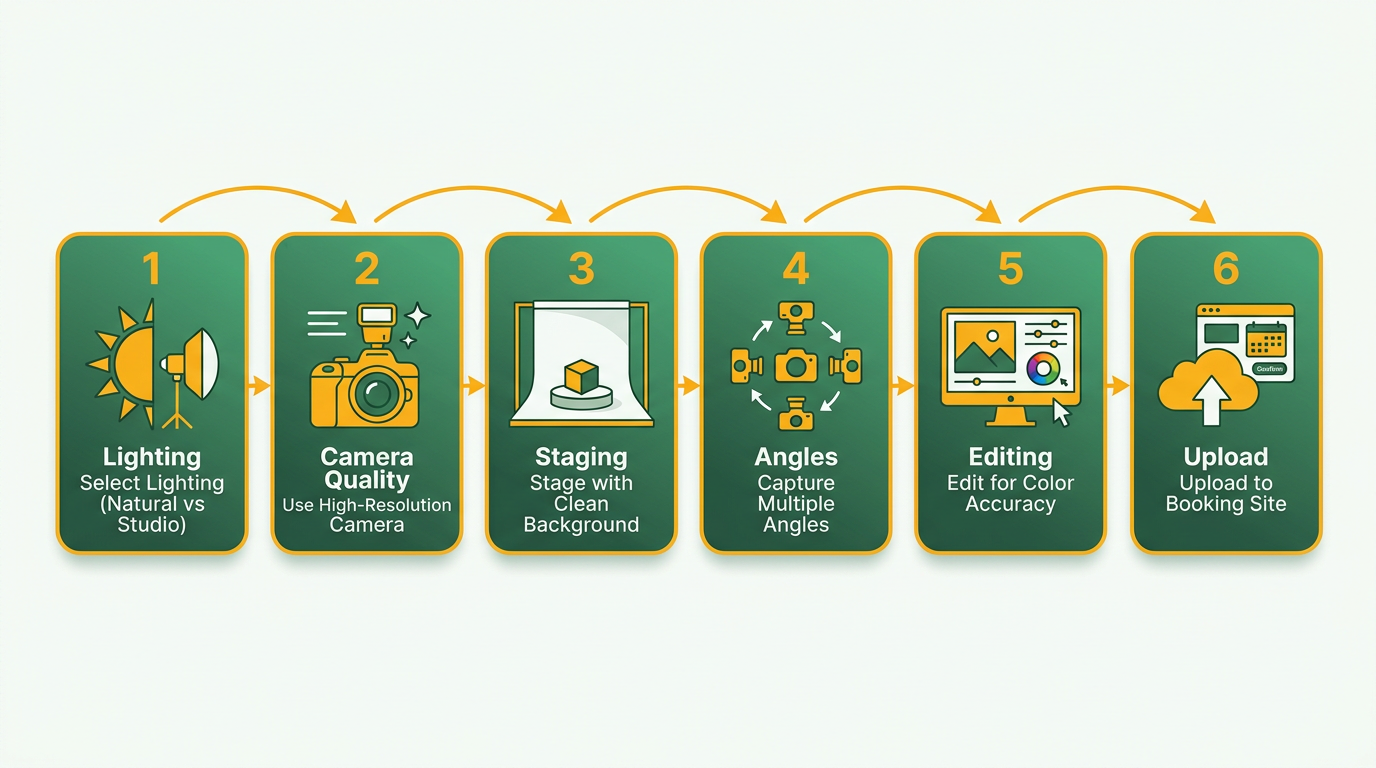
We’ve seen properties spend tens of thousands on staging, then blow it with low-res phone shots uploaded straight to the booking site. A rare timepiece under fluorescent overhead light reads as costume jewelry. A crystal decanter against a cluttered nightstand disappears into noise. Photography is where most boutique hotels lose the pre-arrival advantage they just paid to build.
What Makes a High-Ticket Item Photograph Well
High-ticket items need controlled lighting and compositional discipline to register as premium in a two-second scroll. Good setups often mix natural window light for warmth, diffused studio strobes for catalog-grade detail, and practical lamps for evening ambiance. A mechanical watch on a nightstand works best with a single key light at 45 degrees, enough for dimension without harsh shadows. Shoot in RAW to hold highlight and shadow detail. Gold, crystal, and polished metal all lose their texture once a JPEG compresses them.
Context beats megapixels. A watch on a marble tray beside a handwritten welcome note tells a story. The same watch centered on white reads as product photography, not hospitality. Stage accessories with one or two complementary elements at most, a leather-bound journal, a single stem in a bud vase, so you avoid the catalog look while keeping focus on the hero item.
Optimizing for Feeds and Booking Platforms
Platform compression eats subtlety. Instagram squeezes images to 1080px wide, so complex textures and fine detail vanish unless you bump contrast and saturation 10 to 15% before upload. Prep two versions of every hero shot: a high-res file for press kits and your website gallery, and a social version with lifted midtones and sharpening checked at 100% view. Booking platforms like Airbnb weight the first three images in search, so lead with the accessory vignette that anchors your pre-arrival story.
Vertical crops perform better in Stories and Reels. Shoot every setup in both landscape and 4:5 portrait so you have platform-ready assets without awkward cropping that lops off the accessory or its surroundings. The target isn’t perfection. It’s legibility at thumbnail size, plus enough of a hook to stop a scroll.
Writing Copy an Editor Will Actually Quote
Good photography gets a high-value accessory noticed. The words next to it decide whether an editor asks for the story. Every accessory description should read like press-kit copy, not e-commerce filler, because the line beside your welcome vignette is what a journalist either quotes or skips.
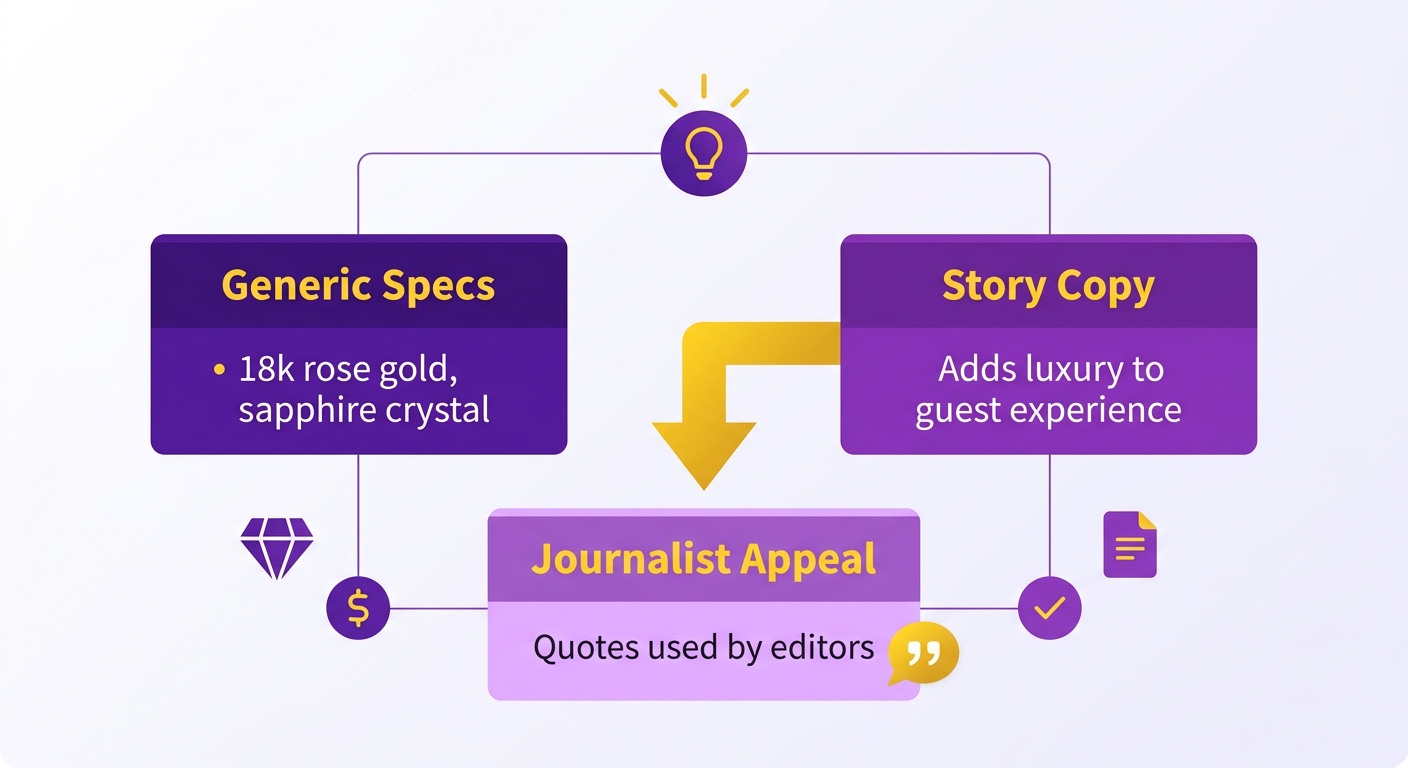
The trick is writing features that carry meaning instead of specs. “18k rose gold, sapphire crystal” reads as a product tag. A line that ties the piece to your property’s story hands a writer their angle. Strong pre-arrival materials pair the material detail with the reason the piece sits in that room. That pairing is what makes coverage feel earned rather than bought.
How Do You Write Descriptions Editors Actually Use?
Lead with the benefit to the guest, then back it with the feature. Editors and influencers scan for a hook in the first line, so the emotional payoff comes before the spec sheet. Say what the guest feels, then prove it with the material fact.
Three habits carry most of the weight:
- Name the feature, then the “why it’s here.” “Hand-finished crystal decanter, chosen because the suite overlooks the vineyard” beats a bare product line every time.
- Write for the caption, not the catalog. Short, quotable sentences travel. If a line drops straight into an Instagram post or a press blurb without edits, you’ve done the job.
- Show provenance plainly. Where a piece came from, who made it, why you chose it. Transparency reads as commitment, and commitment is the story.
When to Skip the Hard Sell
Cut the superlatives. Words like “unmatched” or “exquisite” signal marketing, and press instincts filter them out on sight. State the fact and let the object carry the prestige.
Professional editorial coverage runs on restraint. Say what a piece is, where it lives in your property, and why a guest’s story starts with it. That honesty is what turns a room into something worth writing about before anyone checks in.
Keeping Valuable Items Safe Once the Room Goes Live
The story you build before check-in creates a real problem. A photographed luxury timepiece or a staged crystal set tells everyone, including the wrong people, exactly what sits in your rooms. Pre-arrival media works because it’s specific and visible. That same visibility is what you have to protect once the accessories move from the photo studio into a live guest room.
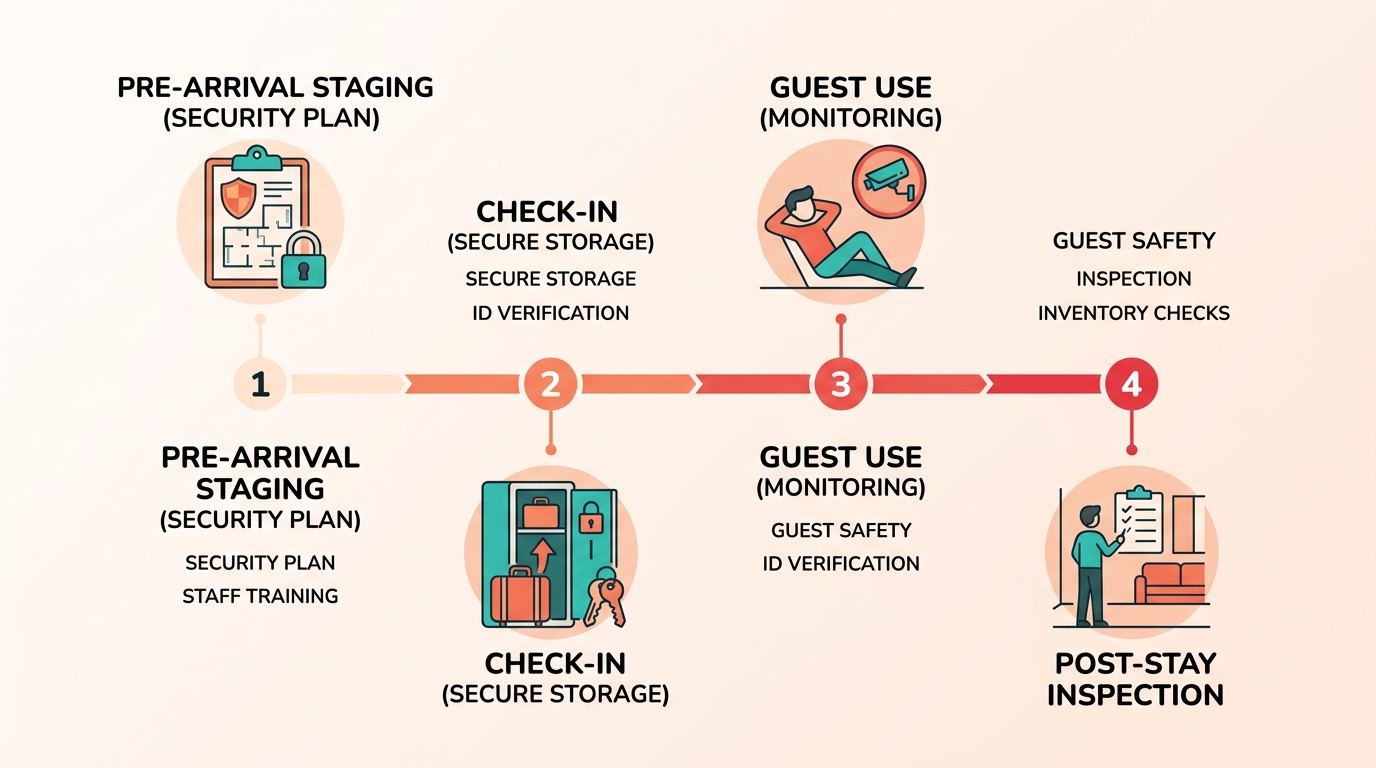
Treat security as part of the staging plan, not something bolted on the week before opening. A watch worth insuring should never be the piece guests actually handle. Photograph the real timepiece for your press kit, then swap in a secured display unit or a high-quality replica for the room itself. The image lives online. The asset lives in a safe.
How Do You Protect a High-Ticket Item in a Live Room?
Keep the valuable original out of daily circulation and let the media asset be the public-facing version. The photo carries the story. A tethered display, a bolted-down case, or a room safe carries the physical piece. That separation is the single most effective loss-prevention move a boutique property can make.
A few practical controls worth putting in place:
- Establish a chain of custody. Document who handles the physical items during room turnover and maintenance.
- Insure by named article. Schedule high-value accessories on your property policy rather than lumping them under general contents. General coverage rarely pays full value on luxury goods.
- Log every piece. Serial numbers, purchase records, and the press photos themselves double as proof of ownership for a claim.
- Limit access. Only named staff should touch or move scheduled items, and every movement gets recorded.
Train Staff Before the First Booking
Your team is the real security layer. Walk every front-of-house and housekeeping member through which items are scheduled, who’s cleared to handle them, and what check-in and check-out verification looks like.
Skip the elaborate protocols for low-value decor. Save the strict handling rules for the pieces driving your press coverage. That focus keeps the training memorable and the valuable accessories accounted for.
References
[1] Project Strategies for Hotel Investors – LinkedIn – https://www.linkedin.com/top-content/hospitality-tourism/hospitality-investment-opportunities/project-strategies-for-hotel-investors/
[2] What Counts as “Luxury,” Key Features, and What Actually … – https://hometeamluxuryrentals.com/blog/luxury-vacation-rentals-what-counts-as-luxury
[3] 8 Proven Strategies to Market Luxury Vacation Rentals – https://www.houfy.com/blog/8-proven-strategies-to-market-luxury-vacation-rentals
[4] A Vello Guide: The Top Airbnb Amenities for Higher Profits – https://stayvello.com/the-investors-blueprint-top-10-high-roi-amenities-guests-are-demanding-in-2026/
[6] How to Build a Vacation Rental That Guests Love – https://gotravli.com/how-to-build-a-vacation-rental-that-guests-love/
[7] How to Master Airbnb Investment: A 2026 Guide – https://www.lodgify.com/blog/investing-airbnb-properties/
[8] Signaling effects of branded amenities on customer-based brand … – https://www.researchgate.net/publication/351639815_Signaling_effects_of_branded_amenities_on_customer-based_brand_equity
Frequently Asked Questions
1. Can I use this strategy if my hotel isn’t finished yet?
Pre-arrival press works precisely because it happens before opening. A single well-photographed accessory can anchor an editorial feature or interview while construction crews still finish the lobby. This early exposure allows you to build a waitlist of eager guests, ensuring that your booking calendar is populated before the doors officially open.
2. Does a recognizable luxury brand name help or hurt?
Brand logos add little at the luxury tier because those guests already expect quality. Instead of relying on commercial labels, focus on the history and craftsmanship of the item. High-end travelers appreciate the discovery of unique, storied objects over off-the-shelf retail products, making the narrative behind the piece far more valuable than a visible logo.
3. Should I display the genuine item or a replica in the room?
Using a high-quality replica or securing the item in a locked display case protects your investment while maintaining the room’s aesthetic. If guests ask about the piece, staff can share the story of the original, turning a security measure into an engaging conversation about the property’s curation.
4. Is it better to buy new designer pieces or source vintage?
Vintage and estate finds usually carry more story weight than new designer pieces. Sourcing from regional auctions or local artisans allows you to acquire items with unique patinas and histories that cannot be replicated by modern retail goods. This approach also helps differentiate your property from competitors who rely on the same design catalogs.
5. How many props should surround the hero accessory in a photo?
Keep the composition clean by limiting surrounding props to a minimum. Focus on negative space and the rule of thirds to draw the eye directly to the hero accessory. The goal is to make the item feel like a natural part of the room’s environment rather than a staged product shot.
6. Will this work if I list only through platforms like Airbnb?
While third-party platforms limit direct communication, you can still leverage this strategy by driving traffic to a dedicated landing page or social media profile. Use your platform listing to highlight the editorial coverage your property has received, directing potential guests to the broader narrative you have built online.
7. Are smartphone photos good enough for luxury accessories?
Professional photography is essential to capture the fine textures of luxury materials. Standard smartphone cameras often struggle with reflections on polished metal or crystal, resulting in flat images. Investing in professional gear or hiring a photographer ensures the lighting highlights the depth and quality of your curated pieces.