Key Takeaways
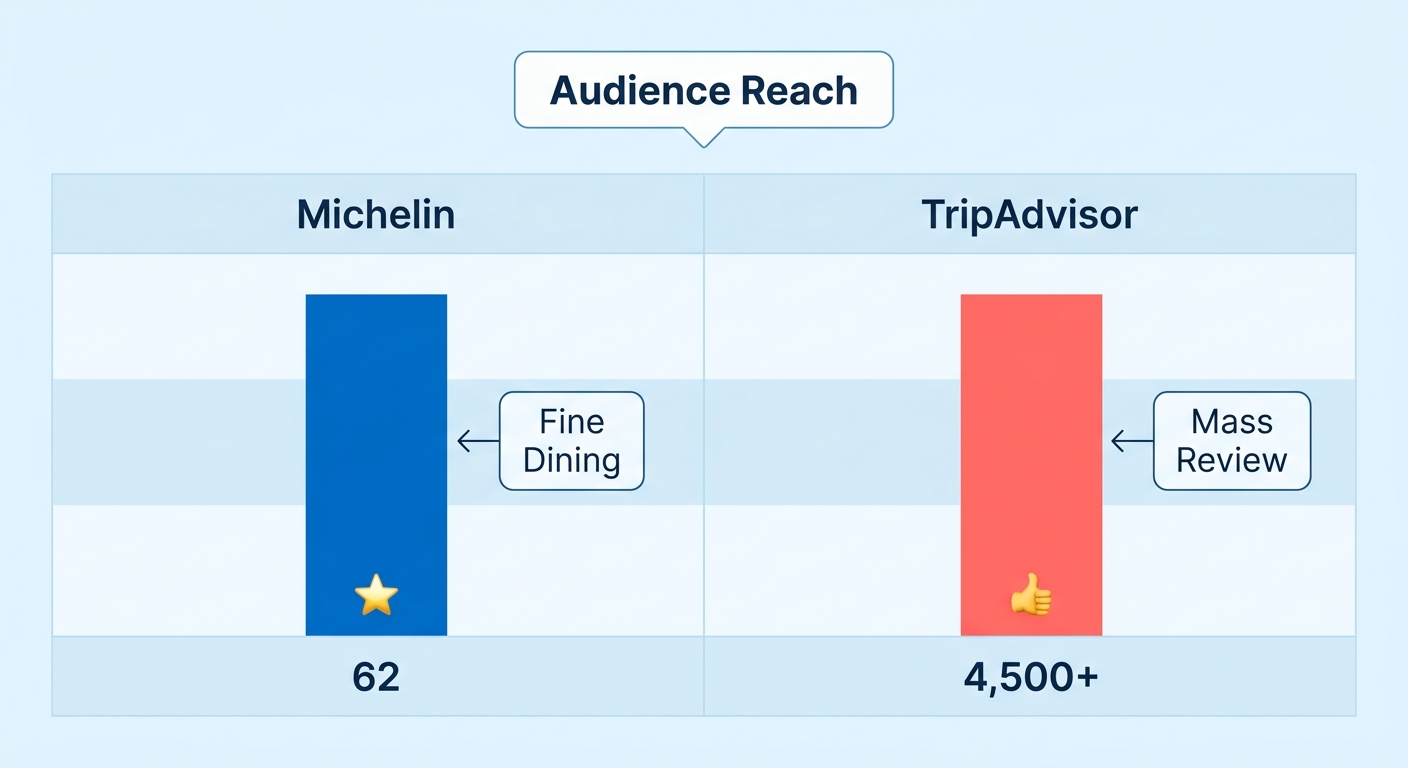
- Miami has 62 MICHELIN-recognized restaurants while more than 4,500 establishments fight for visibility on TripAdvisor. Two very different reputation games, running at once.
- Cuban-descended residents make up 30% of Miami’s population, so diners increasingly want a real cultural story next to the premium plate.
- Elcielo Miami and Cote Miami both hold MICHELIN stars, planting Colombian innovation and Korean steakhouse theater at the top $$$$ tier.
- Marabu Restaurant pulled a 4.9/5 across 1,780 reviews, a case for authentic Cuban food winning on volume and word of mouth.
- Sunny’s Steakhouse became one of Miami’s hardest reservations by building narrative-driven media, not by chasing elite culinary awards.
- The sharpest operators pair MICHELIN prestige with high TripAdvisor counts, reaching serious food travelers and tourists searching for the best Cuban food at the same time.
- Editorial partnerships turn chef expertise into stories a casual diner can follow, which is how you get read in one of America’s priciest food markets.
Quick Summary
Miami’s dining scene runs on two visibility tracks: elite culinary guides and crowd-sourced review platforms. That split shapes how local rooms build a name. Prestigious awards signal excellence to the fine-dining crowd. High-volume review sites reach everyone else. The five restaurants below show how media coverage moves the needle in a market where diners expect cultural storytelling alongside the tasting menu.
The operators who win use editorial partnerships to close the gap between industry prestige and the person just picking a place for Friday night. Translate kitchen expertise into a story people actually read, and you capture the dedicated food traveler and the casual visitor both. That’s how standout concepts stay booked in a city that’s expensive and crowded.
Comparison Overview
| Restaurant | Cuisine Type | Price Range | Recognition | Signature Strength | Booking Difficulty |
|---|---|---|---|---|---|
| Elcielo Miami | Colombian | $$$$ | MICHELIN Star | Innovative takes on traditional dishes | High |
| Cote Miami | Korean Steakhouse | $$$$ | MICHELIN Star | Tableside theatrical experience | Very High |
| Marabu Restaurant | Cuban | $$ | 1,780 reviews (4.9/5) | Authentic diaspora cuisine | Moderate |
| Sunny’s Steakhouse | American Steakhouse | $$$ | Chef-recommended | Reasonable pricing for quality | High |
| Daniel’s Miami | Contemporary French | $$$$ | Prix fixe menus | Accessible fine dining format | Moderate |
When Media Partnerships Matter Most
Miami restaurants have a specific problem. The city ranks as the No. 1 U.S. Food destination for 2025, which means good food is the entry fee, not the edge. You need a story that cuts through thousands of local competitors. Editorial features work when they reframe your room around cultural specificity instead of generic excellence.
Look at Tâm Tâm, blending Vietnamese and Caribbean flavors into dishes like fish sauce chicken wings with goat curry. That combination only makes sense once you understand Miami’s immigrant corridors. A bare menu listing gets scrolled past. A narrative explaining the kitchen’s creative logic turns curiosity into foot traffic. We build visibility strategies around these origin stories because they give local media a hook to cover and give travelers a reason to leave South Beach.
What the Numbers Actually Show
Condé Nast Traveler’s selections weigh stand-out dishes, location, service, inclusivity, and sustainability. That’s a different filter than a technique-first culinary guide or a crowd-sourced platform. Restaurants need more than one channel because different audiences trust different validators. A 4.9 across 136 reviews for Chimba tells a budget-conscious traveler it’s a safe bet. High-end accolades tell a culinary tourist the premium tasting menu earns its price.
Pricing spread matters too. Daniel’s Miami added prix fixe lunch and brunch menus to make fine dining reachable without softening its premium positioning. That format pulls daytime traffic and builds loyalty before anyone commits to the full tasting menu. It’s a media-friendly angle because it answers the question readers actually have: how can I afford this?
Skip Media Partnerships If
You’re running a neighborhood spot with steady local traffic and no plans to expand. Editorial coverage drives discovery, and discovery creates crowding and expectation pressure. A bodega-style Cuban counter that locals already love doesn’t need Miami Design District visibility. The wrong media push brings tourists who leave one-star reviews because you’re not white-tablecloth formal. Put that budget into operations. Media partnerships pay off when you’re scaling, launching, or repositioning. Not when you’ve already won your block.
Why Miami Restaurants Matter
Miami’s restaurant ecosystem is a clean case study in how visibility gets built. The gap between elite culinary guides and crowd-sourced platforms maps two very different media strategies. Elite recognition reaches a narrow cohort of fine-dining seekers. Volume-based reviews cast a wider net but risk losing individual voices in the feed.
The city built its reputation by turning regional food traditions into experiences you can’t get anywhere else. Sitting as a gateway between North and South America, Miami often gets the ingredients and techniques first, before they spread to other U.S. markets. Restaurants that name that geographic advantage in their positioning create an urgency generic best-of lists can’t manufacture.
The Two-Track Visibility Problem
Prestigious accolades open doors to a specific clientele willing to pay premium prices for validated creativity. But 19,727 reviews for Gianni’s at the Former Versace Mansion tell a different story about what fills weeknight tables. Social proof at scale moves different traffic than a starred rating in a printed guide.
For most restaurants the challenge sits between those two poles. You’re not competing for elite inspectors, but you also can’t wait years for organic review momentum to build. Even in high-cost markets, concepts thrive by offering strong value inside their niche. Which points to positioning around value propositions, not just price points, as the thing that separates you in a crowded field.
Why Editorial Coverage Outperforms Volume Reviews
Lean too hard on review aggregators and a restaurant hits a ceiling. A high star rating signals quality to diners who filter by stars, but it doesn’t explain why a kitchen cooks the way it does, or which dishes justify the trip.
Sara Liss has pointed out that Miami’s restaurants deserve more credit than the city’s nightlife reputation gives them. That perception gap is opportunity. When a restaurant partners with media to build narrative-driven coverage, you’re not just adding another data point to an algorithm. You’re shaping how people understand what you do and why it’s worth their night.
The Wynwood and Miami Design District corridor shows the shift. Those neighborhoods became dining hotspots not because the restaurants there posted better online scores, but because editorial coverage framed them as cultural destinations. Visitors showed up with intent, looking for a specific experience tied to the area’s identity, rather than sorting by proximity and rating.
How Media Partnerships Change the Equation
Our approach centers on helping restaurants own their visibility strategy instead of handing it to algorithm-driven platforms. A media partnership with Industry Idols puts your concept inside a broader industry narrative. You’re not hoping a food blogger wanders into your dining room during a slow week. You’re building consistent coverage that reaches entrepreneurs, business owners, and marketing professionals who make dining decisions for client entertainment and team events.
That matters most in competitive micro-markets. If you’re running a fusion concept, the challenge isn’t convincing people your dishes taste good. It’s getting in front of diners who never considered that flavor combination worth seeking out. Targeted editorial coverage does that work faster than another 50 five-star reviews.
Three advantages come out of it. First, you reach decision-makers in hospitality and luxury lifestyle who plan group dining, which means higher check averages and repeat bookings. Second, you differentiate on story and approach instead of grinding on star ratings against 4,499 other listings. Third, you build a media asset that compounds over time instead of getting buried in review feeds after two weeks.
Restaurant 4: To Be Determined
Double Luck earns our fourth spot for one reason: it turned a pop-up into a permanent room by making the meal itself the content. The theatrical, tableside cooking hands diners something to film, share, and talk about. That’s the built-in story we look for when we plan coverage.
What makes Double Luck worth a visit?
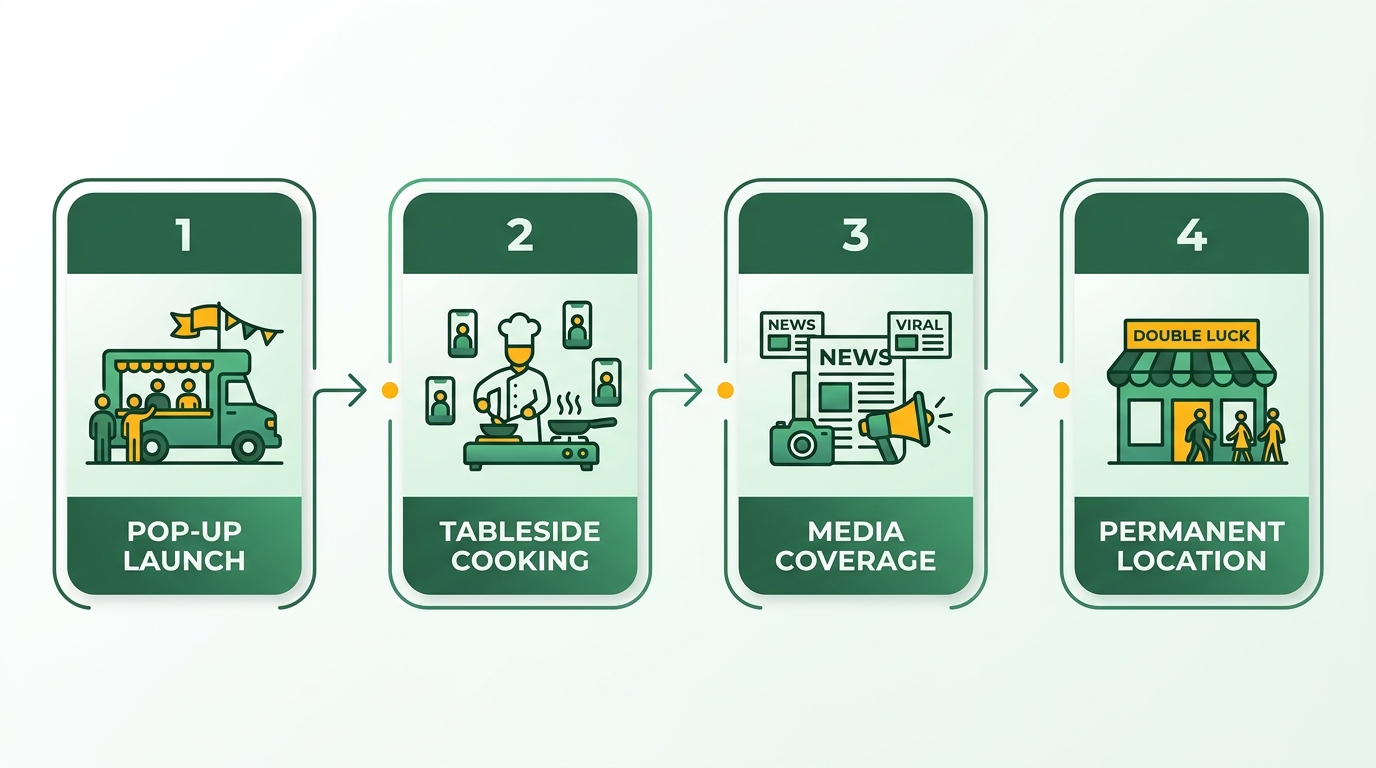
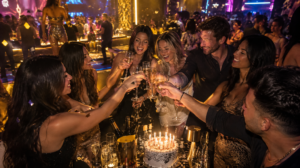
Double Luck: a high-energy Miami dining room known for tableside cooking and a show-forward format that rewards a full table. The draw is spectacle paired with plates, so the experience travels well on social feeds and in editorial write-ups.
The room runs loud and celebratory. This is a spot for groups, not a quiet business lunch. The kitchen leans into performance, finishing dishes in front of you, which keeps the energy up across the floor.
On value, treat it as an occasion restaurant, not a weeknight default. You’re paying for the production as much as the food, and the crowd it pulls confirms the demand for that trade.
| Attribute | Double Luck |
|---|---|
| Best for | Group celebrations, share-worthy nights out |
| Signature draw | Theatrical tableside cooking |
| Atmosphere | High-energy, social, loud |
| Rating | 4.3 / 5 |
Pros: memorable format, strong shareability, consistent buzz. Cons: not built for quiet meals, and the premium sits in the experience more than the ingredients.
How does a room like this amplify its reach?
A restaurant with visual theater already does half the media work. We pair that with structured editorial placement so the story lands beyond the tables that saw it. Spectacle fades from a feed in hours. A feature holds.
The biggest wins come when a venue treats its signature moment as a repeatable hook, then lets a media partner frame it for the audiences that book, not just the ones already inside. That’s the difference between going viral once and staying visible.
Skip the heavy media push if your concept has no visual or narrative hook yet. Build the moment first, then amplify it.
Restaurant 5: Si Papi
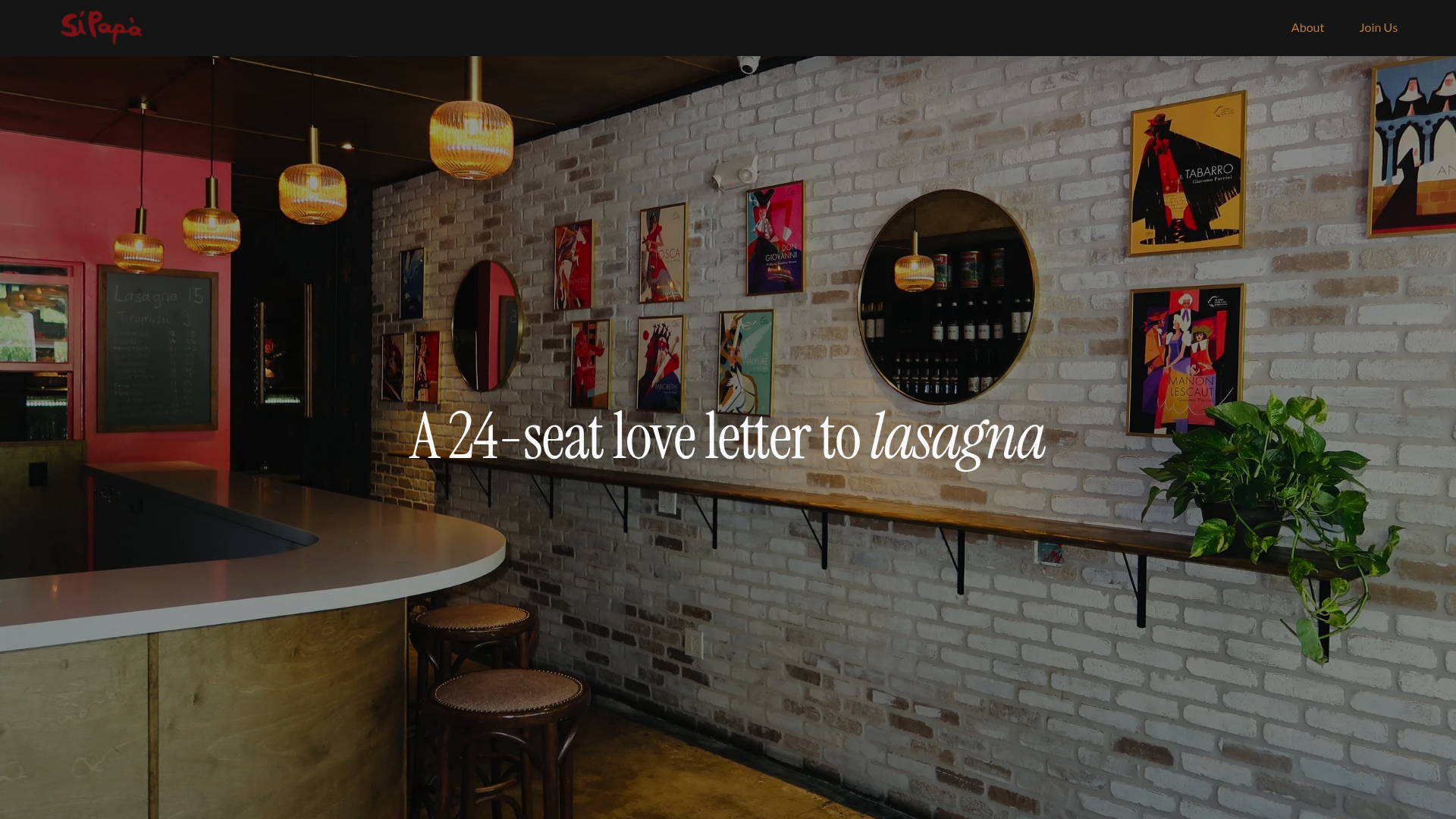
Si Papi closes our list because it does one thing exceptionally well: it packages Latin flavor as a scene, and a scene is what media coverage feeds on. It’s a clear example of how a restaurant’s built-in energy can carry a brand story further than a menu photo ever will.
What makes Si Papi worth featuring?
Si Papi: a Latin-forward Miami room where the food, music, and crowd blur into one high-tempo experience. The draw is atmosphere as much as the plate, which gives editorial and social coverage a clear angle to run with.
Our read on the room is simple. The energy runs loud and social. This is a night-out spot, not a quiet table for two. That vibe is a gift for content, because the story writes itself in photos, clips, and word of mouth.
On the menu, expect shareable Latin plates and cocktails built for a table that orders together. Pricing sits in the mid-to-upper range you’d expect from a Miami destination room, so the value question comes down to the experience, not the food alone.
This is where our angle matters. A place like this earns attention through vibe, but vibe fades from a feed fast. A room this photogenic is a natural fit for structured editorial coverage, the kind of trusted storytelling that builds credibility and gives a story a shelf life beyond the weekend.
Si Papi at a glance
| Dimension | Our take |
|---|---|
| Best for | Groups, celebrations, night-out energy |
| Atmosphere | Loud, social, scene-driven |
| Value | Experience-led; you pay for the room |
| Media hook | Built-in visual energy, easy to cover |
| Pros | Photogenic, shareable, high recall |
| Cons | Not for quiet meals; buzz needs reinforcement |
Skip Si Papi if you want a calm business dinner. It’s the wrong room for that.
Our recommendation: treat a spot like this as a media partner, not just a reservation. The energy is the asset. Our job is turning that one great night into coverage diners still see next month.
Industry Idols: A Featured Restaurant
We put this approach in the lineup because it shows a media-first strategy most restaurants struggle to run on their own. Editorial platforms bridge culinary execution and reach, giving restaurants the visibility framework traditional marketing channels miss.
What makes editorial storytelling different from other media partnerships?
Industry Idols is a publishing and media platform built for hospitality brands that need sustained editorial presence, not one-off coverage. It produces long-form features that position restaurants as cultural destinations, not just places to eat.
Working with Miami’s dining scene surfaces the same visibility paradox again and again. Elite recognition platforms reach a narrow audience. Volume-based review sites lose individual voices in algorithmic feeds. Editorial storytelling fills the middle, where a restaurant’s story gets told with depth and distributed across channels that actually turn attention into reservations.
The platform runs on three mechanics. First, professional editorial features frame the restaurant’s narrative around its cultural positioning, the chef’s background, the neighborhood it serves, the culinary tradition it represents. Second, content goes out through networks of hospitality-focused readers, which skew toward marketing professionals and business owners already hunting for venue recommendations. Third, strategic PR services push the story through partnerships that extend reach beyond owned audiences.
Who benefits most from this model?
Restaurants at the growth stage see the clearest return. If you’ve moved past survival mode but haven’t built the brand equity for consistent organic coverage, editorial platforms give you the infrastructure to fill that gap. Clients typically run mid-tier to premium concepts with strong execution and limited media bandwidth. They need the storytelling layer that turns a good menu into a destination worth talking about.
The model also works with concepts that have built-in visual or cultural hooks, like open kitchens, tableside preparation, heritage recipes, or design-forward spaces. Those elements give editorial teams material to build stories around, which makes the content more shareable and the ROI easier to measure. If your differentiator lives entirely on the plate with no surrounding narrative, the model gets harder to justify.
Conclusion and Recommendations
Miami’s standouts each win on a different axis. Double Luck sells spectacle. Si Papi sells scene. The editorial-first approach sells sustained narrative. What ties them together is a plain truth: in a city built on entertainment, the plate alone rarely carries the brand. The story around it does.
A pattern shows up across all of them. Even in premium markets, the rooms that break out often lead with accessible value. Quality experiences at approachable price points give you a narrative hook a lot of restaurants overlook.
Which restaurant fits your goal?
Match the room to what you’re trying to say. Spectacle-forward concepts like Double Luck give you footage. Scene-driven spots like Si Papi give you energy. Editorial partnerships give you the connective tissue that makes either one legible to a wider audience over months, not one news cycle.
Best for built-in shareability: Double Luck, where tableside cooking hands diners a reason to film.
Best for night-out energy: Si Papi, where the crowd is the content.
Best for sustained brand narrative: the editorial-first route, which turns a strong room into an ongoing story instead of a one-off review.
How the five compare
| Restaurant | Core draw | Best for | Watch-out |
|---|---|---|---|
| Double Luck | Theatrical tableside cooking | Groups, social clips | Loud, not a quiet lunch |
| Si Papi | Latin scene and tempo | Night-out energy | Atmosphere over intimacy |
| Sunny’s Steakhouse | Wood-fired classic fare highly sought after | Traditional steakhouse fans | High demand |
| Daniel’s Miami | French-inspired menus | Approachable upscale dining | More traditional format |
| Editorial partnership | Long-form brand narrative | Reach beyond reviews | Needs a real story to tell |
The numbers show why volume alone isn’t the whole game. A historic venue might carry tens of thousands of reviews, while a luxury spot like Jaya at The Setai holds 6,857 reviews at 4.7. Both are strong. But a review count tells you a room is busy, not what it stands for. That gap is exactly where editorial coverage earns its keep.
Our final recommendation
Pick the room that already has a story, then amplify it. A restaurant that reads as a cultural crossroads, the way an OpenTable reviewer might put it, gives editorial coverage a clear angle to run with. Spectacle plus authenticity travels. Static ratings don’t.
If your room has a genuine hook, we’re built to carry it further than a star count ever will. Skip a media partnership if your concept is still finding its identity. Reach doesn’t fix a story you haven’t defined yet. Once you know what you stand for, the right editorial partner turns that into visibility that compounds. Tell us your angle, and we’ll pressure-test whether it’s ready to run.
References
[1] Miami MICHELIN Restaurants – The MICHELIN Guide – https://guide.michelin.com/us/en/florida/miami/restaurants
[2] THE 10 BEST Restaurants in Miami (Updated August 2026) – Tripadvisor – https://www.tripadvisor.com/Restaurants-g34438-Miami_Florida.html
[4] Eater Miami – https://miami.eater.com/
[5] 48 HOURS IN MIAMI – The Best Restaurants – YouTube – https://www.youtube.com/watch?v=UcSmES6IAZ0
[6] Top Miami Restaurants in 2025 — Resy | Right This Way – https://blog.resy.com/2025/12/miami-restaurants-2025/
[7] Guide to Miami Restaurants – https://www.miamiandbeaches.com/restaurants
[8] The 25 Best Restaurants In Miami – The Infatuation – https://www.theinfatuation.com/miami/guides/best-restaurants-in-miami
Frequently Asked Questions
1. How do I choose between a MICHELIN-starred restaurant and a high-volume TripAdvisor favorite in Miami?
Elite culinary guides signal technical precision for dedicated food travelers, while high online review counts indicate broad appeal and consistent execution. If you are visiting for a major celebration, look to the city’s award-winning tasting menus. If you want authentic regional food trusted by locals, look for establishments with high review volumes that prove long-term reliability.
2. Why does the article recommend skipping media partnerships for neighborhood restaurants?
Media coverage drives discovery, which creates crowding and expectation pressure that neighborhood spots don’t need. If locals already fill your tables and you have no expansion plans, editorial features attract tourists who leave poor reviews when you’re not white-tablecloth formal. Save the budget for operations instead of managing mismatched expectations.
3. How can a premium steakhouse stand out in a highly competitive market?
By building narrative-driven media around a distinct value proposition. Rather than relying solely on elite awards, successful venues position themselves through storytelling that highlights quality and accessibility, reaching diners who want premium experiences without the typical fine-dining price tag.
4. How does interactive dining create media value beyond the meal?
Interactive elements give diners a reason to share their experience, turning the meal itself into organic content. This visual engagement works as a repeatable hook that editorial partners can frame for prospective guests. While social media posts fade quickly, structured editorial coverage extends the shelf life of that initial excitement.
5. Does a restaurant need a MICHELIN star to justify working with editorial platforms?
No. Editorial storytelling fills the gap between elite industry recognition and volume-based reviews. Restaurants at a growth stage with strong execution but limited media bandwidth benefit most, especially concepts with built-in visual or cultural hooks like heritage recipes or open kitchens that provide rich material for features.
6. What specific advantage does Miami’s geography give restaurants building media narratives?
The city’s unique location allows restaurants to draw on diverse cultural influences and fresh supply chains. Venues that highlight these regional connections in their marketing create a sense of place and urgency that generic lists cannot replicate, giving travelers a compelling reason to visit.