Key Takeaways
- Industry Idols works with boutique properties to turn guest stories into editorial‑style pieces that can support a PR workflow.
- Setting up a guest‑story collection process typically takes a short period of time and is considered a moderate‑difficulty task.
- Writing and editing stories can be organized in weekly batches.
- Negotiating PR placements often involves several weeks of coordination and can result in editorial features.
- Ongoing distribution of guest content may help improve weeknight occupancy over time.
- Social engagement generated by storytelling campaigns can increase brand mentions across platforms.
Quick Summary
Boutique properties can use authentic guest experiences as a foundation for a media pipeline. By organizing these moments into a structured campaign, hotels can showcase their unique attributes while building a workflow that supports ongoing visibility.
What the quick‑look table shows
The table below outlines the core steps of a storytelling‑to‑PR workflow that has been refined for boutique properties.
| Step | Key Focus | Typical Starting Point | Enhanced Outcome |
|---|---|---|---|
| Guest collection | Story volume (per week) | Limited set of anecdotes | Expanded pool of guest narratives |
| Content creation | Edited stories (published) | Few or no editorial pieces | Regularly published articles |
| Media partnership | PR placements | Minimal media exposure | Secured editorial features |
| Distribution | Weeknight visibility | Baseline occupancy levels | Potentially improved occupancy through targeted exposure |
| Engagement | Social mentions | Modest online chatter | Potentially higher social conversation around the brand |
How to estimate effort and difficulty
Managing these phases involves balancing staff time and external resources. The initial collection setup focuses on establishing a capture method that does not disrupt daily operations—such as adding prompts to checkout systems. Once the pipeline is active, content creation involves structuring raw feedback into polished narratives, which can be handled in regular batches. The outreach phase typically requires the most coordination because it depends on aligning with editorial calendars and negotiating placements. Distribution and monitoring can be integrated into existing marketing routines to track performance over time.
Key highlights
- Authentic guest stories provide a foundation for PR and editorial campaigns.
- PR placements can extend reach while preserving the brand’s voice.
- The workflow can scale: each additional story creates another opportunity for media exposure.
Allocating a dedicated content lead and setting aside regular time for partnership management helps maintain momentum. If resources are limited, focusing on organic editorial distribution can still generate meaningful visibility. This overview offers a flexible template you can adapt to ensure every captured story supports your brand’s growth.
Why Guest Storytelling Matters
Guest experiences create narratives that can influence booking decisions, especially on slower weeknights. When a guest shares a story, it can serve as free promotion that reaches friends, family, and social feeds without additional spend. Translating these narratives into editorial features and PR placements can enhance a property’s perceived value and support occupancy.
Guest stories can inspire repeat reservations and help fill gaps during quieter periods. By turning authentic moments into editorial‑ready pieces, properties establish a pipeline of content that continuously nudges potential travelers toward those empty slots.
How hotel guest storytelling can influence weeknight bookings
A story creates relevance that standard ads may not match. A guest’s personal experience—a sunrise yoga session on a rooftop or a surprise birthday dinner—gives future travelers a vivid picture of what their stay could feel like. When that narrative appears in a travel magazine or lifestyle blog, readers see a real‑world endorsement that feels more like a recommendation from a trusted peer than a sales pitch.
- Emotional connection – Stories make the hotel memorable.
- Social proof – Published guest anecdotes act as third‑party validation.
- SEO potential – Fresh, authentic content can attract backlinks and improve search visibility.
- Media interest – Editors often look for human‑centric angles, which can increase earned coverage.
Challenges that guest storytelling can address for boutique hotels
Low weeknight occupancy can stem from a lack of differentiated messaging, limited marketing budgets, and guest perceptions of generic amenities. Gathering authentic guest moments through interviews or short surveys helps build a library of stories that address these pain points. Those stories can then be woven into editorial coverage and PR campaigns, helping attract weeknight guests and fostering a loyalty loop that encourages repeat visits and referrals.
Defining Your Hotel’s Core Story
We start with an audit of guest‑generated moments and match them to the hotel’s unique values.
- Capture – Use short, open‑ended surveys at checkout and invite guests to share the most vivid part of their stay.
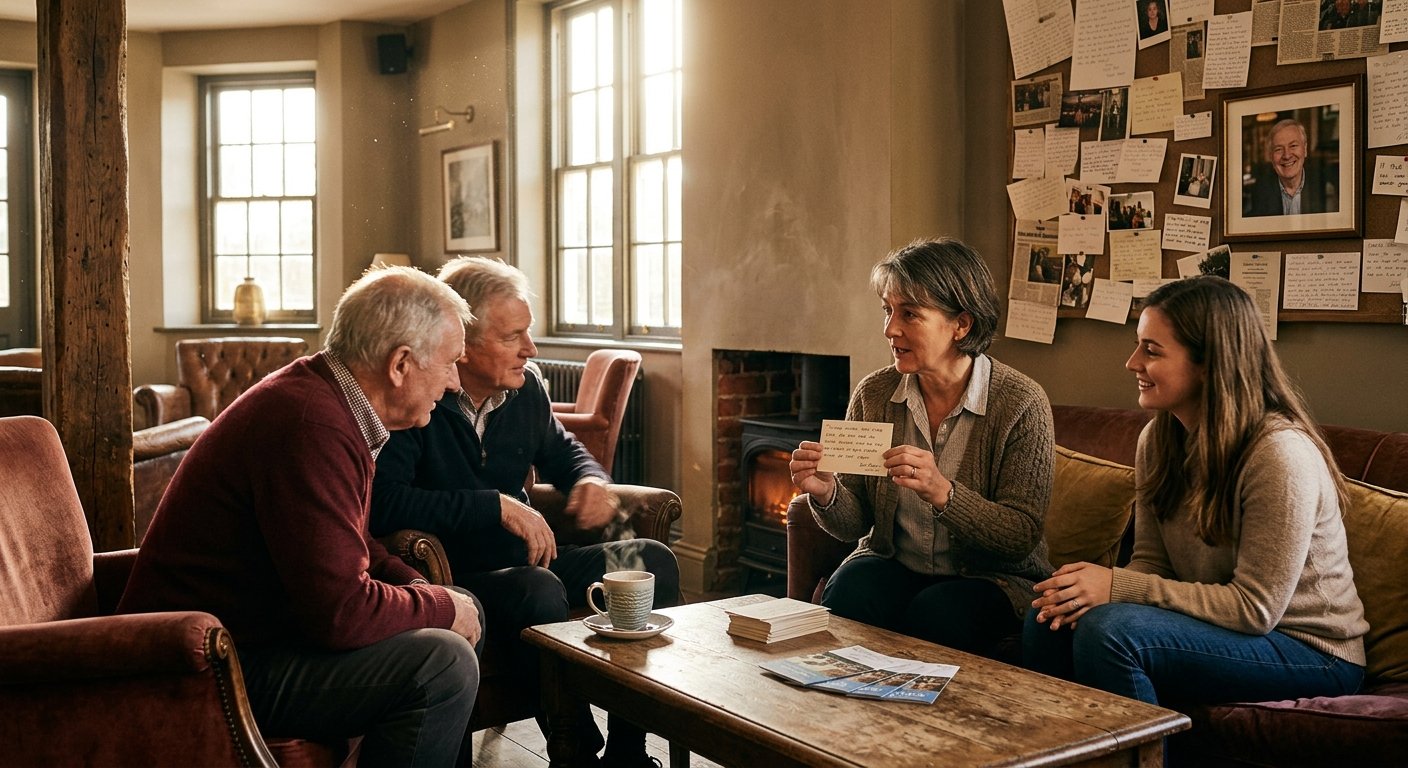
- Focus group – Conduct a brief session with a mix of repeat visitors and first‑timers to surface recurring themes.
- Map – Align each theme with the property’s differentiators—heritage, design, local partnerships—to identify compelling story angles.
- Guest insights: collect anecdotes, photos, and quotes in a shared document.
- Value alignment: list the hotel’s mission statements and physical assets; highlight any that appear in multiple guest comments.
- Theme clustering: use simple color‑coding to group similar stories and spot dominant narratives.
Guest feedback often highlights memorable elements such as a distinctive design feature or a local cultural touchpoint. Those insights become the backbone of the core story.
Shaping guest voices into a cohesive story
We translate raw anecdotes into a structured narrative that media outlets can use.
- Quote selection – Choose a few authentic quotes that illustrate the core theme.
- Narrative draft – Write a short “story capsule” (around 150–200 words) that weaves the quotes into a setting description, a problem‑solution arc, and a subtle call‑to‑action.
- Media kit – Pair the capsule with high‑resolution images and a concise press note, ready for a media partner’s editorial calendar.
- Quote selection: prioritize authenticity and avoid generic praise.
- Narrative draft: follow a clear beginning‑middle‑end flow; keep language vivid but factual.
- Media kit: include visuals, guest‑generated hashtags, and a brief “why this matters” blurb.
Storytelling helps businesses embed their offerings within meaningful contexts, turning everyday guest moments into credibility‑building assets.
Collecting and Curating Guest Stories
Transforming guest experiences into media‑ready assets requires a structured approach to capture, triage, and packaging. This ensures each narrative is prepared for pitching shortly after it is gathered.
Common capture points include checkout and the property’s own social channels, where guests often share highlights. Encouraging guests to provide a brief highlight in a short survey and monitoring tagged mentions on platforms like Instagram and TikTok can build a steady stream of raw material without adding significant staff workload.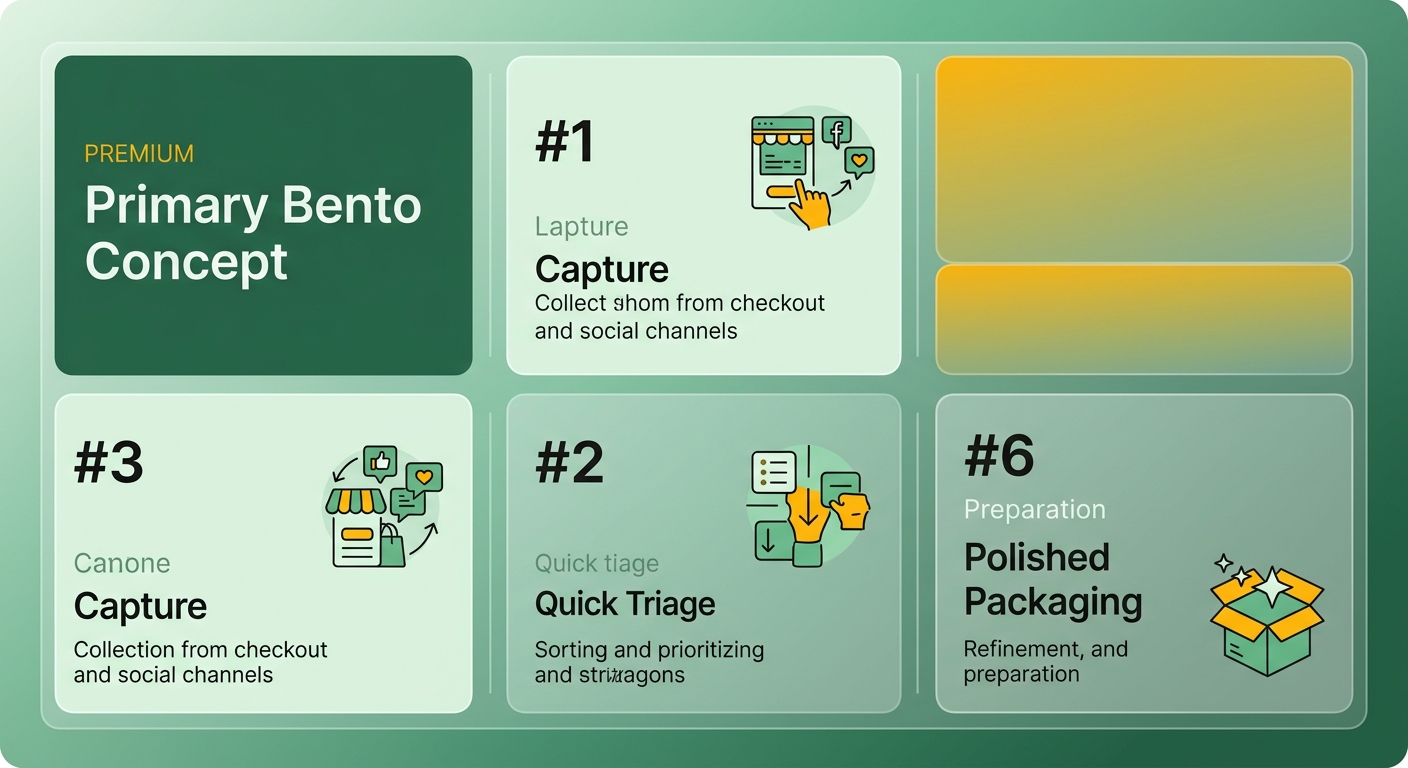
Capturing guest stories on social media
Stories can be captured as soon as they appear, turning a fleeting post into a usable narrative. A social‑listening tool can flag mentions that include the hotel’s branded hashtag or location tag, after which an editor adds sentiment, theme, and a concise summary.
The workflow links the original post, the guest’s consent file, and a thumbnail image in a simple document. Guests are asked for permission to repurpose their content, and the consent is stored alongside the story for quick reference. Real‑time capture allows fresh anecdotes to be considered for the next editorial cycle, keeping the feed lively and timely.
Curation workflow
Curation applies a three‑tier filter that balances authenticity, relevance, and media appeal. First, stories that feel rehearsed or overly promotional are set aside; authenticity is prioritized. Second, the remaining stories are matched to the hotel’s core themes identified during the initial audit. Third, each story is shaped into a story kit that includes a headline, a concise narrative, high‑resolution photos, and a pull‑quote ready for journalists.
Each kit is reviewed by a senior copywriter who refines the prose, adds a contextual hook (such as a local event), and attaches a brief explaining why the story fits a targeted audience. The final kits are uploaded to a shared media portal where the PR team can access them for placement.
Using these curated story kits in targeted press releases can help hotels enhance visibility and attract interest from media outlets and potential guests.
Embedding Guest Stories into Your Brand Voice
Weaving authentic guest experiences into the overall storytelling strategy creates a consistent tone, emotional resonance, and a clear reason for travelers to consider weekday stays.
When a property lives the stories it shares, the impact of these narratives can become evident. For example, MACq 01 hotel in Tasmania built an experience around themed rooms, inviting guests to become part of Tasmania’s history. Highlighting such moments allows properties to amplify their narrative through editorial features and strategic PR placements.
Translating anecdotes into a consistent voice
We begin by distilling each anecdote into a voice anchor—a short phrase that captures the guest’s emotion and the property’s promise. The anchor then guides copy across channels.
- Identify the core feeling (surprise, comfort, discovery) and express it as a concise tagline.
- Map the tagline to brand pillars identified during the audit, ensuring every piece of copy references at least one pillar.
- Create a style sheet that lists the taglines, preferred verbs, and tone descriptors (warm, witty, refined) for writers and designers to reference.
Resources to support staff as story ambassadors
Providing tools and guidance helps front‑line teams capture and share memorable moments.
- Role‑play sessions where staff practice turning a guest comment into a headline‑ready sentence.
- Micro‑learning cards placed at the front desk that list current voice anchors and sample sentences.
- Feedback loops that recognize staff whose stories are featured in editorial coverage, reinforcing the habit of storytelling.
By integrating authentic guest stories into every piece of communication, brands can turn ordinary stays into compelling reasons to book a weeknight, enhancing visibility and credibility through trusted editorial storytelling.
Showcasing Stories Across Marketing Channels
Turning authentic guest experiences into editorial content allows hotels to leverage these narratives across multiple channels. Featuring guest quotes and photos in editorial pieces and PR placements can provide credible visibility that encourages travelers to consider weekday stays.
Integrating stories into email outreach
Editorial features and press releases can be referenced in a hotel’s own email communications. Highlighting a guest’s voice within a concise newsletter adds authenticity and aligns the message with trusted storytelling.
Social platforms for extending narratives
The stories can be repurposed on social channels such as Instagram, TikTok, and LinkedIn.
- Instagram: Share carousel posts that pair candid images with guest captions.
- TikTok: Create short video walkthroughs that overlay guest quotes as voice‑overs.
- LinkedIn: Position the story as a case study of experiential hospitality.
Each platform can include a call‑to‑action that directs viewers to the hotel’s booking page or a dedicated weekday‑special landing page.
Influencer collaborations as an extension of PR
Hotels may complement editorial coverage with collaborations involving micro‑influencers whose audiences value authentic experiences. Providing influencers with the featured guest story allows them to share the narrative in their own voice, tagging the property and, if appropriate, using a unique promo code. This approach aligns with broader PR efforts that aim to amplify brand credibility through trusted third‑party voices.
Measuring Storytelling Impact on Occupancy
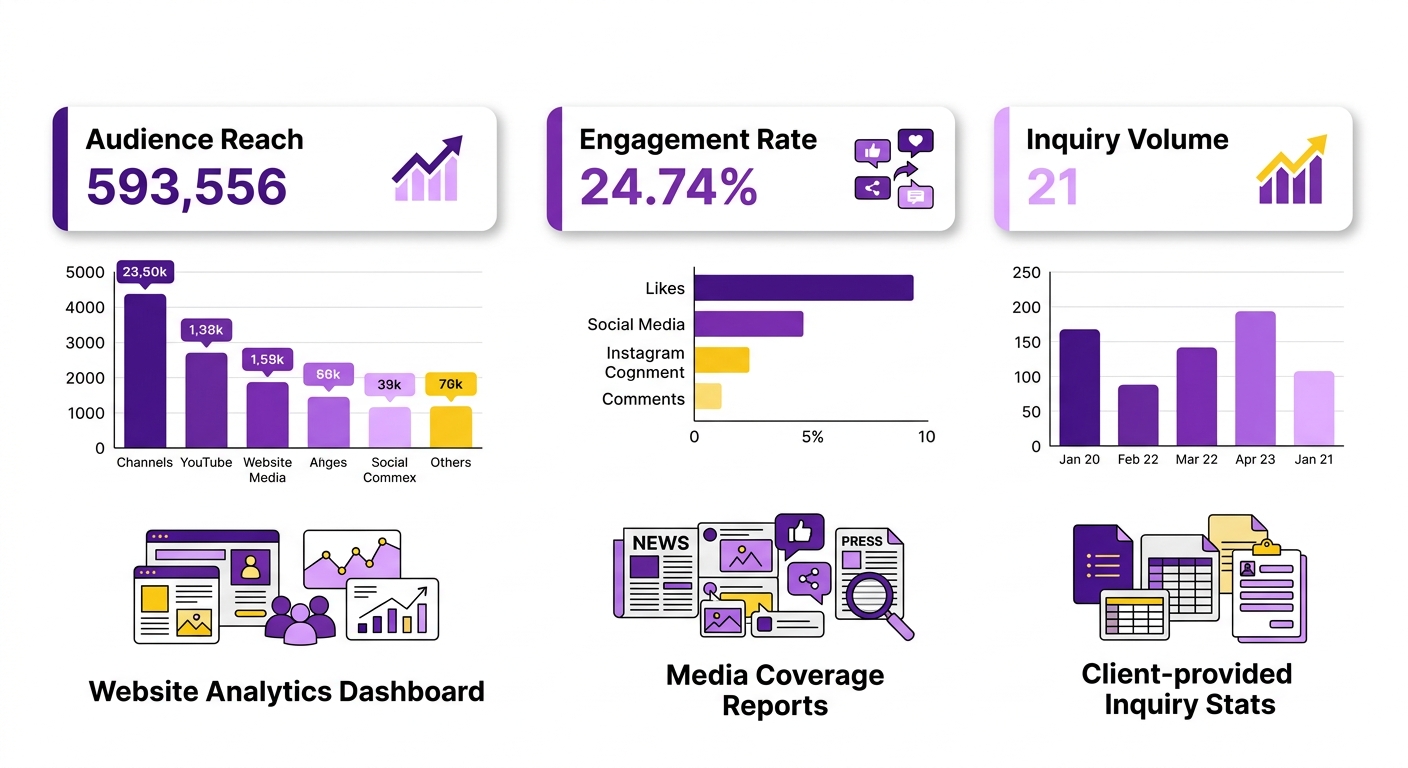
Key visibility indicators can be compiled into a concise overview that brings together audience reach, engagement, and any uptick in inquiries or bookings reported by the client.
- Gather data sources – combine website analytics, media‑coverage reports, and client‑provided inquiry statistics.
- Identify KPIs – focus on audience reach, engagement rate, and inquiry volume.
- Tag each story – assign a reference code to every guest narrative and link it to performance data.
- Visualize the timeline – use a simple chart that overlays story publication dates on visibility metrics; spikes that align with releases may suggest impact.
“Creating memorable experiences can be a significant source of competitive advantage in the experience economy.” – Pine and Gilmore (1999)
Regular reviews allow you to see trends, such as whether a feature coincides with a noticeable increase in interest. Over time, these incremental gains can contribute to stronger overall occupancy and brand awareness.
When to review and adjust the campaign
Conduct a formal review after each story cycle (roughly one month) and after any major seasonal push, comparing KPI trends to the baseline and to the previous cycle.
- Quarterly check‑in – assess overall visibility growth and note any stories that performed exceptionally.
- Monthly health check – ensure referral traffic remains a healthy portion of total visits; if it dips, consider adjusting distribution channels (e.g., shifting focus from print to Instagram Stories).
- Iterative updates – refresh stories that show limited impact and test new angles.
Treating storytelling as a data‑informed initiative helps keep the narrative fresh, the media partners engaged, and the brand’s presence growing steadily.
Scaling Storytelling for Future Growth
Incorporate a simple, repeatable habit into daily operations so every team member can capture memorable moments.
- Quick capture moments – During regular staff briefings, highlight a recent guest quote and discuss a concise prompt (e.g., “What surprised you most about the sunset view?”) to keep storytelling top of mind.
- Story‑capture checklist – Front‑desk, concierge, and food‑and‑beverage staff can note key details (guest name, moment, photo permission) on a shared tablet or paper form, ensuring the information flows to the hotel’s content hub.
- Internal recognition – Share standout submissions on the staff intranet or bulletin board to celebrate contributions and encourage ongoing participation.
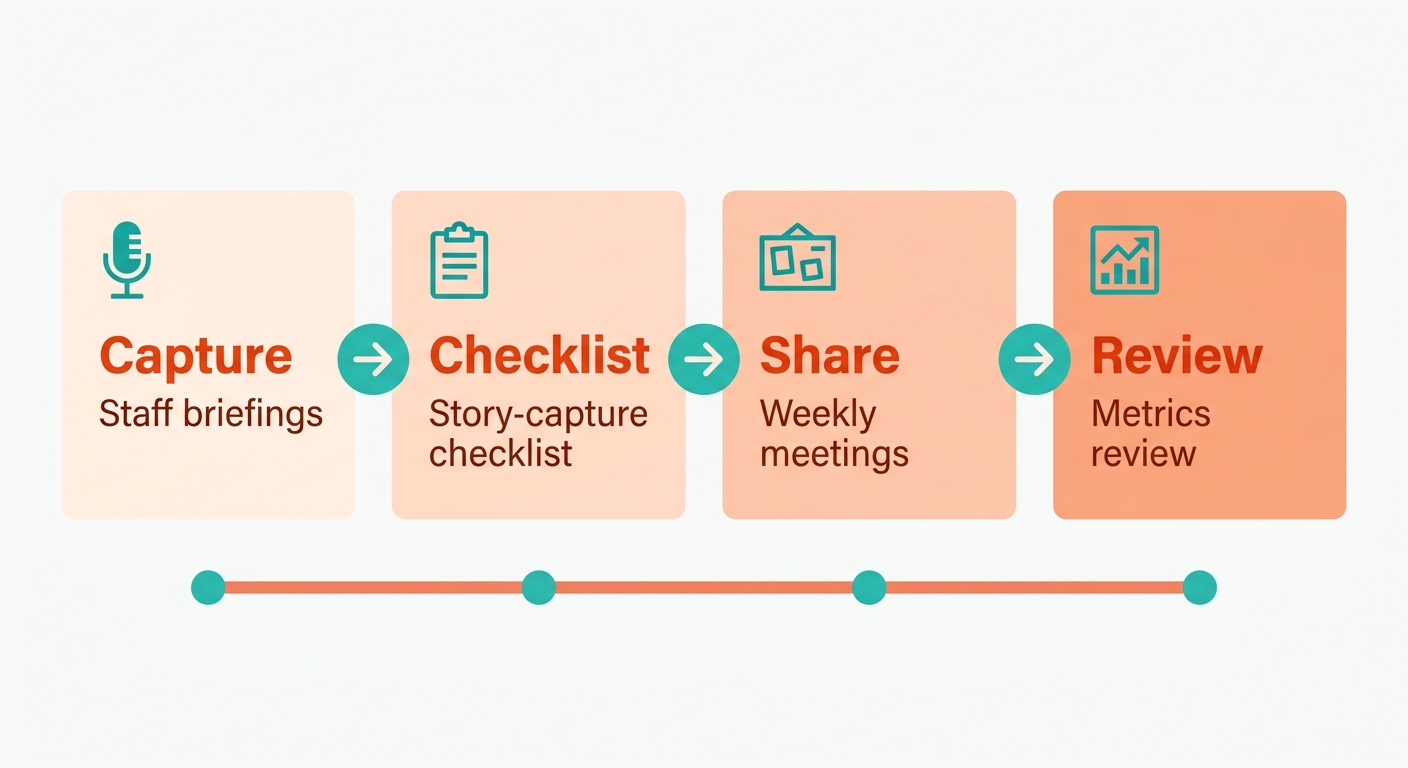
These steps turn storytelling into a habit rather than a one‑off project.
Embedding stories into the broader marketing mix
Place each vetted narrative into an editorial calendar that aligns with the hotel’s occupancy goals, using targeted editorial and PR channels.
- Email & CRM – Use a short guest excerpt as the headline of a weekday‑focused newsletter that promotes a special package.
- Press‑ready pitches – Repurpose the same quote into a one‑pager for travel editors, letting the guest’s authentic voice serve as the hook.
- Social‑media carousel – Pair a guest photo, quote, and property detail in a three‑image series scheduled for times when weekday travel intent is higher.
Aligning each story with specific channels and clear calls‑to‑action can extend reach without additional spend. By tagging each publication with a reference code and monitoring booking trends in the following week, hotels can see which narratives resonate most and refine future prompts accordingly. This feedback loop keeps the storytelling engine lean, scalable, and directly tied to weeknight revenue goals.
References
[1] Experiential Marketing Through Strategic Storytelling: A Qualitative … – https://www.researchgate.net/publication/391726757_Experiential_Marketing_Through_Strategic_Storytelling_A_Qualitative_Case_Study_of_a_Tasmanian_Hotel
Frequently Asked Questions
1. How can a boutique hotel with part‑time staff still collect enough guest stories?
Part‑time staff can integrate story collection into existing routines by using digital prompts at checkout. Training team members to ask a single open‑ended question during standard interactions can help build a consistent pipeline of guest anecdotes without adding significant workload.
2. Is the guest‑storytelling workflow usable for larger chain hotels?
The framework can be adapted for larger chains by decentralizing the collection process across multiple departments or properties. Regional marketing teams can manage localized media outreach and tailor core narratives to fit diverse property profiles.
3. What is the proper way to obtain permission to reuse a guest’s social‑media post?
Securing usage rights requires clear documentation. When reaching out to guests on social media, obtain explicit written consent via direct message or a digital waiver, and archive this authorization alongside the media assets to ensure compliance with privacy regulations before publication.
4. Does guest‑driven content improve search rankings more than paid ads?
Guest narratives often target long‑tail search queries that prospective travelers use when researching destinations. Hosting these stories on a blog or media room can create permanent, search‑optimized landing pages that continue to attract organic traffic over time.
5. Can the typical PR negotiation period be shortened?
The speed of media placements depends heavily on existing relationships with travel journalists and editors. Preparing complete media kits in advance can help partners review and accept stories more quickly, potentially reducing the negotiation timeline.
6. Which metrics reveal storytelling impact beyond occupancy numbers?
Beyond direct bookings, hotels can monitor referral traffic from media placements, social sharing metrics, and the sentiment of online reviews. Tracking how long visitors stay on story‑focused landing pages also helps gauge audience engagement depth.
7. What common mistake reduces the effectiveness of curated story kits?
A frequent error is failing to provide journalists with a clear, timely hook that connects the guest’s experience to broader travel trends or local events. Without this contextual relevance, media outlets are less likely to feature the story, regardless of how compelling the individual guest experience may be.