Key Takeaways
- Designer partnerships can give you pricing power by positioning you in front of luxury audiences who already pay for quality.
- Audience alignment often matters more than logo prestige — luxury customers tend to reject partnerships that feel forced.
- Strong collaborations typically solve a real customer problem or create genuine value for both parties.
- Track article views, social reach, and event attendance to see if the partnership connects with buyers who matter.
- Strategic visibility often beats volume when your audience expects exclusivity.
- Established names in fashion and lifestyle can build social proof that supports higher pricing.
- Engagement metrics help separate real audience connection from empty impressions.
Quick Summary
Partnering with designer brands can be a deliberate move that enables premium pricing and positions you in front of high-intent luxury buyers. When done right, these collaborations can signal credibility and open revenue streams that mass-market positioning may not access.
Emerging luxury brands can accelerate by aligning with established names in fashion, hospitality, and lifestyle. The right partnership may amplify your story, give you access to their audience, and build social proof you need to justify higher prices. Strategic visibility often matters more than volume when you’re targeting buyers who expect quality.
What Makes a Designer Brand Partnership Work
Success tends to come down to audience alignment and mutual value. You’re not chasing logo placement. You’re building a relationship where both brands can gain credibility and reach. Luxury customers often expect authenticity. If the partnership feels transactional, it can backfire.
Shared values and complementary positioning typically matter most. Partnerships work when they feel intentional and solve a real problem: access to something rare and thoughtfully designed.
Key Metrics That Can Signal Real Impact
Watch article views, social reach, and event attendance. These numbers can show whether the partnership connects with the right audience or just generates vanity impressions. Audience engagement may tell you if editorial storytelling is reaching buyers who value quality.
Set expectations early. Successful partnerships often need tailored visibility strategies built around your goals, connecting your brand with the right audience.
Why Designer Partnerships Can Create Luxury Value
Aligning with designer brands can do something a marketing budget alone may not: it can borrow trust that took decades to build. When a recognized name in fashion or lifestyle stands next to yours, buyers may stop questioning whether you’re worth the premium. That association can become shorthand for quality, potentially shortening the sales cycle for high-end customers.
This pattern appears in luxury and hospitality. The pull of established designer brands isn’t just vanity. It can be a credibility transfer. Their audience often already expects exclusivity and pays for it, so you may inherit permission to price at that level earlier.
Why Can Designer Partnerships Justify Higher Prices?
Partnerships can signal scarcity and taste — two things luxury buyers often pay for above raw utility. When your product sits alongside a respected name, price may stop being the deciding factor and perceived worth can take over.
The strongest pairings often favor fit over fame. A partnership typically works best when both audiences overlap and both reputations reinforce each other. Shared values, aligned aesthetics, and a customer base that already spends at premium tiers can make the match hold. A mismatched pairing may read as a stretch, and luxury audiences often notice.
Exclusivity can matter too. Limited collaborations, capsule releases, and invite-only launches may create urgency that mass-market positioning rarely earns. You’re not competing on volume. You’re competing on the feeling that this won’t be around forever.
What Problems Can These Partnerships Solve?
One challenge for emerging luxury brands is reach. High-end audiences don’t always respond to broad advertising, and they can be skeptical of anything that tries too hard. A designer partnership may hand you a warm introduction to exactly those buyers.
It can also address the credibility gap. New brands may struggle to prove they belong in the premium tier. Standing next to an established name can close that gap faster than ad spend alone.
One caveat: skip this if your product can’t hold up to the association. A partnership amplifies whatever you already are. If quality, packaging, and service aren’t at luxury standard, the spotlight may only expose the gaps. Fix the fundamentals first.
Positioning Your Brand Before Seeking a Partnership
Before you approach any designer brands, get your own house in order. Partnerships can fail when the smaller brand hasn’t defined what it stands for. A designer brand is unlikely to lend its name to a business that can’t articulate its own value in one sentence.
Positioning comes first. Luxury brands that anchor whole categories in fashion and lifestyle tend to share a few traits. High-quality products. Controlled scarcity. Experiences that feel deliberate rather than mass-produced. If your brand lacks those signals, a partnership may not cover the gap.
What Tends to Define a Luxury Brand Worth Partnering With?
A luxury brand typically sells meaning, not just product. The price often reflects craftsmanship, exclusivity, and a story buyers want to belong to. Many recognized fashion houses treat every touchpoint as part of the narrative, from packaging to store design to the wait for a bespoke piece.
Three characteristics can matter when evaluating an emerging brand’s readiness:
- Product quality that survives scrutiny. Luxury buyers inspect. Your materials, finish, and consistency have to hold up close.
- Exclusive access or experience. Limited runs, invitation-only events, or personalized service can create the scarcity premium buyers pay for.
- A coherent visual and verbal identity. Every photo, caption, and email should feel like it came from the same room.
Why Can Brand Storytelling Matter Here?
Storytelling can turn a product into a designer-level position. Buyers at this tier aren’t always comparing spec sheets. They may be buying a point of view, and the brand with the clearer story can win the premium.
Emerging luxury brands can benefit when they build the narrative before outreach. Who is this for? What does owning it say about them? Answer those, and a potential partner may see a brand that already speaks their language.
One caveat: skip the partnership chase if your positioning still reads mass-market. Fix the fundamentals first. A rushed collaboration with a mismatched partner can do more damage than waiting to sharpen your identity. Forced pairings may confuse the audience on both sides, and that confusion can be expensive to undo.
Selecting Designer Partners That Align With Your Audience
The right designer partner shares your audience, not just your aesthetic. Before you chase any name, map who they actually reach and whether those buyers overlap with the customers you want. A prestigious logo may mean nothing if its followers never convert for you.
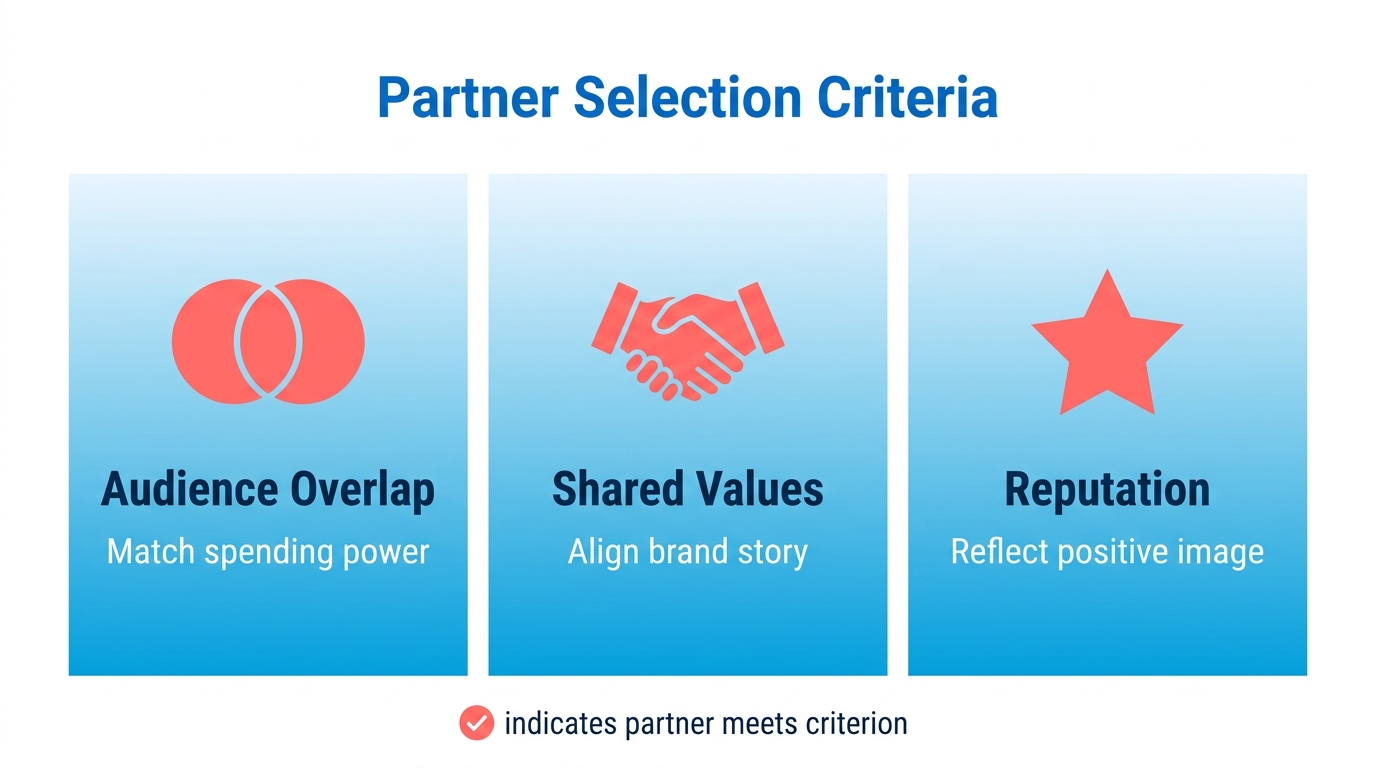
Consider potential partners on three things: audience overlap, shared values, and reputation you’d want reflected onto your own. Designer brands to consider aligning with are often the ones whose customers already behave like yours — spending on quality and expecting exclusivity. Match the buyer first, then the badge.
How Might You Evaluate a Designer Partner?
Start with the audience, then the values. A partner may be worth pursuing when their customer base mirrors yours in spending power and taste, and when their brand story doesn’t clash with what you stand for. Misaligned values can show up fast, and buyers often notice.
Screen for these factors before outreach:
- Audience overlap: Do their followers fit your ideal buyer profile, or are you borrowing reach that may not convert?
- Value alignment: Does their positioning on quality, craft, and exclusivity match yours, or contradict it?
- Reputation: Is this a name you’d be proud to sit beside for years, not just one campaign?
- Momentum: Are they growing, stable, or fading? You may inherit their trajectory too.
Skip a partnership when the only thing you share is a price tier. Prestige without audience fit can drain budget and dilute your story.
What Makes Shared Values Important in Luxury?
Shared mission can separate a real partnership from a paid placement. Luxury buyers may sense a transactional collab, and it can cheapen both names. When two brands genuinely believe the same things about quality and experience, the collaboration may read as authentic.
Define your non-negotiables before the first conversation. If a designer partner treats craftsmanship as marketing rather than practice, consider walking away. The credibility transfer typically works best when the values behind the logo are real.
When you approach a partner, lead with the overlap you’ve already mapped. Show them the audience math and the values fit. That approach can help you negotiate from strength instead of asking for a favor.
Creating a Partnership Offer That Benefits Both Brands
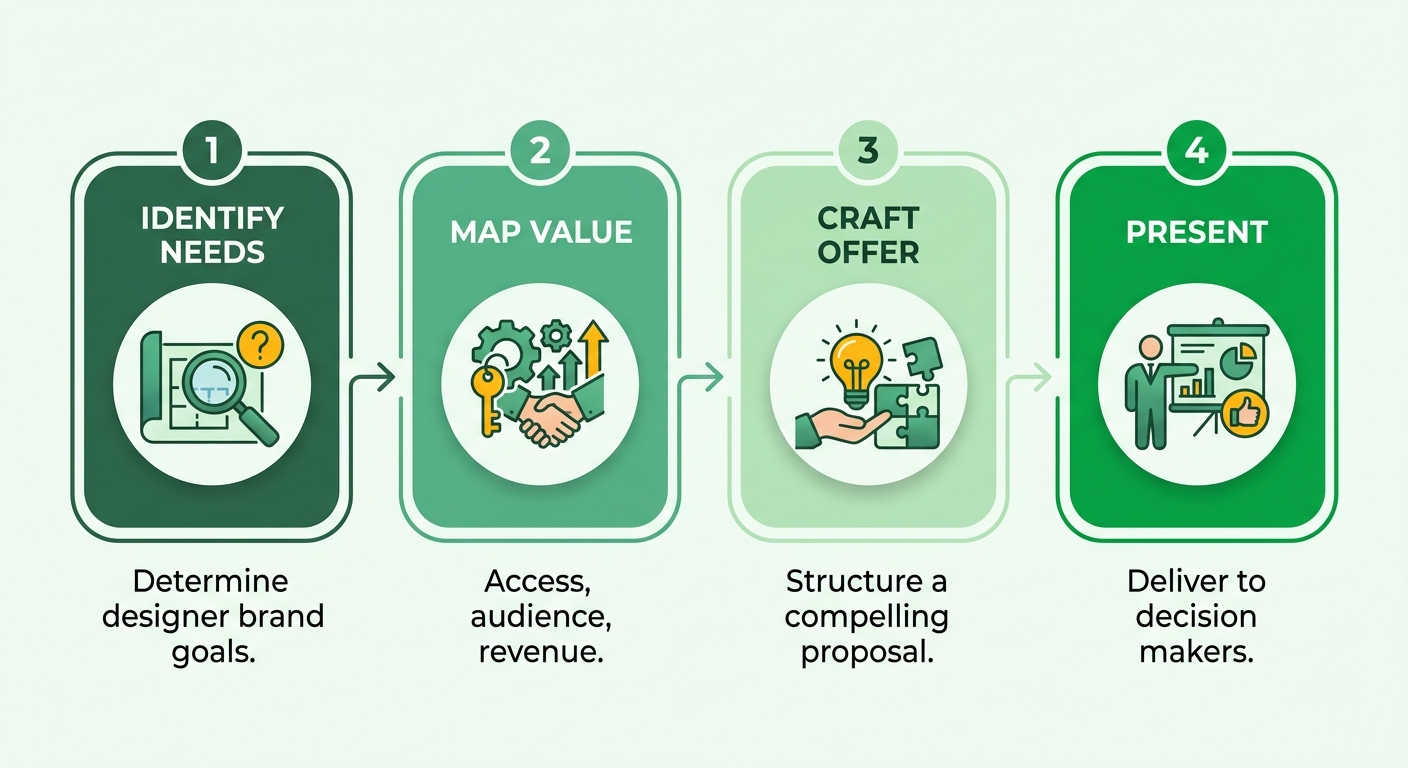
A partnership offer needs to answer one question: what does the designer brand get out of this? Many emerging luxury businesses pitch the prestige they’ll gain but forget that established names don’t need your credibility. They need tangible value they can’t easily create themselves.
Strong offers are often built around access, audience, or revenue. Designer brands that say yes typically see a clear path to one of those three. Access might mean entry to a new market segment or distribution channel they haven’t cracked. Audience could be your customer base if it’s genuinely distinct from theirs. Revenue is simplest: a licensing fee, profit share, or co-marketing budget that justifies their time.
What Might a Co-Branding Proposal Include?
Start with the commercial terms, not the creative vision. Designer brands often evaluate partnerships as business decisions first. Spell out the revenue model upfront: are you paying a licensing fee, offering percentage points on sales, or splitting marketing costs? If the economics don’t make sense to them, the rest of the pitch may be noise.
Next, define the scope and exclusivity. Will this be a limited run or an ongoing collaboration? Which product categories does it cover, and are you asking for category exclusivity on their end? Vague partnership language can kill deals. The clearer you are about what’s on and off the table, the faster you may get to yes or no.
Show how you’ll protect their brand. Include guidelines for how their name and visual identity will appear, who controls final approvals, and what happens if the partnership ends. Designer brands have often spent years building equity in their image. They’re unlikely to hand over control to a partner who can’t demonstrate they understand that.
How Can You Make the Offer Feel Exclusive?
Limit the scope deliberately. A partnership that spans your entire product line can read as desperation, not exclusivity. Pick one hero product or collection that genuinely benefits from their design language, and make that the anchor. Scarcity can signal seriousness.
Approaching Designer Brands and Securing the Collaboration
Once you’ve identified the right designer brands and built a compelling value proposition, the next step is making contact and managing the conversation. Approach this as a credibility exercise first, outreach second. The brands worth partnering with often get pitched constantly, so standing out may mean proving you’ve done the homework before you send an email.
Start with warm introductions whenever possible. Cold outreach to designer brands rarely works unless your brand already has visible momentum. Use mutual connections, industry events, or shared distribution channels to get a referral. If you’ve worked with a PR agency, retailer, or influencer who has existing relationships in the luxury space, ask them to make the introduction. A single warm intro can beat many cold emails.
What Might Your Initial Pitch Include?
Your first message should be brief and focus on what the designer brand gains. Lead with the opportunity you’re offering, not the partnership you want. If you’re bringing access to a new customer segment, state the demographic and spending behavior upfront. If you’re proposing a co-branded product line, explain the distribution channel and revenue model concisely. The goal is to earn a follow-up conversation, not to pitch the entire deal in one email.
Pitches that show proof of audience or market validation often gain traction. Share a relevant performance metric like your customer retention rate, average order value, or recent press coverage. Designer brands typically want to see that you’re already operating at a level that justifies their time. If you’ve launched a limited release that sold out or secured placements in high-end retail, mention it. Tangible proof can shorten the conversation.
Expect early responses to focus on terms, timelines, and creative control. Designer brands will likely want to understand how their name and visual identity will be used, what approvals they’ll have, and how revenue or attribution will be split. Be prepared with a one-page deal structure that outlines those terms clearly. The faster you can answer their questions, the more seriously they may take the conversation.
Building an Exclusive Co-Branding and Content Strategy
Once you’ve secured a partnership, the work shifts to making the collaboration feel rare. Scarcity can turn a co-branded product into something people chase. When you release a limited run with designer brands, you’re not just selling a product. You’re selling the fact that most people won’t get one.
The psychology is simple but can be powerful. Limited availability may signal status, and status is often what luxury buyers pay for. A capsule collection of a specific number of pieces can read as more desirable than an open-ended line, even if the product is identical. Scarcity tells the buyer this moment won’t come back, and that urgency may drive faster decisions and support higher prices.
How Might You Build Scarcity Into a Limited-Edition Drop?
Scarcity tends to work when it’s real, not manufactured. Cap the quantity, name the run, and give it a clear beginning and end. Number each piece. Set a hard cutoff. The constraint has to be believable, because buyers can often sense a fake “limited” label that quietly restocks later.
Strong drops are often built around three levers. First, controlled volume: a fixed number of units, stated upfront. Second, time windows: a release that opens and closes on set dates. Third, exclusive access: early entry for existing customers or a waitlist that rewards loyalty before the public sees anything.
Your content should carry the same restraint. Tease the collaboration before launch, show the craftsmanship, then go quiet. Over-posting can kill the sense of rarity you worked to build. Let the product breathe.
When Should You Skip the Scarcity Play?
Skip artificial scarcity if your business runs on volume or repeat purchases. A café loyalty program or a subscription box doesn’t need a limited unit cap. Forcing exclusivity onto a high-frequency product can frustrate the customers you want coming back.
The balance is the hard part. Too scarce and you may leave revenue on the table. Too available and the premium can collapse. Consider releasing enough to sell out with a visible waitlist left over. That sold-out signal can do more for your next drop than any ad. It may prove demand outran supply, and it can prime the audience to move faster next time.
Using Scarcity, Experiences, and Storytelling to Support Luxury Pricing
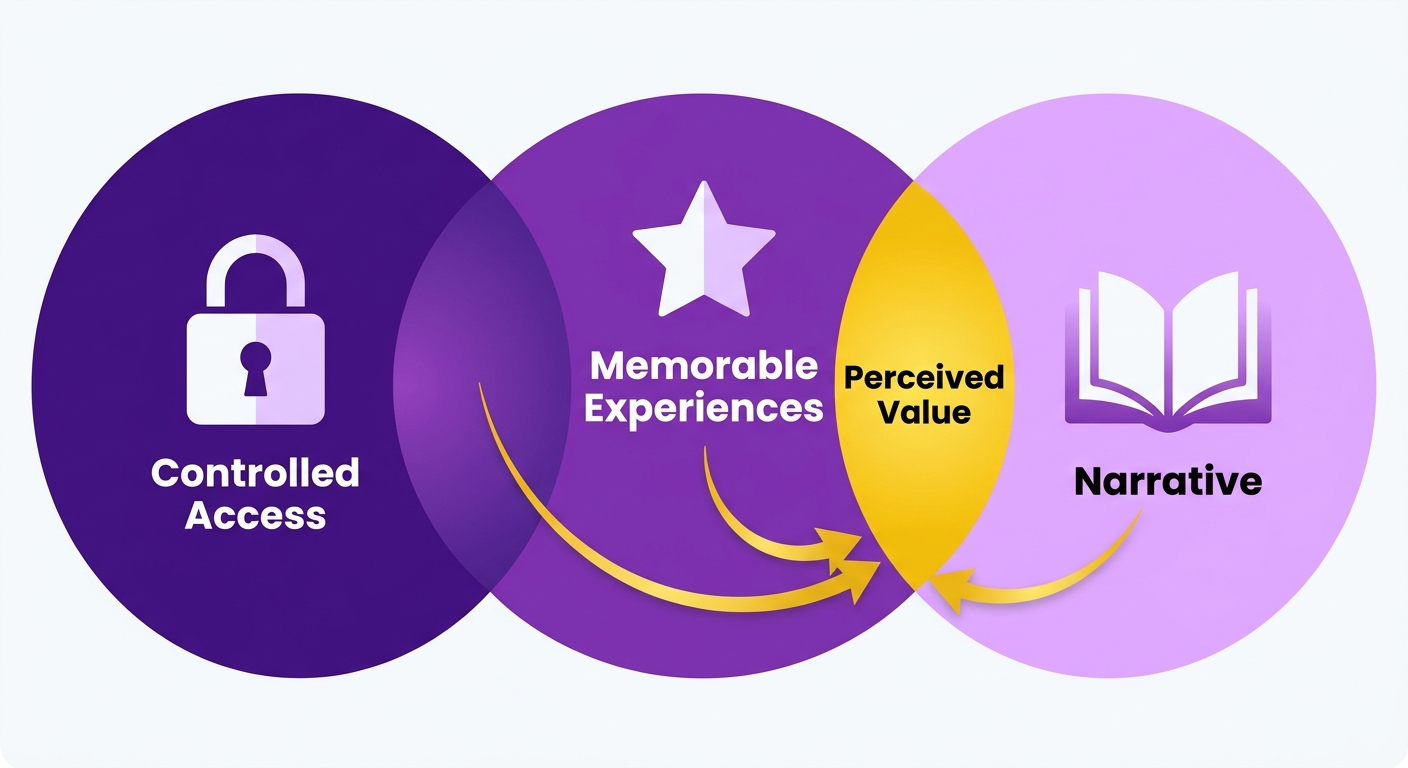
Designer brands often command premium prices not because their costs are necessarily higher, but because they’ve mastered how scarcity, experience, and narrative combine to create perceived value. Once your partnership is live, the work shifts to delivering the intangible signals luxury buyers may expect. Price isn’t just what you charge. It’s the story you tell about why something is worth having.
Luxury positioning often relies on three layers: controlled access, memorable experiences, and a narrative that ties the product to something bigger than utility. When all three work together, price resistance may drop. Buyers can stop comparing your offer to alternatives and start asking whether they can access it before it’s gone.
How Can Scarcity Support Luxury Pricing?
Scarcity can signal status, and status is often what luxury buyers pay for. When you cap availability on a co-branded product or experience, you’re not just managing inventory. You may be creating a membership tier. If everyone can have it, it may not feel like luxury. If most people can’t, it can become something worth pursuing.
Time-limited releases often work better than open-ended availability. A short-window drop with a designer partner can read as more exclusive than a permanent collection, even if you produce the same total units. The urgency may force faster buying decisions and remove the mental friction of “I’ll come back later.” Luxury buyers often expect to compete for access. Build that expectation into your launch calendar, and you may see higher conversion at higher price points.
What Role Can Experiential Marketing Play in Luxury Positioning?
Experiences can build memory, and memory may justify price. A product someone buys online is transactional. A product they first encountered at a private event, curated for a specific audience, can become part of a story they want to belong to.
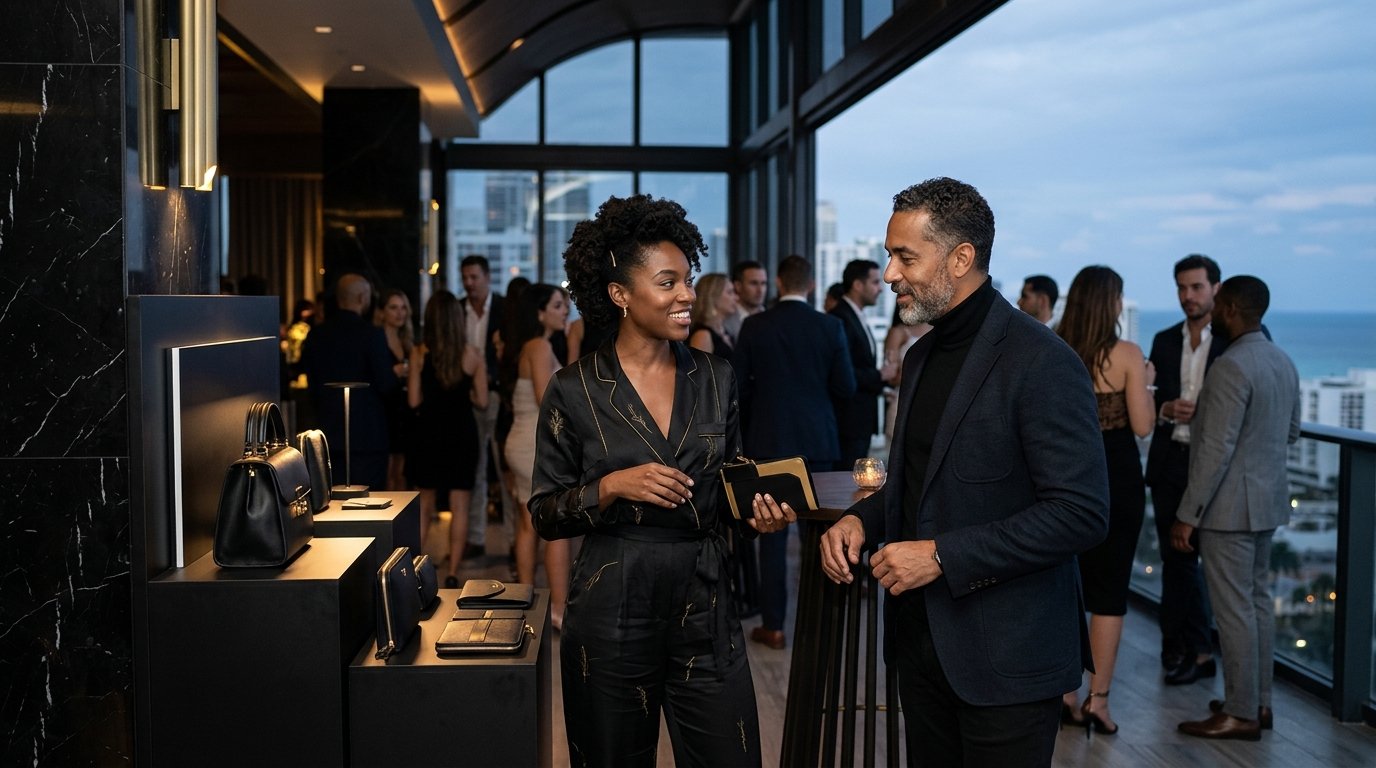
When you host an event around a designer collaboration, venue and guest list can matter more than scale. A smaller gathering with the right attendees may build more brand equity than a larger open-door launch. Luxury buyers often want to feel discovered, not marketed to. Invite them to something they had to qualify for, and the product can become secondary to the access. That access may be what they’ll remember when they see your pricing.
Measuring ROI and Strengthening Future Partnerships
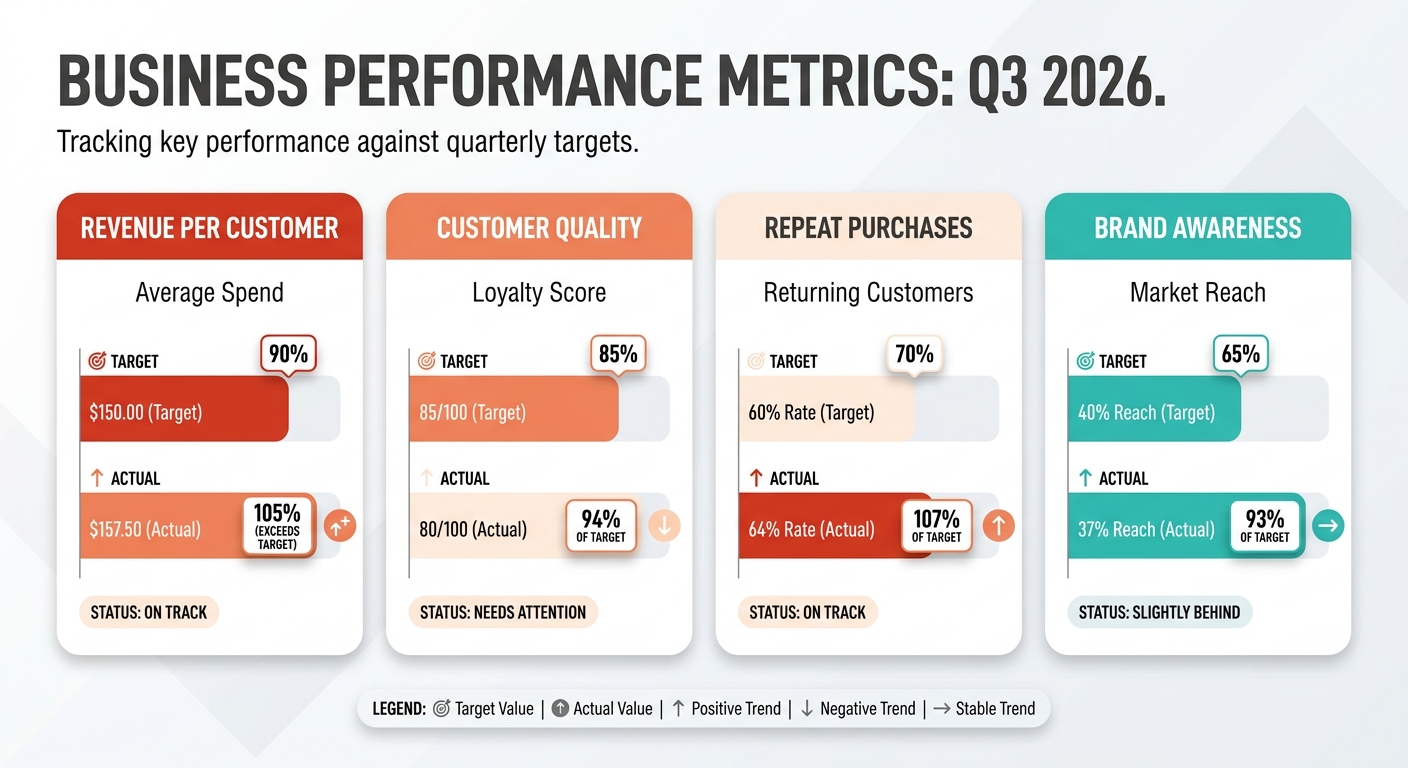
A partnership with designer brands earns its place if it moves the numbers that matter. Decide upfront which outcomes signal success, rather than waiting until the campaign ends to look back. Prestige may feel good, but revenue, customer quality, and repeat purchases tell you whether the collaboration was worth the effort.
Watch four things when a designer brand collaboration goes live. Revenue per customer, because luxury buyers may spend more per order than your baseline audience. Customer acquisition cost, to see whether the partnership brought in high-value buyers more efficiently. Retention, since a good partnership can pull in customers who come back. And margin, because volume means less if discounting eroded your premium positioning.
How Might You Measure ROI on a Luxury Partnership?
ROI here can be the lift in profit attributable to the collaboration, divided by what you spent to run it. That may include production, marketing, and the licensing or revenue-share terms you agreed to. Compare the partnership cohort against your normal customer base over the same window.
Track the cohort, not just the launch spike. A capsule collection might sell out fast, but the real value can show up in the months after. Are those buyers subscribing, returning, referring? Consider following the customers who came through the partnership across at least two quarters before calling the collaboration a win or loss.
Adjusting Pricing With Market Research
Use what you learned to sharpen your pricing. If the partnership sold out quickly, you may have priced too low and left margin on the table. If it stalled, either the price may have outrun the perceived value or the audience match was off.
Run competitor analysis before you reprice. Look at what comparable luxury releases command, then position slightly above or below based on your scarcity and story. Small price increases on the next drop rarely hurt demand when the first one signaled genuine exclusivity.
One caveat: skip aggressive price hikes if your retention data is weak. A high launch price with no repeat buyers may mean you rented attention, not built loyalty. Consider fixing the relationship before you raise the number.
How Industry Idols Can Support Brand Partnership Visibility
Brand partnerships can benefit from visibility strategies that treat every collaboration as a public-facing campaign. When a partnership goes live, co-branded press releases, editorial features, and content showing the two brands working together can help both audiences learn about it. Visibility may drive value — if your customers don’t see the partnership, it might as well not exist.
Approaches can include editorial coverage, strategic PR, and tailored visibility built around specific goals. Editorial coverage may mean professional features and interviews that tell the collaboration’s story to audiences in hospitality, entertainment, and lifestyle. Strategic PR can include pitching the partnership through press releases to outlets that reach both brands’ customers. Tailored visibility strategies can customize outreach to connect the collaboration with the right audience.
How Might You Build a Content Calendar Around the Partnership?
Start by mapping the partnership milestones, then assign content to each one. The announcement is often the first beat — this is where you introduce the collaboration and explain what makes it distinctive. The product drop is typically the second, where you release visuals, pricing, and availability. The post-launch phase can be where you share customer reactions, testimonials, and user-generated content that shows demand.
Spread the storytelling across those milestones rather than releasing everything at once. A single launch-day push can get buried in feeds. A rollout with teaser coverage, launch features, and follow-up stories may keep the partnership visible longer. Each stage should answer a different question: who’s involved, what’s being released, why it matters, and where to get it. That cadence can build momentum without burning out your audience.
Coordinate your content calendar with the designer brands early. If both partners post at the same time, you may be competing for attention. Stagger the posts so each brand’s audience sees the collaboration at a different moment. That can extend the campaign’s lifespan and give you two chances to trend instead of one.
References
Frequently Asked Questions
1. What’s a common mistake brands make when first approaching designer partners?
Many brands pitch what they’ll gain instead of what the designer partner gets. Established luxury names don’t need your credibility—they typically need tangible value like access to new market segments, distinct audience reach, or clear revenue through licensing fees or profit shares.
2. How can you tell if a designer partnership actually drove sales or just created buzz?
Track the customer cohort from the partnership over time. Measure revenue per customer, retention rate, and whether those buyers return and refer. A sold-out launch may mean less if those customers never come back—you may have rented attention, not built loyalty.
3. When might you avoid using scarcity in a designer collaboration?
Consider skipping artificial scarcity if your business relies on high-frequency repeat purchases like subscriptions or café loyalty programs. Forcing a limited unit cap on volume-based products can frustrate the customers you want returning regularly, which may undermine the repeat revenue model.
4. What can signal that you’re not ready to approach designer brands yet?
If you can’t articulate your brand’s positioning clearly, or if product quality, packaging, and service aren’t already at luxury standard, it may be worth waiting. Designer partnerships can amplify whatever you already are—the spotlight may expose gaps in fundamentals, potentially doing more damage than good.
5. How can warm introductions change partnership success compared to cold outreach?
Warm introductions through mutual connections, industry events, or shared distribution channels often vastly outperform cold emails because designer brands get pitched constantly. A single referral from a PR agency, retailer, or influencer with existing luxury relationships can beat sending many unsolicited messages.
6. What might be the right pricing move if your limited designer collaboration sells out quickly?
You may have priced too low and left margin on the table. Run competitor analysis on comparable luxury releases, then consider positioning slightly higher for the next drop. Small price increases rarely hurt demand when the first release signaled genuine exclusivity, but verify retention data is strong first.
7. Why can time-limited releases outperform permanent collections even with identical unit counts?
A short-window drop may create urgency that prompts faster buying decisions and removes the “I’ll come back later” friction. Luxury buyers often expect to compete for access—time windows can prove demand outran supply, priming the audience to move faster on your next release.
Industry Idols helps luxury brands and high-end businesses build visibility through editorial coverage, strategic PR, and tailored campaigns. Learn more at industryidols.com.