

Key Takeaways
- Miami filed nearly 4,900 new business applications per 100,000 residents last year, ranking first nationwide for small business growth.
- Miami-Dade County hosts roughly 83,000 small businesses with fewer than 50 employees, forming the backbone of its entrepreneurial economy.
- The region’s $219 billion GDP places it among the top five worldwide for millionaire growth and wealth expansion.
- More than 1,200 multinational corporations have based their Latin American headquarters in Miami, anchoring its role in cross-border commerce.
- Miami channels over $50 billion in annual trade with Latin America and the Caribbean, serving as a strategic gateway market.
- Florida eliminated its commercial rent tax in October 2025, lowering leasing costs for businesses across the state.
- Shared-ownership programs now let Miami businesses buy property collaboratively, blending real estate strategy with day-to-day operational planning.
Quick Summary
Miami’s small business sector is moving fast. The numbers reflect an ecosystem built around capital access, workforce training, and infrastructure investments that support entrepreneur competitiveness.
The city functions as a major hub for cross-border commerce and wealth creation. Local support networks and international trade corridors converge here in ways that distinguish the market.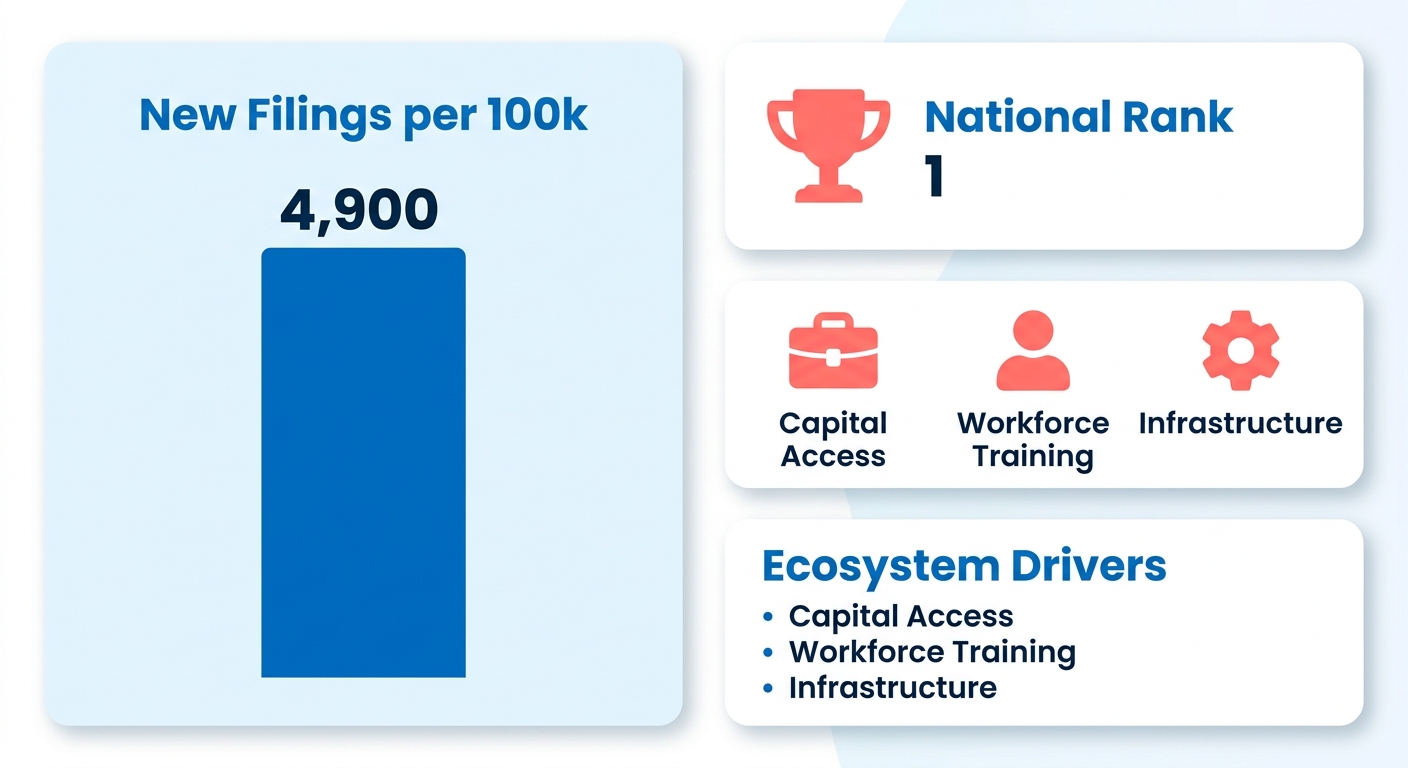
What pulls entrepreneurs to Miami
Miami offers a diverse, multilingual workforce, favorable tax policy, and strategic geographic positioning. Recent state-level tax reforms and collaborative purchasing models have influenced how local founders approach commercial leasing, creating options to integrate real estate strategy directly into operational planning.
The Strive305 program, launched in 2021, supports over 75,000 small businesses and entrepreneurs—many of them women and minority-owned. Mayor Daniella Levine Cava explains the county’s focus: “It’s not just about starting a business—it’s about building a business that lasts.” That commitment shows in the infrastructure: new resource centers across the county connect entrepreneurs with capital, digital tools for e-commerce, and free workforce training workshops.
Capital access and support networks
Organizations like Ascendus have dispersed $300 million to 36,000 small business owners over 30 years. Miami Bayside Foundation has awarded 164 loans totaling over $9 million, creating more than 450 jobs. The Community Fund of North Miami Dade provides loans from $10,000 to $150,000 for minority and woman-owned businesses.
Priscilla Reyes, founder of Earthy Chic, a fashion and accessory boutique, used an EOCF loan to expand her online presence and marketing. Her business now employs four full-time staff. “Sometimes business ownership is month-to-month, but having access to cash alleviates a lot of that burden and makes it possible to invest in things that help your business grow in the long run,” she notes.
Industry growth drivers
Hospitality, entertainment, and lifestyle sectors are well-represented in Miami’s small business market. The Miami AI Hub has convened over 4,000 participants and supported hundreds of AI startups since launch. DoorLoop raised $100 million in Series B funding in October 2024, adding 100 jobs at its Miami Beach headquarters. The region’s 1.3 million-person labor force with a 63.8% participation rate provides talent for these industries.
Programs like ACCESS Miami focus on financial literacy, access to existing benefits, and wealth-building. Over 2 million Floridians benefit from the Earned Income Tax Credit, which helps lift families out of poverty while stabilizing the customer base for local businesses. The county’s approach addresses systemic barriers, enabling entrepreneurs to contribute to economic growth while building sustainable operations.
Why Miami small businesses matter
Miami’s small business momentum extends beyond new business filings to ownership as wealth strategy. When Wells Fargo committed $20 million to the Miami Open for Business initiative, 370+ businesses and nonprofits received funding that targeted asset-building over short-term relief. The Collective Real Estate Ownership program closed 15 deals housing almost 40 businesses, giving entrepreneurs control of their physical space rather than locking them into rent cycles.
That ownership focus matters because the pandemic exposed how quickly businesses without hard assets fold under economic pressure. Miami’s newer capital programs structure deals around equity accumulation—whether that’s property through CREO loans up to $500,000 or equipment through microgrants that let food and production businesses upgrade capacity without taking on debt.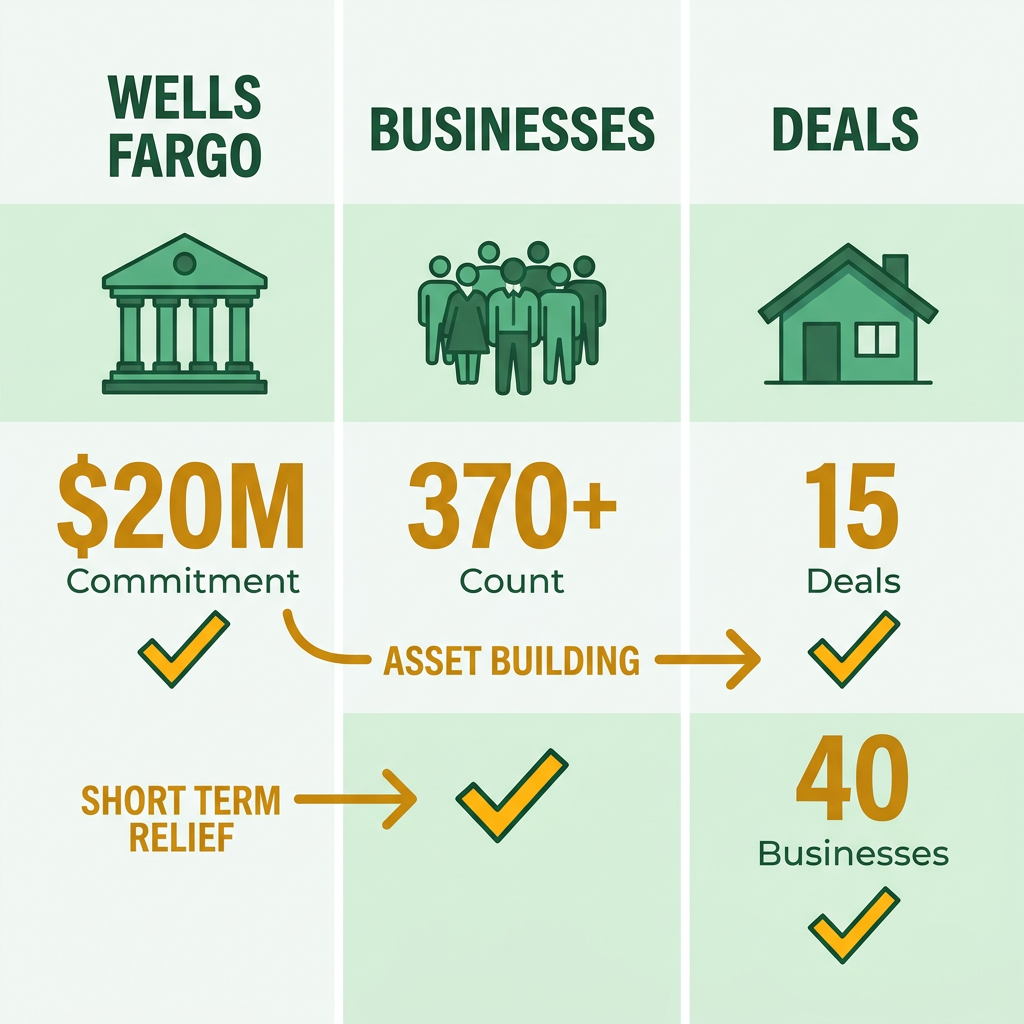
The capital gap is actually an advisory gap
When you compare Miami’s programs side-by-side, a pattern appears: outreach initiatives reach tens of thousands of small businesses, while documented financing programs collectively fund smaller numbers annually. The awareness layer is wide; the deployment layer is narrow. Some programs can promote resources to tens of thousands of owners while community lenders in the same ecosystem close fewer loans in a comparable window, because underwriting and advising take time per business.
Miami Open for Business found that borrowers who received technical assistance alongside their loans had better outcomes, which explains why they allocated $2 million for TA bundled with the $15 million in loan products. You can’t separate the funding gap from the knowledge gap.
A working-capital loan can fund online marketing or a few full-time hires that steady the ledger. That monthly cash-flow relief lets businesses invest in long-term competitive advantages—whether that’s a specialized service provider upgrading digital tools or a logistics company building a client management system.
When centralized infrastructure meets community trust
Miami Open for Business concluded that support works better when decentralized through trusted community partners who understand specific immigrant and minority populations.
Both models hold when you position them correctly. Centralize the front door—make it easy to find what’s available and complete initial intake. Then decentralize delivery through mission-based lenders who already carry standing relationships with the neighborhoods they serve, so an entrepreneur in Little Haiti or Hialeah talks to someone who speaks their language and knows their block. Community-based lenders use this approach to move capital and create jobs by meeting businesses where they are.
The county’s EasyPerks program demonstrates this hybrid thinking. It lets businesses advertise on Metrorail at no cost—a centralized infrastructure asset made accessible without requiring businesses to manage complex procurement. Similarly, the FIT2Lead program connects businesses with paid interns, handling workforce development logistics centrally while delivering talent directly to individual companies.
The functional question is whether a resource requires navigational simplification (one intake point) or last-mile trust (delivery through a known community contact). Miami’s ecosystem increasingly uses both, and that dual-track approach is why the Florida SBDC at FIU could support over 1,400 small businesses in a single year while specialized lenders maintain deep relationships with a smaller portfolio.
Miami small business growth landscape
Three distinct growth engines are operating in Miami right now, and they’re not all moving at the same speed. The application surge is real, but filing paperwork and sustaining a business are different problems. Advisory programs reach far more owners than financing programs do, and the documented capital initiatives fund only a portion of the region’s active small businesses.
That funding gap shows up in specific ways. The most-established lenders built their credibility on decades of steady deployment, and that longevity matters when you’re deciding who to trust with your application. But the newer programs operate on different scales, focusing on targeted deployment rather than broad, short-term relief.
Miami’s position as a Latin American trade gateway creates specific opportunities for certain business sectors. Luxury retail operations handling high-value goods—whether designer apparel, fine jewelry like a Cartier watch, or specialty imports—benefit from the concentration of international buyers flowing through the Design District and surrounding commercial corridors. Hialeah’s manufacturing and import-export businesses tap into established cross-border supply chains that connect directly to Caribbean and South American markets. These sectors demonstrate how Miami’s geographic positioning translates into operational advantages for businesses aligned with the city’s role as a hemispheric commercial hub.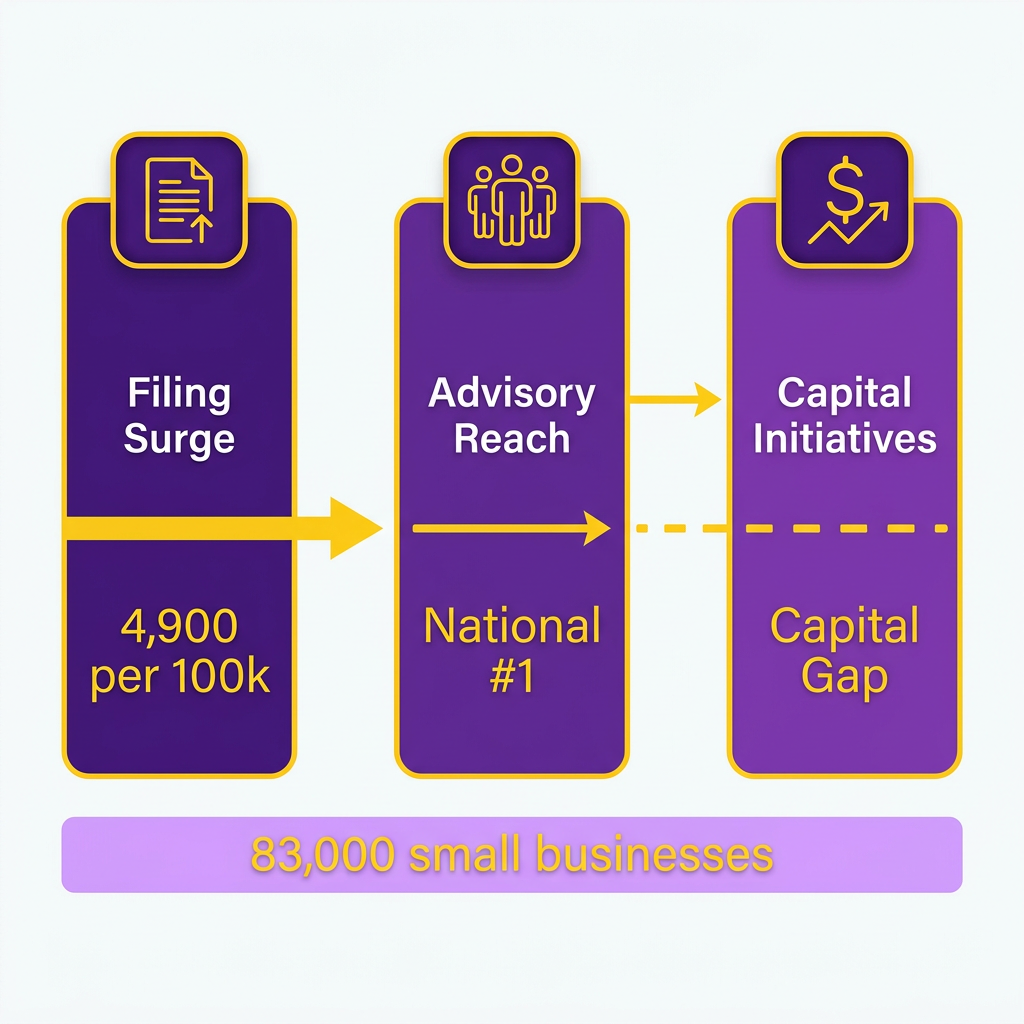
How the capital programs actually differ
The programs differ less by dollar size than by what they leave behind. A grant covers a one-time purchase and disappears. A working-capital loan bridges a seasonal gap and gets repaid. Real estate financing does something else entirely: it converts a recurring rent payment into equity the owner keeps. That last mechanism is where the real differentiation lives, because it changes the balance sheet permanently rather than smoothing a single quarter. Some businesses have acquired property through these programs—moving from tenant to owner and pulling their largest fixed cost out of the monthly outflow. For businesses operating on thin margins, the difference between paying rent forever and building an asset reshapes every downstream decision, from hiring to expansion timing.
The county’s own incentives operate differently. Loan forgiveness is available for businesses creating permanent local jobs, which shifts the calculation for anyone deciding between contract labor and full-time hires. Other initiatives connect businesses with subsidized talent or provide free promotional space on transit networks. These aren’t financing mechanisms, but they reduce cash outflow in specific operational areas—marketing and workforce costs that would otherwise come out of working capital.
Where technical assistance finally connects to capital
One finding cuts through the usual assumptions about who needs help. Earlier research found that a significant majority of borrowers had never accessed technical assistance before. The funding gap and the advisory gap turn out to be overlapping populations. The application process itself is where many entrepreneurs first encounter structured business planning. Early-stage retail founders often use micro-loans to expand their online presence and marketing, discovering that access to cash alleviates the burden of month-to-month operations and allows them to focus on growth.
The pattern holds across the ecosystem: businesses access advisory services when they’re already in the capital-raising process, not as a separate preparation step. Intus Health built a healthcare business with SBDC assistance, and the support model appears to work best when it’s embedded in the financing pipeline rather than positioned as a prerequisite.
Why the centralized vs. decentralized debate misses the point
Two competing models are playing out simultaneously, and both have merit. The county is consolidating support services to reduce navigation friction—one front door for many programs, as local resource expositions demonstrate. The opposing view argues that support is more accessible when decentralized through trusted community partners who enable nimbler delivery in immigrant and minority communities. The ideal model is hybrid. Centralize discovery and intake so entrepreneurs don’t spend weeks figuring out which door to knock on. Decentralize delivery through partners who already have trust and cultural competence in specific neighborhoods. The county’s case is about reducing the search cost; the foundation’s case is about last-mile execution speed.
That hybrid approach matters more as the region scales. Broward County also ranks in the national top three, which means South Florida as a whole is generating business formation at rates that strain existing support infrastructure. The advisory capacity is there. The financing capacity still lags behind the application volume, which creates a natural filter: businesses that make it through the current system are already demonstrating persistence and planning capability just by managing the process.
Choosing the right business structure in Florida
Founders often rush the structure decision. A sole proprietorship might feel like the path of least resistance—no filing fees, no separation between you and the business—but that structure leaves your personal assets exposed if a client lawsuit or vendor dispute materializes. The moment you sign your first commercial lease or bring on a partner, that liability risk jumps from theoretical to real.
An LLC (Limited Liability Company) addresses the exposure problem without the tax complexity of a corporation. You get a legal wall between personal and business debts, and profits flow through to your personal return without double taxation. For most Miami small businesses—retail shops, hospitality ventures, service providers—an LLC offers a functional balance. Specialized machinery, commercial inventory, and high-value equipment should sit inside an entity that protects them from business claims.
When a corporation makes sense
A corporation becomes relevant when you plan to raise outside capital or eventually sell the business. Investors tend to prefer C-corps because they can buy stock, and venture funds typically avoid LLCs due to tax complications on their side. The tradeoff: you pay corporate tax on profits, then personal tax when you distribute dividends. This structure makes sense primarily when you’re building something with an exit strategy or need to issue equity to employees.
S-corps split the difference—they provide corporate liability protection but let profits pass through to your personal return like an LLC. The consideration: you must pay yourself a salary and run payroll, which adds administrative cost. This route can make sense when your business generates consistent profit and you want to manage self-employment tax exposure. Below certain thresholds, the payroll overhead may outweigh the tax benefits.
The Miami-Dade County government website walks through registration steps for each structure, but the real decision comes down to three factors: how much personal risk you’re willing to carry, whether you need outside funding, and what your tax situation looks like. Consulting with a CPA early can prevent the cost to restructure later—transferring licenses, rewriting contracts, unwinding tax filings.
Startup funding and financial preparedness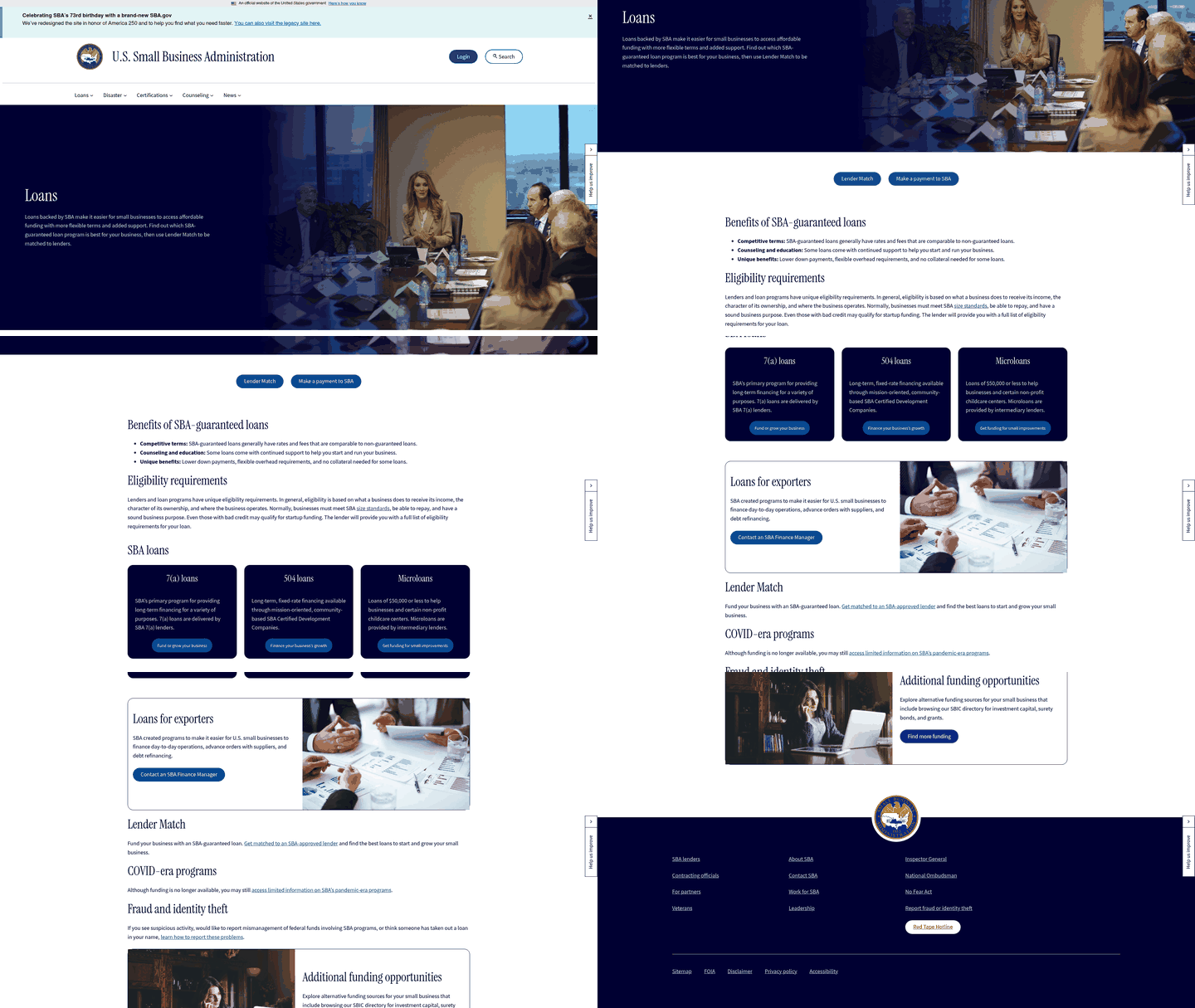
Founders sometimes treat fundraising like a final hurdle—get the money, then figure out the rest. That sequence can create problems. Financial preparedness isn’t what happens after you secure a loan; it’s what makes you fundable in the first place. Many first-time applicants walk into lending programs without having worked with an advisor, and that gap shapes what follows.
Where Miami businesses actually access capital
Miami’s capital market splits into tiers. County-backed loan programs like RISE target businesses traditional banks may pass on, with below-market pricing and grace periods so borrowers aren’t repaying before revenue stabilizes. The RISE fund demonstrated that immigrant-owned businesses respond to targeted outreach—often because they approach systems that historically excluded them with caution.
Asset-building loans operate at a different scale, extending into six figures for equipment, expansion, and property acquisition. Some property-focused programs pool multiple operators into shared real estate deals. That approach groups smaller operators into shared holdings, reducing individual risk while building collective equity.
Grant programs and loan forgiveness offer non-debt support. Some local debt-relief incentives reward businesses that meet hiring milestones. When you’re bootstrapping a specialty service, local visibility in high-traffic corridors can provide credibility that complements other marketing efforts.
What fundable actually looks like
Lenders want proof you understand cash flow, not just revenue projections. That typically means showing multiple months of bank statements that demonstrate you can cover fixed costs during slow periods. If deposits show erratic patterns with no seasonal explanation, underwriters may question inventory control or customer acquisition.
Your financial documentation should tell a coherent story. Accion USA, a nonprofit micro-lender supporting job creation nationwide, requires three months of business bank statements, personal credit scores, and tax returns. They’re verifying you track money in the first place. Businesses that can’t produce clean records face challenges regardless of revenue.
The technical assistance gap matters here. Apply for technical assistance first, then chase capital. Local economic initiatives offer free financial seminars and tax preparation services that build the literacy lenders look for.
When to skip traditional funding routes
Not every business needs outside capital, and taking on debt you don’t require can strain runway. Service businesses with low overhead might bootstrap until revenue proves the model. If you’re running a consulting practice or freelance operation, a large loan creates an obligation that eats into profit margins before you’ve validated pricing or customer acquisition costs.
Retail and hospitality ventures face the opposite situation—you often need inventory, equipment, and physical space before opening day. Targeted programs can help here. Local internship initiatives connect businesses with subsidized talent, lowering labor costs while you stabilize operations. The Mom & Pop Small Business Grant provides both financial and technical support for growth-stage businesses that have already proven unit economics.
Consolidated resource events bring these opportunities into a single space, eliminating the navigation friction that keeps founders from accessing what already exists. Support can be more accessible when decentralized through trusted community partners, but discovery still requires a centralized front door. A hybrid model uses one intake point feeding into localized delivery networks that understand immigrant communities, minority-owned businesses, and the specific friction points traditional systems create.
Selecting a Miami-Dade business location
Location mistakes can undermine Miami small businesses. Local enterprises aren’t evenly distributed—they cluster in corridors where foot traffic, demographic fit, and commercial infrastructure align. A retail venture needs foot traffic in areas aligned with your target customer, not just raw population density. A service business might prioritize proximity to commercial districts over consumer visibility. The wrong ZIP code doesn’t just cost you customers; it locks you into a lease that drains cash while you wait for traffic that may not materialize.
What zoning actually controls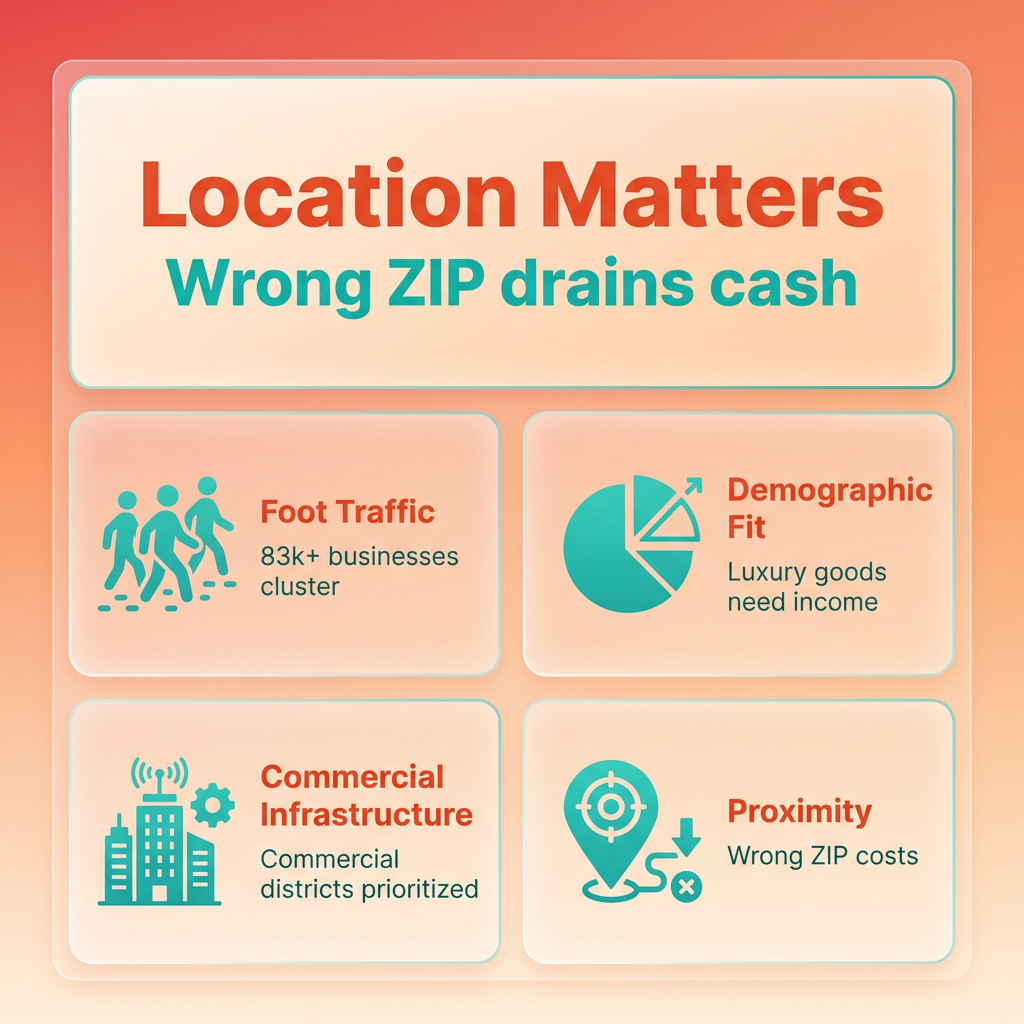
Zoning determines whether your business can legally operate at a given address. Miami-Dade uses residential, commercial, industrial, and mixed-use designations, and each category has subcategories that regulate everything from signage to parking ratios. A commercial-zoned property doesn’t guarantee permit approval—if you’re opening a restaurant in a zone that restricts food service, the county may reject your application even if the landlord signed the lease.
Check zoning before you tour properties. The county’s planning department maintains online zoning maps, and most commercial real estate listings include zoning codes in the property details. If the code doesn’t match your intended use, you’ll need a variance or conditional use permit, both of which add time to your timeline and legal fees to your budget. Treat zoning as a go/no-go filter, not a problem to solve later.
Demographics and competition
Pull census tract data for any location you’re considering. Median household income, age distribution, and language preferences all influence whether your product fits the neighborhood. Competition density matters too—if several similar businesses already serve a small radius, you’re competing for market share unless you’re offering something materially different.
Visit the location during peak hours and observe actual foot traffic. A busy intersection on paper can feel dead if parking is problematic or the adjacent businesses don’t draw your target customer. Look for complementary businesses—retail tends to cluster near other brands serving similar demographics.
Registering a business in Florida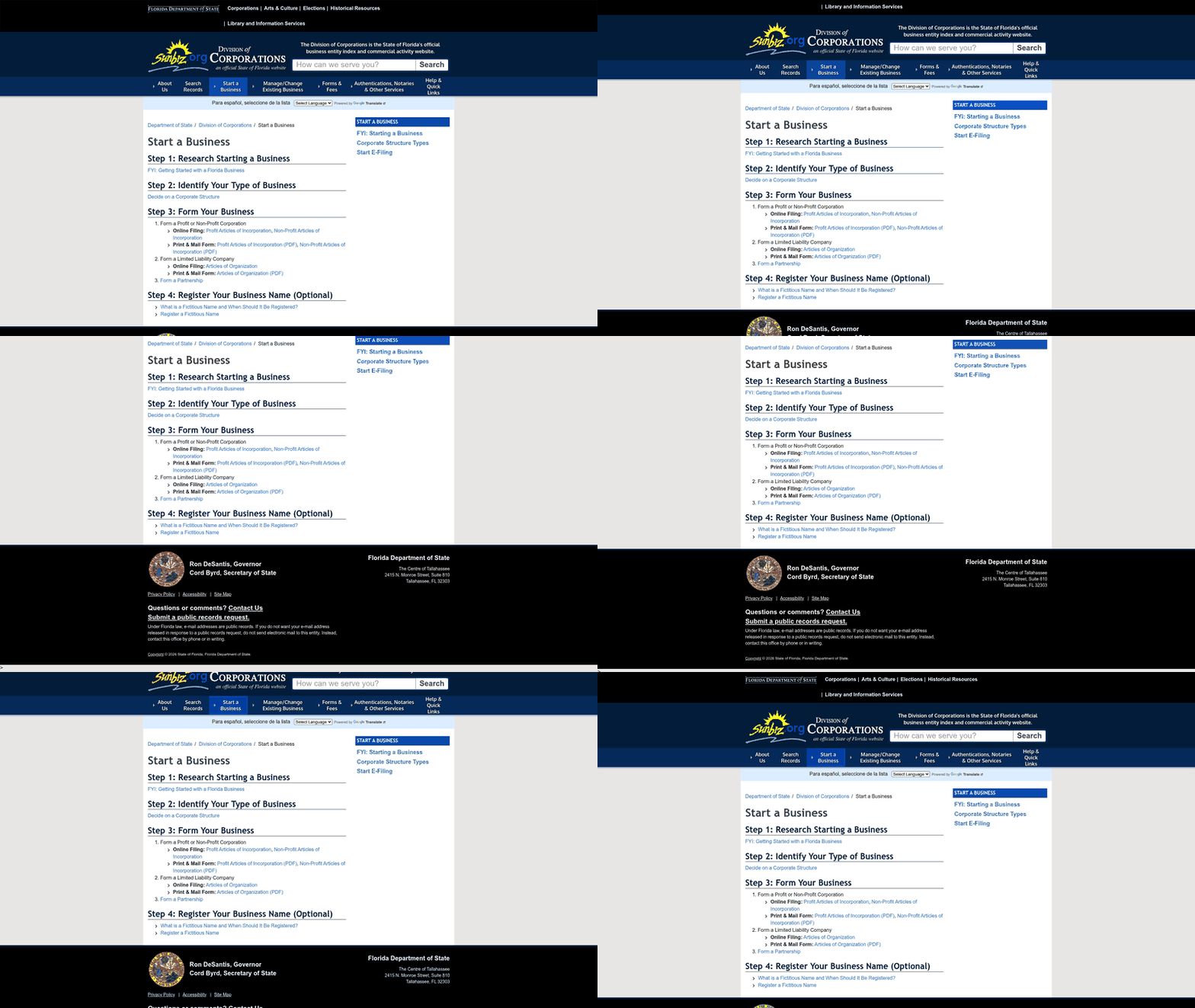
Founders sometimes register their Florida business after they’ve already signed a lease, hired staff, or opened a bank account—then find their structure choice created complications they can’t easily fix. The state filing is straightforward, but the decisions you make before you file determine whether your business structure actually protects you. A retail shop needs an entity structure to shield personal assets from customer lawsuits or vendor disputes. A sole proprietorship might save filing fees initially, but it leaves your home and savings vulnerable the moment someone decides to sue.
What Florida actually requires
You’ll register through the Florida Department of State’s Division of Corporations website. The process is quick if you’ve already chosen your business name and registered agent. Filing fees vary by entity type. Your registered agent must have a physical Florida address—no P.O. Boxes—and be available during business hours to accept legal documents. If you’re launching a consulting practice or professional service, listing your home address means clients and process servers know where you live. A commercial registered agent service solves this while keeping your personal address off public databases.
You’ll also need a Federal Employer Identification Number (EIN) from the IRS, even if you don’t plan to hire employees immediately. Banks require it to open a business account, and it keeps your Social Security number off vendor contracts and tax forms. The IRS issues EINs for free through their online application.
Local permits and zoning clearance
State registration doesn’t give you permission to operate. Miami-Dade County requires a separate business tax receipt (formerly called an occupational license) before you open. Fees vary by business type and location size. If your location requires zoning approval or a special-use permit, that adds time to your timeline. This catches founders who’ve already committed to lease terms, leaving them paying rent on a space they can’t legally occupy yet. Confirm zoning compliance before you sign anything.
Miami-Dade business taxes, licenses, and permits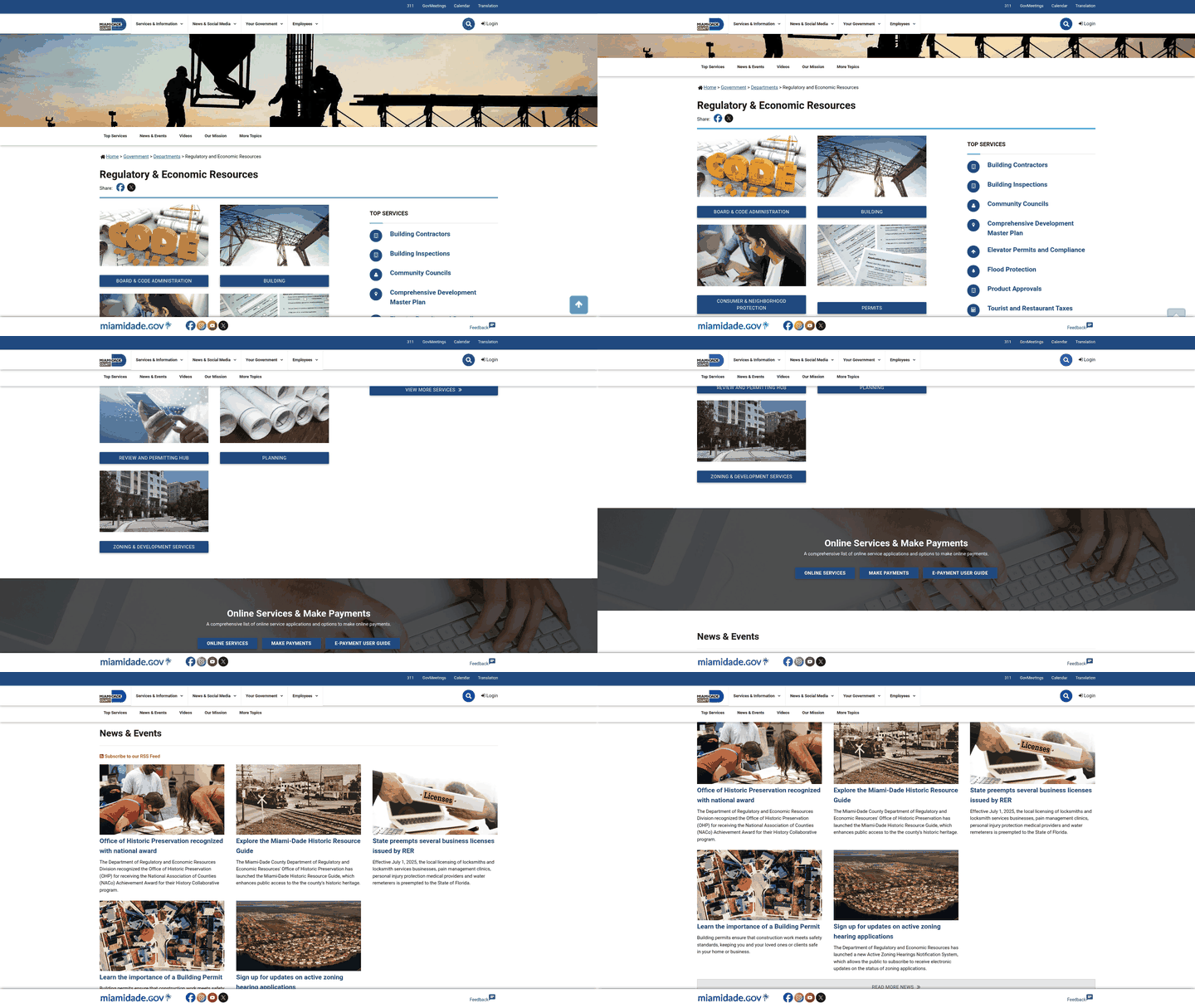
Compliance is a critical foundation that many founders underestimate. Small businesses in Miami-Dade face multiple obligations: a county Local Business Tax Receipt, state sales tax registration (if applicable), federal employer filings, and industry-specific permits. Miss one, and penalties can compound.
Retailers—particularly those moving high-ticket inventory—carry sales tax collection duties, inventory reporting, and often stricter insurance and security permitting than service businesses. The higher your average transaction, the more attention regulators may pay, so build compliance into your launch plan rather than addressing it reactively.
What taxes and licenses do Miami-Dade businesses actually owe?
Most Miami-Dade businesses face several categories of obligation. Sort these before you open, not after your first audit notice.
- Local Business Tax Receipt: The county license that legally lets you operate. Required countywide, plus a separate municipal receipt if you’re inside a city like Miami or Coral Gables.
- Florida sales and use tax: If you sell taxable goods, you register with the state, collect tax at the point of sale, and remit on schedule.
- Federal obligations: An EIN, and payroll withholding if you have employees.
- Industry permits: Food service, alcohol, health, and building permits sit on top of the base license depending on your business type.
County economic opportunity resources provide guidance on specific requirements based on your business category. Some founders in permit-heavy categories like food or alcohol engage compliance advisors early to navigate inspection requirements and renewal schedules.
Miami’s cross-border position creates additional considerations for import-oriented businesses. Companies handling international merchandise—from luxury retail goods to specialized manufacturing inputs—may face customs documentation, import duty calculations, and international payment processing requirements that domestic-only businesses can skip. Businesses operating in sectors like jewelry retail, where a single shipment might include items like a Cartier watch or other high-value goods from European or Latin American suppliers, should account for customs broker fees, bonding requirements, and the time required to clear goods through Miami’s ports. These compliance layers stack on top of standard local and state obligations, making early consultation with trade-focused advisors worthwhile for businesses whose model depends on international supply chains.
How do you stay compliant without drowning in paperwork?
Start with the official Miami-Dade County resources. The county’s economic opportunity office publishes requirements and connects you to advisors who walk you through the sequence.
Successful founders treat compliance as a recurring calendar, not a one-time task. Set reminders for your Business Tax Receipt renewal, your sales tax remittance dates (if applicable), and your federal quarterly deadlines.
Consider professional guidance if you’re in a permit-heavy category. Compliance support can be a worthwhile investment compared to the cost of fines or operational delays from missed inspections or filings.
References
[1] Miami | LISC EOCF – https://www.lisc.org/eocf/impact/miami/
[2] Miami-Dade Empowers Small Businesses for 2026 – https://communitynewspapers.com/featured/one-roof-endless-opportunity-miami-dade-empowers-small-businesses-for-2026/
[3] Economic Opportunity – https://www.miamidade.gov/global/economy/innovation-and-economic-development/economic-opportunity.page
[4] Best Businesses to Start in Miami (2025 Guide) – https://www.davincivirtual.com/blog/best-businesses-to-start-in-miami
[5] RISE Report 2021 – https://www.cdfa.net/cdfa/cdfaweb.nsf/ord/2021SmallBusinessEconomy_MiamiDadeCounty/$file/RISE+Report+2021.pdf
[6] Miami Open For Business – https://miamifoundation.org/miami-open-for-business/
[8] Client Success Stories – SBDC at FIU – https://business.fiu.edu/faculty-and-research/centers-institutes/sbdc/clients.php
[9] Strive 305: Miami Entrepreneurs, Small Business Stories & … – https://www.youtube.com/watch?v=EnWpzrn5UTw
[10] Economic Initiatives + ACCESS Miami – https://www.miami.gov/My-Government/Departments/Human-Services/Economic-Initiatives-ACCESS-Miami
Frequently Asked Questions
1. Should I secure funding or advisory help first?
Pursue technical assistance before chasing capital. Establishing financial systems and operational planning early helps ensure that when you do secure funding, it supports growth rather than covering administrative gaps. Local advisory programs offer free seminars and planning workshops to help build the baseline literacy that lenders look for.
2. When is an S-corp worth it over an LLC?
An S-corp may be worth considering when your net earnings reach a level where potential savings on self-employment taxes could exceed the administrative costs of running payroll. This structure allows you to split your income between a salary and shareholder distributions, but requires strict adherence to corporate formalities and reasonable compensation guidelines. Consult with a tax professional to evaluate whether the structure fits your specific situation.
3. What documents do Miami lenders typically require?
Lenders typically require comprehensive financial records to verify how you manage cash flow. This often includes multiple months of business bank statements, personal and business tax returns, and credit history. Underwriters look for consistent deposit patterns and proof that your business can cover its fixed operating costs during seasonal downturns.
4. How does Florida’s commercial rent tax elimination help my business?
The reduction in state-level commercial leasing taxes can directly lower your monthly overhead. When combined with collaborative purchasing models, this shift may allow small businesses to explore transitions from traditional leasing to property ownership, helping stabilize long-term occupancy costs.
5. What’s the difference between a grant, a working-capital loan, and real estate financing?
The primary difference lies in the long-term impact on your balance sheet. Grants provide non-repayable funds for immediate, specific needs. Working-capital loans provide short-term liquidity to manage operational cycles. Real estate financing allows you to acquire physical assets, converting monthly expenses into long-term equity.
6. Are there programs that reduce costs without taking on debt?
Yes, several local initiatives offer non-debt support. These include programs that provide free promotional space on public transit networks, subsidized internship placements to offset labor costs, and performance-based debt forgiveness tied to local hiring milestones. These resources help preserve working capital for core operations.
7. Does filing a business application guarantee I’ll get funding?
No, filing a business registration is simply the first administrative step. Securing capital requires meeting specific underwriting criteria, and funding availability may be limited compared to the total number of active enterprises. Financial preparedness and documentation remain crucial factors in the funding process.