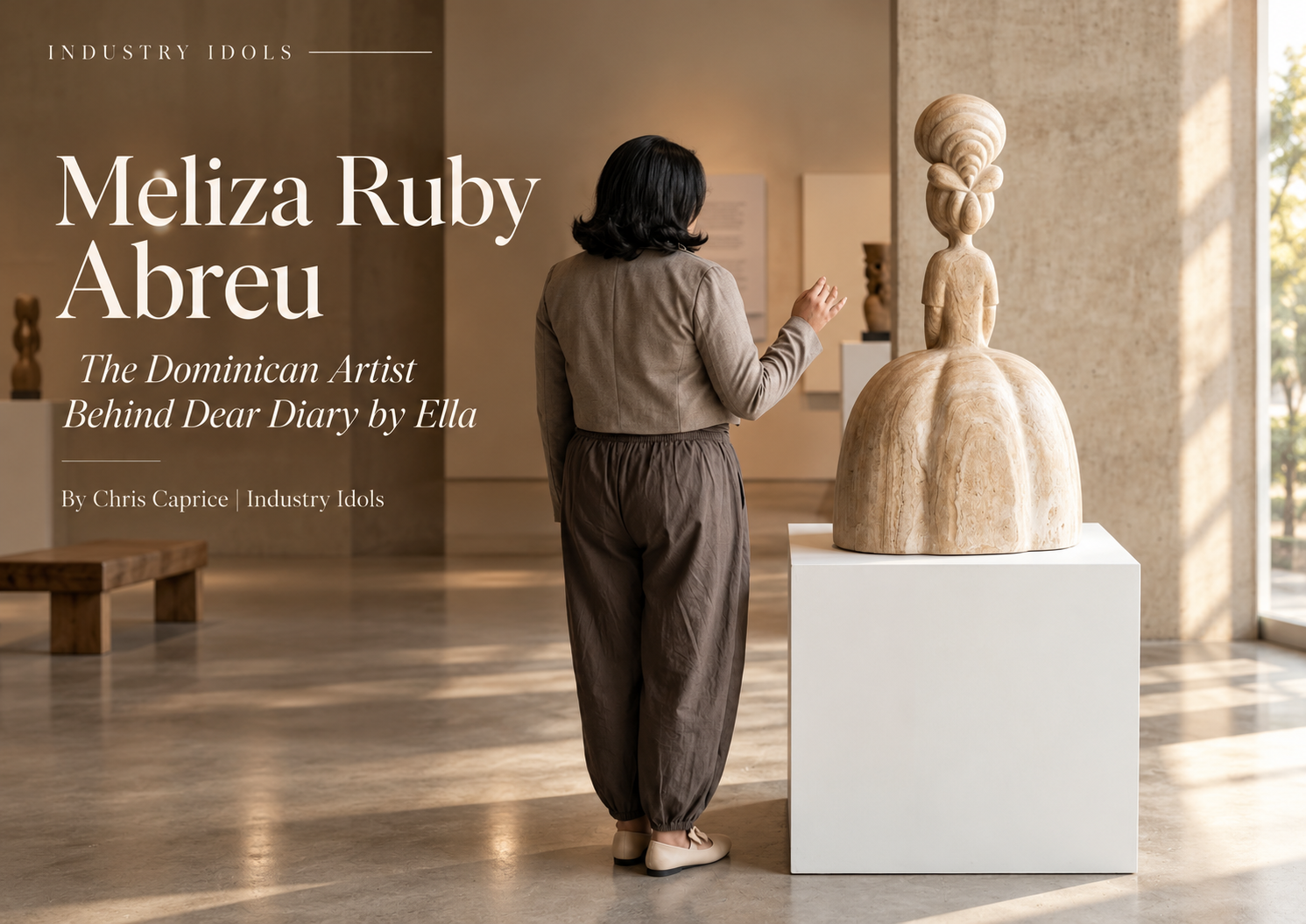

The highs can make you feel unstoppable. The lows can make you question everything. But the real journey of entrepreneurship is learning how to keep moving without losing yourself along the way.
By Chris Caprice | Industry Idols
One day, you feel unstoppable.
The vision is clear. The opportunities are coming. Conversations are turning into possibilities, and everything you’ve sacrificed finally feels like it’s beginning to pay off.
Then comes the next day.
A deal falls apart. A client stops responding. An unexpected expense shows up. Someone you trusted lets you down. And suddenly, the same business that gave you purpose begins testing your peace.
Welcome to the emotional roller coaster of entrepreneurship.
It’s a journey often celebrated through success stories, luxury lifestyles, impressive milestones, and the freedom of being your own boss.
But behind those moments is a reality that rarely makes it onto social media.
The sleepless nights. The financial pressure. The uncertainty. The sacrifices nobody sees. And the quiet moments when even the most ambitious entrepreneur wonders whether everything they’re building is worth the weight they’re carrying.
Because entrepreneurship isn’t just about building a business.
It’s about learning how to lead yourself when everything around you feels uncertain.
The Dream Is Free. The Journey Has a Price.
Almost every entrepreneur begins with a vision.
Maybe it’s financial independence. Maybe it’s creating something meaningful, building a legacy, providing for family, or proving that an idea others doubted can become something extraordinary.
Whatever the motivation, the beginning is often fueled by excitement.
You see possibilities where others see obstacles. You’re willing to work longer hours, sacrifice weekends, invest your savings, and take chances most people would never consider.
But somewhere between the dream and the reality, the excitement meets responsibility.
Suddenly, you’re not just the visionary.
You’re the salesperson, accountant, marketer, problem solver, negotiator, and sometimes the person responsible for making sure everyone else gets paid before you do.
And unlike a traditional job, where the workday eventually ends, entrepreneurship has a way of following you home.
You can close your laptop, silence your phone, and walk away from the office.
But your mind is still working.
Thinking about tomorrow.
Replaying yesterday.
Wondering what you could have done differently.
That’s the invisible cost of building something from nothing.
Nobody Talks About the Lonely Side of Building Something
One of the most unexpected challenges of entrepreneurship is how lonely the journey can become.
People celebrate your ambition when you’re starting out.
They tell you to chase your dreams, believe in yourself, and never give up.
But when the difficult seasons arrive, encouragement doesn’t always translate into understanding.
Friends may not understand why you’re unavailable. Family members may question your decisions. Business partners may lose enthusiasm. People who once supported your vision may begin distancing themselves when results take longer than expected.
And sometimes, the people you expected to build with are no longer standing beside you.
That’s when entrepreneurship becomes deeply personal.
Because you’re not simply dealing with business problems. You’re navigating disappointment, loyalty, expectations, and relationships while trying to protect something you’ve invested your heart into.
One of the hardest lessons is recognizing that not everyone who believes in your vision is meant to accompany you through every stage of it.
Some relationships will evolve.
Some partnerships will end.
And some chapters will require you to move forward without the people who helped you begin.
That doesn’t automatically make anyone the villain.
Sometimes growth simply reveals different levels of commitment, different priorities, and different definitions of success.
The challenge is learning not to allow those experiences to harden you.
You can become wiser without becoming bitter.
When Your Business Starts Controlling Your Emotions
Entrepreneurship creates an unusual relationship between personal identity and professional success.
When business is good, you feel confident.
When business slows down, you begin questioning yourself.
A successful meeting can change your entire mood. One unexpected cancellation can ruin your afternoon.
Before long, your emotional state starts moving with your bank account, inbox, and sales pipeline.
That’s a dangerous place to live.
Because when every business outcome determines how you feel about yourself, you give circumstances more control over your life than they deserve.
A rejected proposal isn’t proof that you’re incapable.
A slow month doesn’t mean your business has failed.
And walking away from an opportunity that no longer makes financial sense doesn’t mean you’ve given up on your dreams.
It means you’re making a decision.
Successful entrepreneurship requires learning to separate your personal worth from your company’s performance.
You are still the same person with the same potential on the days when business is slow.
Your value doesn’t disappear because an invoice hasn’t been paid.
A business can have a bad day without its founder becoming a failure.
The Pressure to Look Successful
We live in a culture that celebrates the appearance of success.
The expensive dinners. The luxury cars. The exclusive events. The business-class flights. The announcements about another deal, another partnership, another exciting opportunity.
Entrepreneurship has become as much about being seen succeeding as it is about actually building something sustainable.
And for many founders, that creates another layer of pressure.
The pressure to look like everything is working.
Even when it isn’t.
But real success doesn’t always look impressive.
Sometimes success is paying off an obligation that has been weighing on you for months.
Sometimes it’s turning down a deal because the numbers don’t make sense.
Sometimes it’s ending a partnership, reducing expenses, rebuilding a strategy, or admitting that something you once believed in no longer fits where you’re going.
These decisions rarely generate applause.
But they can be the very decisions that save your business, your finances, or your peace of mind.
The strongest entrepreneurs aren’t necessarily the ones making the most noise.
They’re often the ones quietly making the difficult decisions that allow them to stay in the game.
Learning When to Push and When to Pause
Entrepreneurs are constantly told to work harder.
Wake up earlier.
Stay up later.
Outwork everyone.
Never stop grinding.
There’s value in discipline, consistency, and the willingness to make sacrifices.
But somewhere along the way, the culture of entrepreneurship began confusing exhaustion with achievement.
Being busy isn’t always the same as being productive.
Working longer doesn’t always mean moving forward.
And refusing to rest isn’t proof of commitment.
Sometimes the most productive decision you can make is to stop long enough to think clearly.
A short walk. A quiet evening. A conversation with someone you trust. A full night of sleep.
These moments may seem insignificant compared with the demands of running a company.
But they create space between emotional reactions and important decisions.
When you’re exhausted, every challenge can feel bigger than it is.
When you’re overwhelmed, every setback can begin to look permanent.
Stepping away doesn’t eliminate the problem.
It allows you to return with a different perspective.
Rest isn’t the opposite of ambition. It’s part of sustaining it.
Not Every Opportunity Is Worth Your Peace
One of the biggest signs of growth in entrepreneurship is learning that you don’t have to say yes to everything.
In the beginning, almost every opportunity feels important.
Every meeting could lead somewhere.
Every partnership sounds promising.
Every client represents potential revenue.
But experience teaches you that opportunities have costs beyond money.
They cost time.
They cost attention.
They cost energy.
And sometimes they cost more emotionally than they’re worth financially.
A project that looks impressive from the outside might be draining resources behind the scenes.
A partnership that once made sense might now be holding you back.
A business model you spent years developing may need to change because the market has changed.
The ability to recognize these moments is not weakness.
It’s maturity.
You don’t have to keep funding a mistake simply because you’ve already invested in it.
You don’t have to remain in a partnership because you’ve known someone for years.
And you don’t have to keep chasing a version of success that no longer reflects what you want from life.
Sometimes moving forward requires having the courage to let something go.
Finding Stability in an Unpredictable Journey
Staying grounded doesn’t mean eliminating uncertainty.
Uncertainty is part of entrepreneurship.
There will always be opportunities you cannot predict, decisions you cannot control, and outcomes that don’t unfold the way you expected.
The goal is not to become someone who never experiences fear, frustration, disappointment, or excitement.
The goal is to stop allowing those emotions to make every decision for you.
That begins with creating stability where you can.
Know your financial obligations.
Understand what your business actually earns.
Build routines that support your physical and mental well-being.
Surround yourself with people who can tell you the truth, not just what you want to hear.
And when problems become overwhelming, stop trying to solve everything inside your head.
Write down what needs to happen next.
Sometimes a difficult situation becomes more manageable the moment you turn it into a clear action.
You don’t have to figure out the next five years tonight.
Sometimes you only need to figure out tomorrow.
Then show up and execute.
Redefining What It Means to Win
At some point, every entrepreneur has to ask a question that goes beyond revenue, recognition, or growth.
What does success actually mean to me?
Is it building the largest company possible?
Is it financial freedom?
Is it creating something your children can inherit?
Is it having the ability to spend more time with the people you love?
Or is it waking up in the morning without feeling like your entire life is one unexpected expense away from falling apart?
There’s no universal answer.
But there is a difference between building a business that supports your life and building a life that exists only to support your business.
Ambition should expand your possibilities, not permanently consume your peace.
And while financial success matters, there’s something equally valuable about reaching a point where your decisions are no longer driven entirely by fear.
Where you can walk away from the wrong deal.
Where you no longer need to prove yourself to everyone.
Where you understand that progress can happen quietly.
That’s a form of freedom worth pursuing.
The Real Victory Is Learning to Keep Your Balance
There will be incredible days.
Days when the right people enter your life, an unexpected opportunity changes everything, and you remember exactly why you started.
There will also be days when nothing seems to move.
When your patience runs thin.
When the numbers don’t add up.
When you question your direction, your decisions, and sometimes even your ability to keep going.
Both experiences are part of the journey.
Neither one tells the entire story.
The entrepreneur who learns to remain grounded through both has an advantage that money alone cannot buy.
Perspective.
The ability to celebrate without becoming careless.
To lose without losing yourself.
To adapt without abandoning your purpose.
And to recognize that building something meaningful rarely happens in a straight line.
Entrepreneurship will test your confidence, relationships, patience, and resilience.
But it can also teach you how to become more disciplined, self-aware, independent, and intentional about the life you’re creating.
The real challenge isn’t learning how to avoid every low point.
It’s learning how to navigate them without forgetting who you are.
Because at the end of the day, success isn’t just about how high you climb.
It’s about staying grounded enough to recognize what matters when you finally get there.
Industry Idols explores the people, ideas, and journeys shaping business, culture, and entrepreneurship. Because behind every success story is a human story worth telling.
STORIES THAT MOVE THE CULTURE.