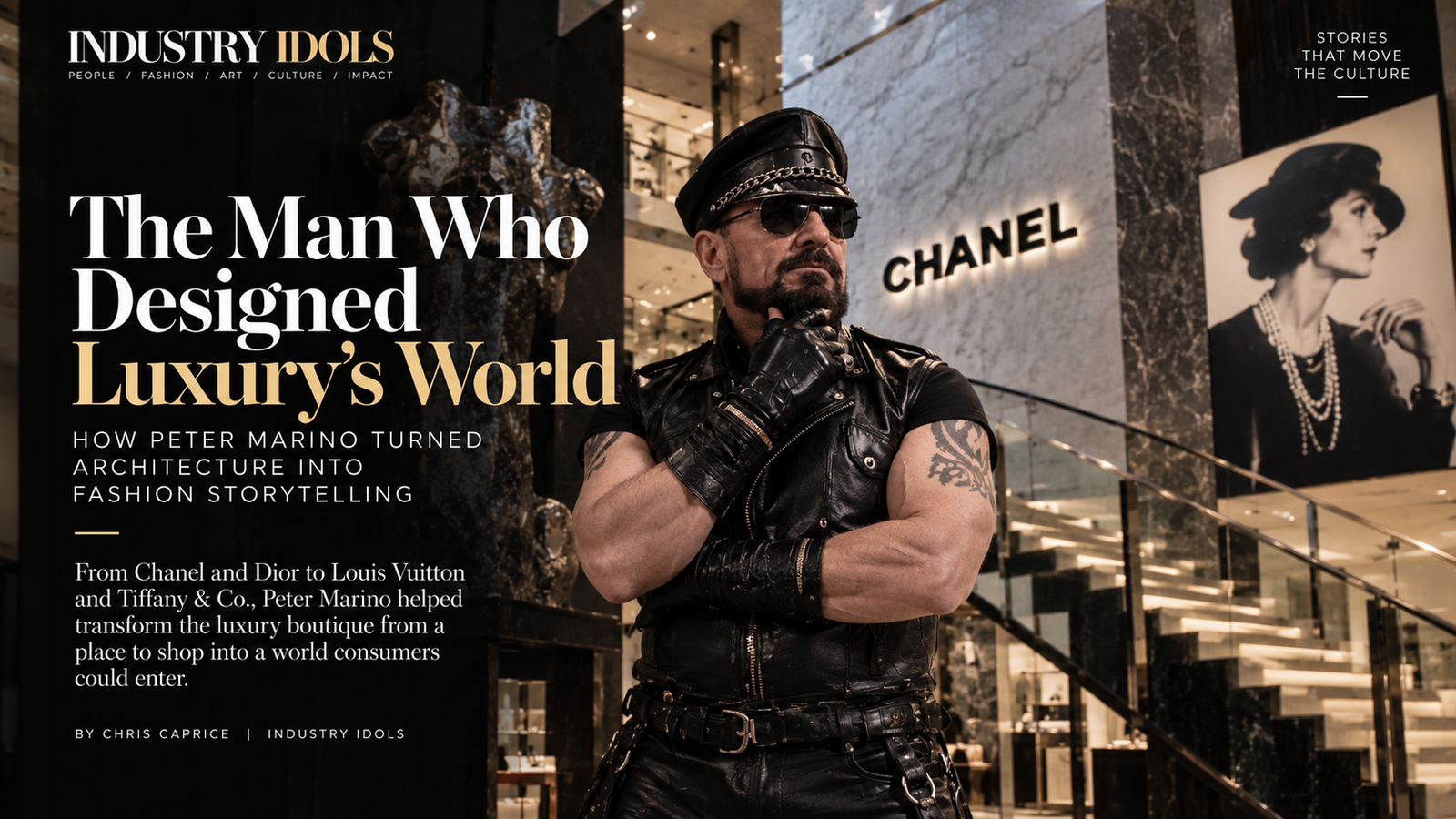
From Chanel and Dior to Louis Vuitton and Tiffany & Co., Peter Marino helped transform the luxury boutique from a place to shop into a world consumers could enter.
By Chris Caprice | Industry Idols
Walk into a great luxury boutique and the experience begins before anyone shows you a handbag, a watch or a piece of couture.
It begins with the building.
The stone beneath your feet. The height of the ceiling. The light hitting a display. The artwork across the room. The staircase pulling you toward another floor. Even the distance between the product and the person looking at it.
Long before “experiential retail” became marketing language, Peter Marino was building environments where architecture became part of the fashion story.
Today, his name sits behind spaces created for some of the most recognizable luxury houses in the world, including Chanel, Dior, Louis Vuitton and Fendi. His New York-based firm, Peter Marino Architect, was founded in 1978 and has built a global practice spanning retail, residences, hotels and cultural projects.
But Marino’s influence reaches beyond an impressive client list.
His work helped establish an idea now fundamental to modern luxury:
The store itself can be part of the product.
Before Luxury, There Was New York
Marino’s path into fashion architecture did not begin inside a luxury conglomerate.
It developed inside the overlapping worlds of New York architecture, art, fashion and society.
Before establishing his own practice, Marino worked for major architectural offices including Skidmore, Owings & Merrill and I.M. Pei. But another early relationship would prove especially consequential.
Andy Warhol hired Marino during the 1970s to work on his Upper East Side townhouse and The Factory at 860 Broadway. Those early commissions helped introduce the young architect to influential figures across the art and fashion worlds.
That intersection would become central to Marino’s career.
Architecture gave him the structure.
Fashion gave him the language of identity.
Art gave him another way to create emotion.
Eventually, those disciplines began occupying the same rooms.
When Fashion Needed More Than a Store
Luxury retail once had a relatively straightforward purpose: create an elegant environment and sell expensive products.
But as global fashion houses grew into cultural brands, their physical spaces had to communicate something larger.
A flagship wasn’t simply somewhere to purchase Chanel.
It had to feel like Chanel.
That difference is where Marino became particularly influential.
Instead of approaching the boutique as a neutral container for merchandise, his work uses architecture to translate the codes of a fashion house into physical form.
Materials matter.
Lighting matters.
Art matters.
History matters.
And every brand requires its own architectural language.
Building the World of Chanel
Perhaps no relationship demonstrates Marino’s philosophy better than Chanel.
Marino has worked on more than 200 Chanel projects around the world, helping translate the fashion house’s identity into architecture across major international markets.
The spaces are not carbon copies.
Instead, recognizable Chanel references are interpreted through different buildings, materials and locations.
Black and white.
Gold.
Reflections.
Textural references to tweed.
Elements inspired by Coco Chanel’s legendary Paris apartment.
Contemporary art commissioned specifically for the spaces.
The result is architecture functioning almost like another Chanel collection: recognizable as part of the house while still capable of evolving.
South Florida provides an important example.
For Chanel’s Bal Harbour boutique, Marino referenced the house’s established iconography while adjusting the atmosphere to Miami’s brighter surroundings.
Years later, his work with Chanel expanded into the Miami Design District, where Marino designed a striking standalone building for the house.
In a neighborhood where architecture, fashion, restaurants, galleries and public art compete for attention, the building itself became part of Chanel’s presence in Miami.
The Store Became Media
That evolution points toward something much larger than interior design.
Luxury stores became a form of media.
An advertisement can show someone a brand.
A physical environment can put someone inside it.
Architecture controls scale, texture, sound, movement, privacy, lighting and proximity simultaneously. A digital campaign can create desire, but a flagship can surround someone with the brand’s worldview.
That becomes increasingly significant in an era when almost any luxury product can be viewed from a phone.
If purchasing is possible without visiting a store, the physical location needs another reason to exist.
Experience becomes part of that reason.
Marino’s architecture anticipated that shift.
The boutique becomes destination, gallery, showroom and brand statement at once.
Art Isn’t Decoration
Another element separates Marino’s work from conventional retail architecture: art isn’t simply something placed on the walls after construction ends.
It is often integrated into the project itself.
Marino has commissioned hundreds of site-specific original artworks for architectural projects.
That approach changes the relationship between fashion and art.
The artwork isn’t necessarily there to sell.
It helps establish the cultural environment surrounding what is being sold.
Eventually, Marino’s relationship with collecting became an institution of its own.
The Peter Marino Art Foundation opened to the public in Southampton, New York, in 2021 inside the restored former Rogers Memorial Library.
Its collection spans painting, sculpture, photography, furniture, ceramics and objects stretching from antiquity to contemporary art.
The foundation makes physical something already visible throughout Marino’s career:
He doesn’t treat architecture, art, furniture and design as completely separate worlds.
He allows them to collide.
Then There’s Peter Marino Himself
If Marino’s buildings are meticulously controlled, his personal image is equally difficult to forget.
Black leather.
Boots.
Caps.
Rings.
Tattoos.
A biker aesthetic that looks dramatically different from the stereotypical image of a luxury architect.
It would be easy to treat the appearance as a curiosity.
But in fashion, identity matters.
The same industry that asks designers to create recognizable visual languages rewards people who develop one themselves.
Marino has done exactly that.
His appearance is unmistakably his.
And there is something fitting about the contrast.
The architect trusted to create sophisticated environments for some of the world’s most prestigious fashion houses presents himself with the energy of someone who might have arrived on a motorcycle.
Luxury and rebellion occupy the same frame.
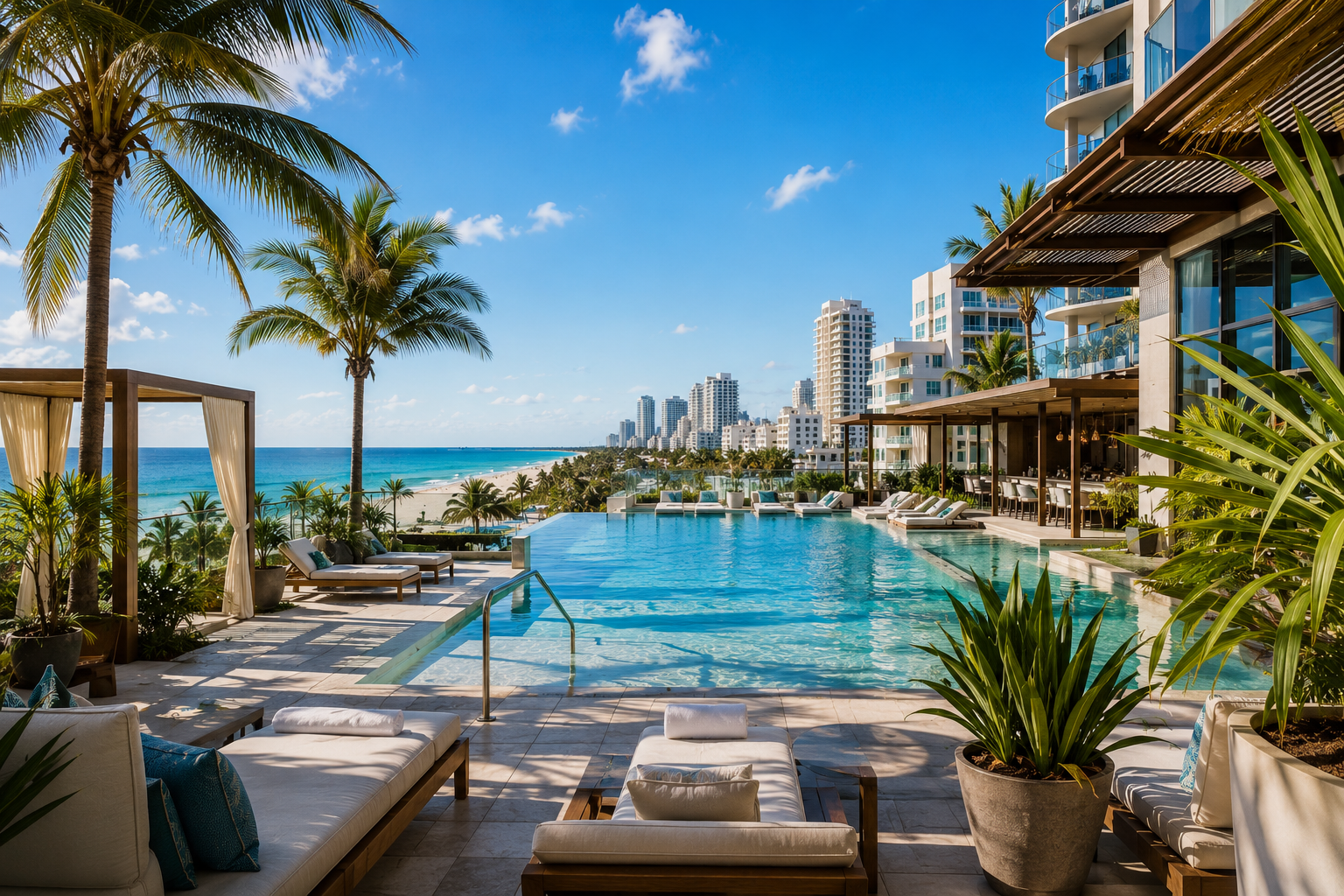
Miami Makes Sense for Marino
Marino’s connection to South Florida extends beyond a single project.
His architectural work has included private residential projects in Miami as well as luxury fashion environments, including Chanel’s Bal Harbour and Miami Design District locations.
That relationship makes particular sense today.
Miami increasingly operates at the intersection of industries that once existed in separate lanes.
Fashion overlaps with hospitality.
Hospitality overlaps with real estate.
Real estate overlaps with architecture.
Architecture overlaps with art.
And every December, Miami Art Week makes that convergence impossible to ignore.
Marino’s career has been built in essentially the same intersection.
The People Behind the Image
Fashion coverage naturally focuses on the people we can see.
Designers.
Models.
Artists.
Celebrities.
Creative directors.
But major cultural moments are built by much larger ecosystems.
There are photographers deciding how fashion will be remembered.
Producers creating the environments where it will be presented.
Stylists constructing identity.
Lighting designers controlling mood.
Architects determining how people physically experience a brand.
Those creators can influence millions of people without the public necessarily knowing their names.
Peter Marino belongs to that category.
Someone can walk through one of his spaces, photograph a staircase, admire an artwork, touch a material and remember how the environment made them feel without ever knowing who designed it.
That may be one of architecture’s most powerful characteristics.
The creator can disappear.
The experience remains.
Designing Luxury’s World
Fashion is often remembered through objects.
The dress.
The bag.
The watch.
The shoe.
But luxury has never survived on objects alone.
It survives by creating worlds around them.
For decades, Peter Marino has been one of the architects building those worlds.
His work demonstrates that architecture can communicate identity before a salesperson speaks and before a customer touches a product.
A building can tell a story.
A room can communicate status.
A material can carry history.
A piece of art can change how someone experiences fashion.
And a store can become something larger than a store.
Fashion creates what we wear.
Art creates what we contemplate.
Architecture creates the spaces where those worlds meet.
Peter Marino has spent a career designing that intersection.
Industry Idols
STORIES THAT MOVE THE CULTURE.