
Key Takeaways
- Around 11% of journalist complaints stem from basic language errors — typos and grammar mistakes that kill trust before the pitch gets read.
- Another 12% of journalists report receiving pitches with the wrong name in the greeting. That’s a mass-blast tell, not relationship-building.
- Journalists covering business innovation need operational stories reframed as strategy, not billion-dollar concepts or breakthrough announcements.
- A rooftop bar cutting wait times by 40% through revised reservation flow becomes a service innovation case study for business readers.
- Most hospitality pitches fail because they prioritize the property’s business goals over what editors’ audiences actually want to read.
- Good media pitches don’t require innovative news to get picked up. Operational insights reframed as thought leadership work just as well.
- The gap between what hoteliers think journalists care about and what readers want to read is where most pitches die unread.
Quick Summary
When you pitch your hospitality brand to media, you’re not asking a journalist to run an ad for your hotel. You’re offering a story that fits their beat and serves their audience. Most hospitality pitches fail because they’re written from the inside out, as if editors care about your property’s business goals. They don’t. They care about what their readers want to read, and the gap between those two perspectives is where most pitches die.
We see this mistake play out in predictable ways. Many pitches fail due to basic language errors like typos and awkward phrasing that immediately signal a lack of care. Similarly, receiving pitches with the wrong name in the greeting line tells the recipient that the sender is blasting identical emails to a list rather than building real relationships. These execution errors act as immediate trust killers, ensuring the message gets deleted before the journalist even finishes the introduction.
Pitching Innovation Without an Innovative Story
Journalists covering entrepreneurship and business innovation do not need a billion-dollar concept to write a compelling piece. They need operational stories reframed as business strategy. A boutique hotel that reduces food waste by a third through a localized sourcing partnership becomes a case study in sustainable operations. A general manager who improves staff retention by restructuring shift schedules offers a valuable thought-leadership angle for business outlets.
Aligning the narrative with the outlet’s editorial focus is what drives coverage. When pitching a hospitality brand to business and entrepreneurship media, the goal is to position internal problem-solving and staff-driven adjustments as the kind of insider strategy their audience wants to dissect. Matias Rodsevich, CEO of PRLab, emphasizes that success lies in how well the story matches what the writer covers, rather than the scale of the announcement itself.
The mistake we see repeatedly: hotel marketers bury the interesting part, how a frontline fix solved a real problem, under generic corporate speak about “elevated experiences” and “world-class service.” Business journalists skip that entirely. They want the specific decision, the surprising constraint, and the measurable result. Strip out the branding language and lead with the operational story, and you’ve got a pitch that earns a reply.
Overwhelming the Journalist Before They Care
Journalists receive between one and five pitches daily, and most of them look identical: long-winded press releases disguised as personal emails, stuffed with unnecessary background, and missing the one thing the journalist needs to make a decision — a clear, specific angle. A common error is submitting the full story instead of a concise pitch that previews why this matters to their readers right now.
Your subject line has roughly 50 characters to make the case before it gets clipped on a mobile screen. That’s not room for clever wordplay or vague teases. It’s room for one sharp statement: “How a 12-room hotel hit 94% occupancy without paid ads” beats “Exciting news from [Hotel Name]” every time. The body of your pitch should deliver one strong hook, one supporting stat or quote, and one clear ask — interview availability, access to data, or an invitation to visit. Anything beyond that is friction.
Following Up Like You’re Owed Coverage
Managing follow-ups requires balancing persistence with professionalism. While some sources warn that aggressive follow-ups come off as desperate, others recommend limiting follow-up to three messages to maintain a healthy relationship. The issue isn’t whether you follow up — it’s whether each follow-up adds new value or just repeats the original ask.
A useful follow-up doesn’t say “just checking in.” It offers something new: a fresh stat, a connection to breaking news in the industry, or a narrower angle tailored to a recent piece the journalist published. If your first two follow-ups got no response and you have nothing new to offer, you’re done. Move on. Badgering a journalist doesn’t inspire coverage — it ensures they’ll ignore your next five pitches too.
Pitching Without Researching the Beat
The fastest way to waste a journalist’s time is to send a pitch that has nothing to do with what they cover. Blasting out pitches without confirming the target covers that topic ruins your credibility, and it takes maybe 90 seconds to scan a writer’s recent bylines and confirm they actually write about hospitality, business operations, or entrepreneurship.
If you’re pitching your hotel to business and thought-leader outlets, read what they’ve published in the past three months. Do they cover founder stories? Operational turnarounds? Revenue innovation? Then frame your pitch as one of those narratives, not as a property feature. Skip the five-star adjectives and lead with the business decision that changed your trajectory. That’s the story business journalists want, and it’s the one most hospitality brands never bother to pitch.
Why Effective Media Pitching Matters
Effective media pitching pays off because coverage compounds. When you pitch a hospitality brand to the right outlet, one placement makes the next one easier. As Emily Kanders Goldfischer puts it in this hospitality media discussion, “media inspires media” — being in one publication makes you more interesting to the next journalist. That momentum is the real return, not a single article.
The goal is not to be covered simply as a hotel, but as a business worth watching. Positioning a property as an entrepreneurial innovator opens doors at business and thought-leader outlets that would never run a room-rate announcement. That audience match is where visibility turns into credibility, which drives booking decisions and partnership conversations.
Why frontline innovation out-pitches the C-suite
The most fundable stories usually come from below the executive level. Josiah Mackenzie notes that “it is very rarely the CEOs that are the most interesting stories,” and compelling angles can originate from any role in the building. A frontline manager who adopts a new tool to solve a real operational problem can become a genuine innovation story worth telling.
This is the exact material business outlets want. When you surface a frontline staff member solving a real problem, you hand an editor a human-interest angle with an entrepreneurial hook. Hospitality PR built on media relationships works best when the story is relevant, unique, visual, and focused on people. A supervisor rebuilding a broken process checks every box.
Who benefits most from getting this right?
Small and mid-sized operators and their marketing leads gain the most, because they cannot buy attention the way large chains do. They win on angle and audience fit instead. Success comes from taking an ordinary operational story and reframing it as an innovation narrative for the right business audience.
The real edge: matching the story to an outlet’s beat, not inflating the size of the announcement. That is a solvable problem for a lean team, which is why this approach favors the underdog.
What separates pitches that land from pitches that die?
Relationships, not blasts. A national survey of 110 media relations practitioners identified best practices that correlate with higher response and placement rates, and the through-line is long-term relationships over one-time hits. That same study analyzed 3,106 reporter requests, showing how often journalists now come looking for sources.
So build a reason for them to come to you. Be responsive, be a reliable source, and keep your angles tied to what an editor’s readers actually care about. Skip the mass pitch entirely — random outreach is the fastest way to get filtered out. The brands that treat journalists as long-term partners get invited back long after a single story runs.
Researching the Outlet and Journalist
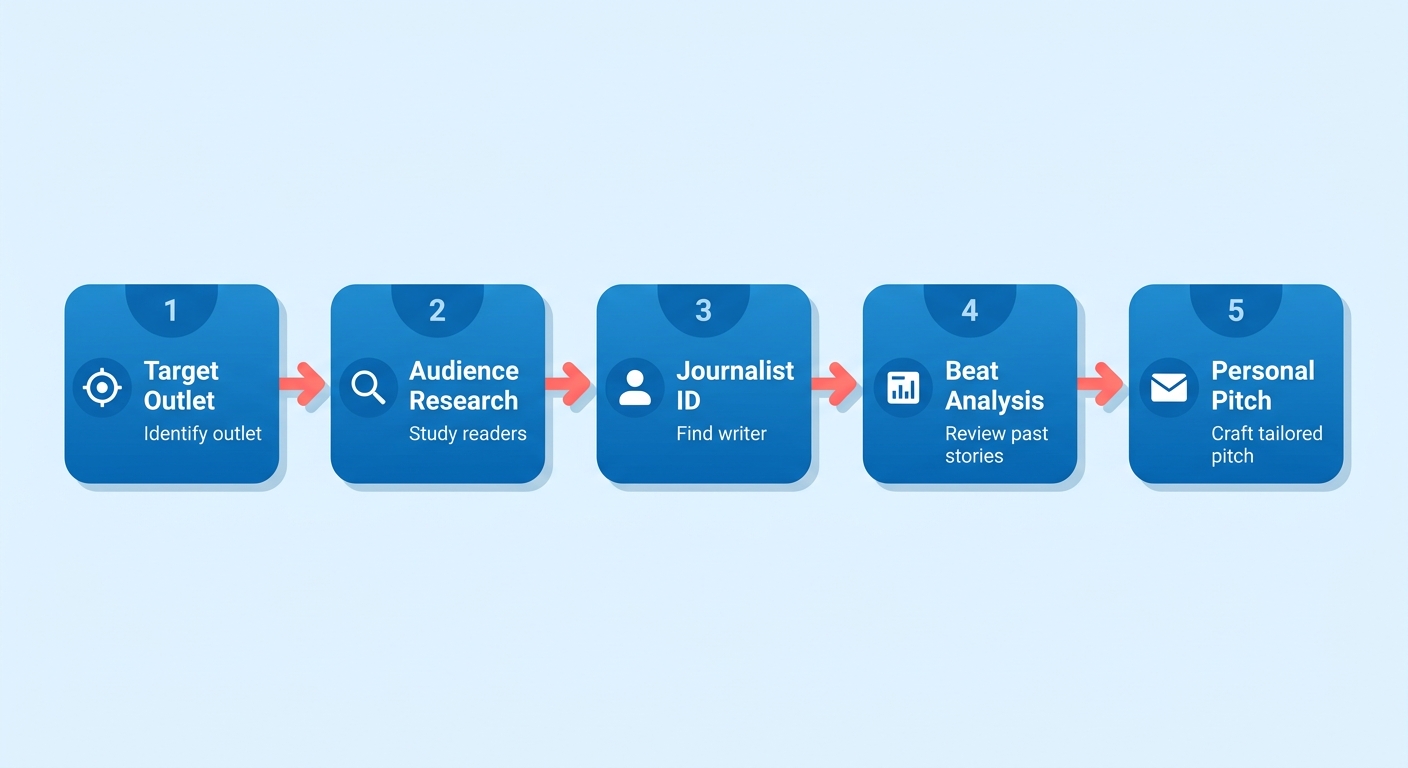
Before you write a single line, research tells you whether your pitch lands or gets deleted. When we pitch a hospitality brand to a business or thought-leader outlet, the win comes from matching the story to what that outlet’s readers actually want. Editors can smell a mismatch instantly. As Ken Terry notes in this pitching guide from Amendola, “editors are likely to delete pitches from publicists who do not understand their publication.”
That’s the real reason research matters when you pitch a hospitality brand as an entrepreneurial innovator rather than a hotel. Business outlets don’t run room-rate news. They run stories about people solving problems. Your job is to find the outlets whose beat already fits that framing, then read them closely enough to speak their language.
How to research the right outlet
Start by reading, not pitching. The outlet’s tone, its recurring story types, and its audience tell you whether your innovation angle belongs there. A journalist covering hospitality startups wants a different story than one covering luxury travel, even if both would technically “cover a hotel.”
Watch for editorial shifts too. Publications frequently update their coverage priorities and guidelines, meaning a pitch built on last year’s articles may miss the mark. Track what an outlet has published over the past few months, rather than relying on its historical reputation.
Which journalists actually cover your story
Find journalists by their beat, not their masthead. The reporter who writes about frontline hospitality innovation is your target, and their recent bylines tell you exactly what they respond to. This is where the entrepreneurial-innovator angle pays off.
The most compelling hospitality narratives often emerge from operational levels rather than executive announcements. Identifying the specific staff members who implement day-to-day solutions provides the human element that reporters look for. Surfacing these practical fixes gives a business journalist the exact narrative tension they need.
Social media speeds this up. Following journalists on their platforms shows you what they engage with, what frustrates them, and what they’re working on right now. That’s research and relationship-building in one move.
How to build the relationship without annoying them
Relevance beats volume every time when reaching out to busy writers. Managing the frequency of your outreach prevents your emails from being marked as spam, ensuring your name remains associated with quality stories.
A follow-up sequence should only continue if each message introduces new substance. A simple reminder adds no value, whereas sharing a fresh data point or a localized angle provides a genuine reason to reply.
Treat the relationship as mutually beneficial. When you become a reliable source who understands a journalist’s beat, the next pitch gets read before you’ve even finished writing it.
Building a Clear and Compelling Pitch
When pitching a hospitality brand to business and thought-leader outlets, the story angle matters more than the announcement itself. Success requires a clear framing that connects an operational detail to a broader industry trend that readers care about. That shift, from “we renovated our lobby” to “how we solved supply-chain delays with local sourcing”, is what turns a hotel update into a business story.
Start with a human problem, not a feature list
The most interesting hospitality stories come from frontline staff solving real problems, not from C-suite press releases. When housekeeping director Lisa Williams utilized the Indeed Flex app to address post-pandemic labor shortages, that operational adjustment became a story about hospitality innovation because it showed a practical response to a widespread industry challenge.
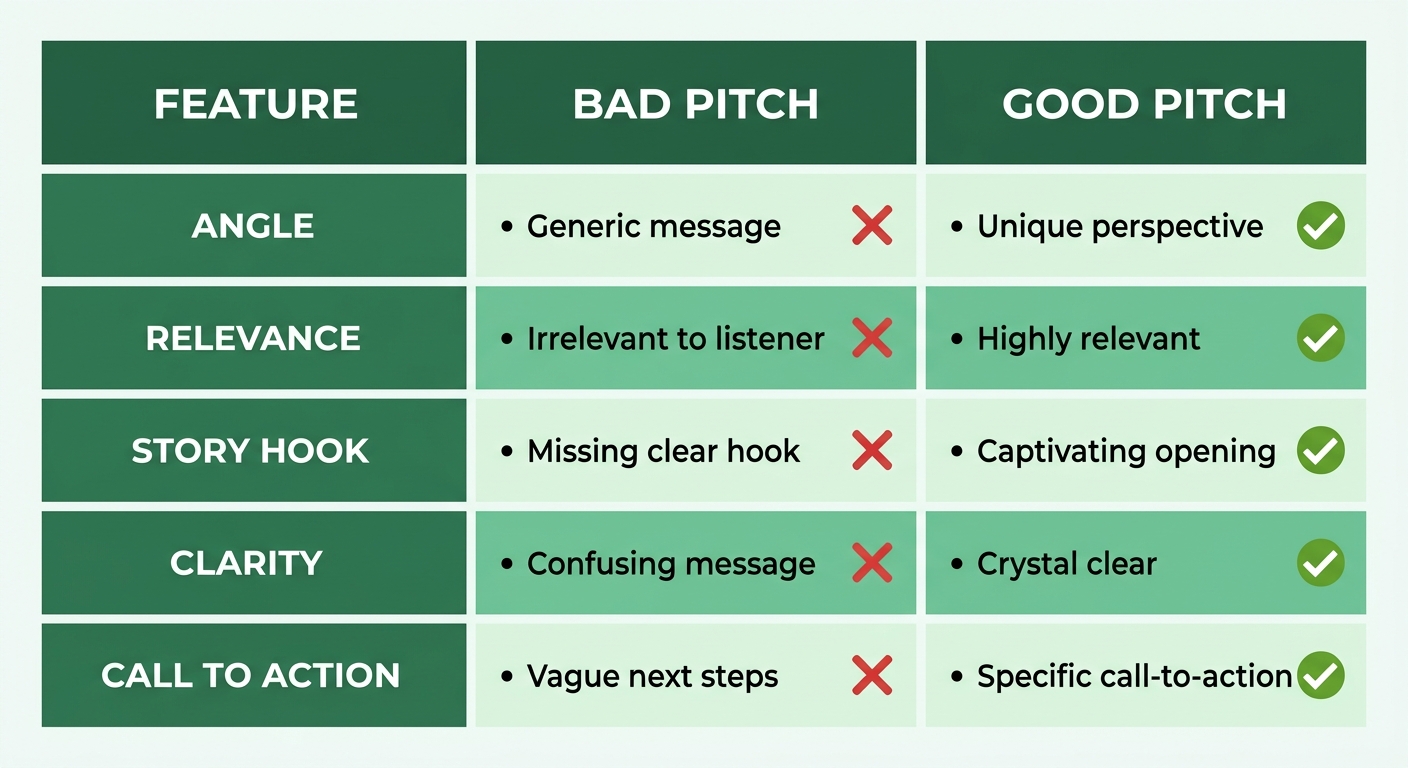
The strongest pitches start by identifying the specific friction a team faced and what assumptions they challenged. Business outlets don’t cover solutions in a vacuum — they cover the moment someone realized the old playbook wasn’t working. A pitch that starts with “we launched a sustainability program” dies in the inbox. A pitch that starts with “our head chef couldn’t source imported vanilla due to shipping delays, so they partnered with a local greenhouse to cultivate a native alternative” gives a journalist something concrete to write about.
Build the narrative around sensory proof
Lauren McGuire highlights the importance of grounding hospitality narratives in tangible human experiences. When you claim “luxury” or “innovation,” you’re asking the journalist to take your word for it. When you describe the moment a guest opened the door to find a handwritten note and locally roasted coffee waiting, you’re giving the journalist material they can use.
Effective pitches include specific sensory details rather than brand adjectives. Instead of “elevated guest experience,” describe the texture: the weight of the linen, the sound design in the lobby, the fact that your front desk staff memorize dietary preferences from booking notes. These details don’t just prove the claim — they make the story easier to write. A journalist who receives a pitch with built-in scenes doesn’t have to invent them later.
Keep the pitch tight and follow up once
With limited time to capture a writer’s attention, your subject line and opening sentence must do the heavy lifting. Keep subject lines concise and direct so they remain fully visible on mobile screens. Open with the human problem or tension, not the brand name. “How a historic inn reduced energy costs by 25% using smart thermostats” beats “XYZ Hotel announces new green initiative” every time.
Follow-up requires careful timing. While industry guidelines suggest capping outreach to protect relationships, sending too many reminders can damage your credibility. One follow-up is reasonable if it adds new value — a fresh data point, a related development, or a tighter angle. A second “just checking in” message is where you cross into annoyance. The journalist saw your pitch. If they didn’t bite, another nudge won’t change that unless you’re offering something genuinely new.
The goal is to hand journalists a story they want to write, not to convince them your brand deserves coverage. When your pitch sounds like you’re trying to fill a quota rather than share something useful, journalists can tell.
Avoiding Common Pitching Mistakes
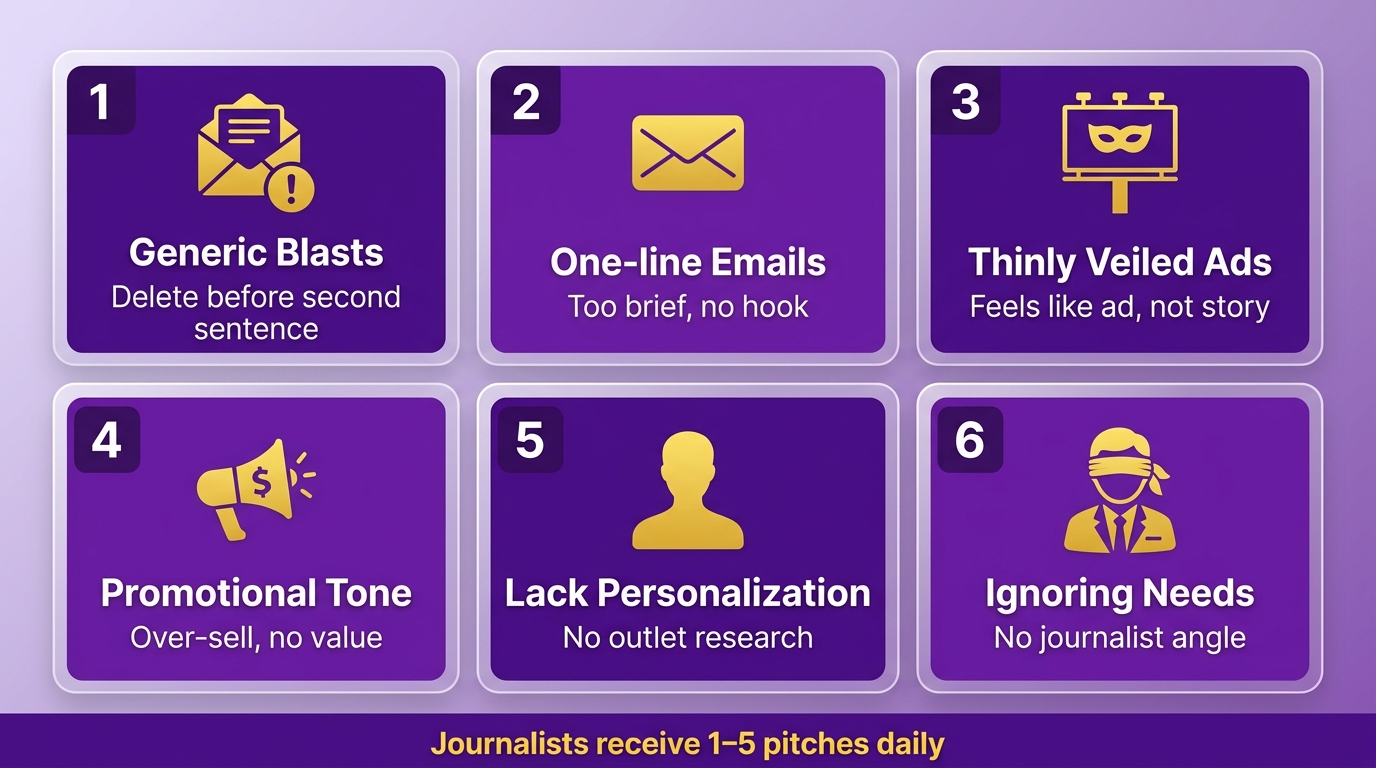
The fastest way to lose a placement is to pitch a hospitality brand the same way everyone else does. Generic blasts, one-line emails, and thinly veiled ads get deleted before the second sentence. A message that reads like a template is competing against dozens of highly tailored pitches.
When pitching a hospitality brand to business and thought-leader outlets, the mistakes that sink you are rarely dramatic. They are small signals that you did not do the work. We see the same few errors again and again, and each one is avoidable.
Why generic pitches get deleted
Generic pitches fail because they signal you don’t know the outlet or the reader. Research on media relations best practices shows that targeted relevance is the single most important factor in securing placements, far outweighing the sheer volume of outreach.
Personalization starts with the obvious. Address the journalist by name, spell it right, and reference a piece they actually wrote. Then go further. Show why your entrepreneurial-innovator angle fits their beat, not just their inbox.
One more tell to kill: AI-written copy. As Jennifer Jones-Mitchell notes in this Forbes breakdown, “most reporters can instantly tell when a pitch was created by AI.” A generic-sounding pitch reads as low effort, and low effort reads as low priority.
Where over-advertising kills a pitch
Over-advertising kills a pitch the moment it stops being a story and starts being a brochure. Business editors protect their editorial integrity fiercely. A pitch that hard-sells room rates or amenities gets flagged as promotional and dropped.
The fix is angle, not volume. Coverage doesn’t require a huge announcement. One company earned 21 unique pieces of coverage from news that wasn’t innovative, because the pitch matched the right audience at the right time.
Repositioning an ordinary operational win as an innovation narrative gives a business outlet something it can run without feeling used. Keep the subject line tight and focused so it remains readable on any device.
How much follow-up is too much
Follow up, but cap it. While some industry guidelines suggest a firm limit on follow-up attempts, others warn that over-persistence can damage your professional standing.
This is resolved through bounded persistence. A few touches are acceptable as long as each one adds value. A follow-up that just says “circling back” is nagging. A follow-up that offers fresh data or a new angle earns its place.
The deeper point is that a healthy PR relationship must serve both parties. The research on media relations agrees that long-term relationships beat one-off placements. Skip the aggressive chase. Play for the next story, not just this one.
Best Practices for Follow-Up and Follow-Through
Following up is where most hospitality pitches quietly die. You sent a strong story, heard nothing, and now you’re deciding whether to nudge or wait. The answer isn’t complicated, but it does require restraint. When you pitch a hospitality brand as an entrepreneurial innovator to a business outlet, the follow-up is part of the story you’re telling about how your team operates.
A single placement is worth far less than a journalist who knows your name and trusts your tips. Industry research indicates that developing long-term relationships with reporters outperforms chasing one-off coverage. The follow-up isn’t about this story — it’s about the next ten.
How many times should you follow up
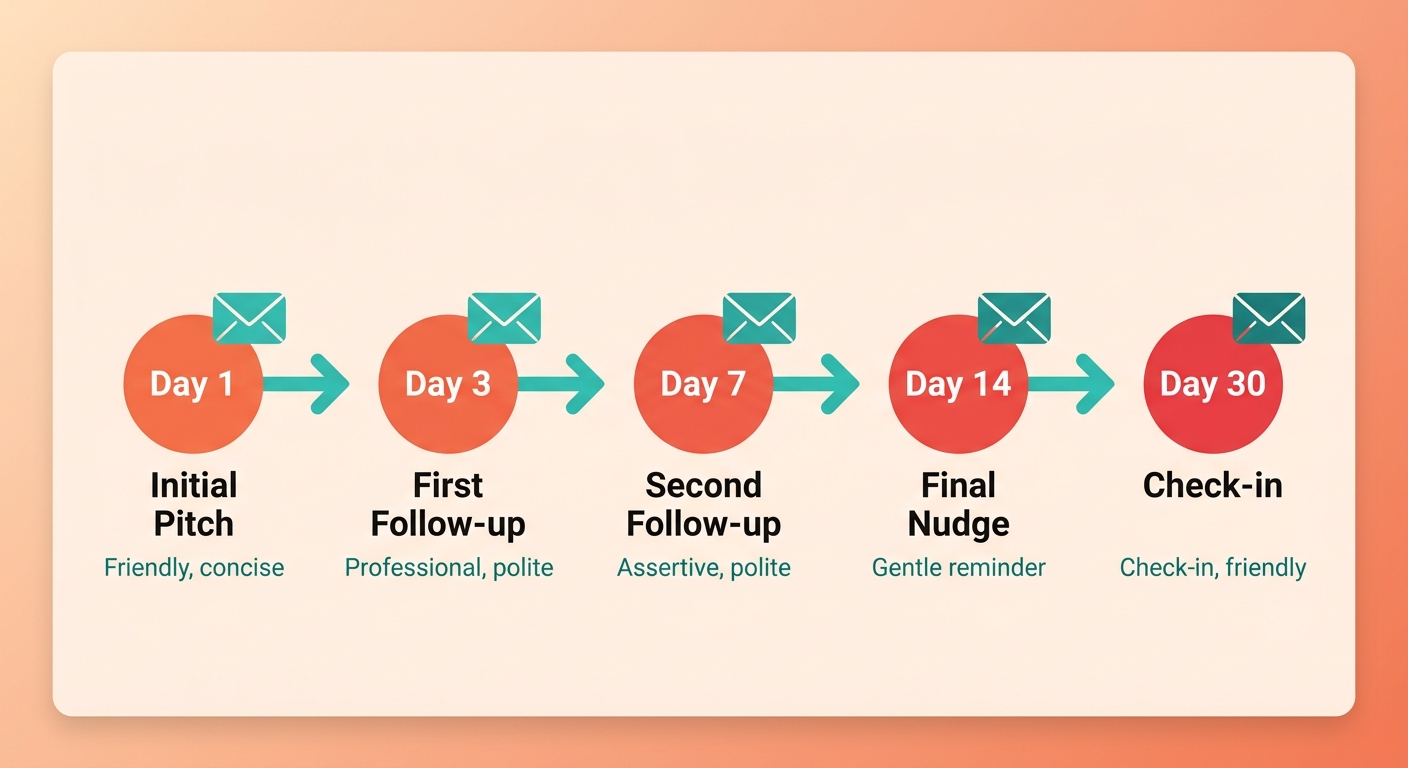
Cap the outreach and make each message earn its place. While some communications experts warn against excessive follow-ups, others suggest a specific limit to keep the relationship healthy.
The resolution is bounded persistence. Keep the total number of messages low, but ensure each one adds something new: a fresh data point, a sharper angle, or a frontline example the editor hasn’t seen. If your follow-up just says “circling back,” you’ve spent a message and added nothing.
What builds credibility with journalists over time
Becoming the source they reach out to first is the goal. Analyzing how journalists seek out sources shows how often they actively look for industry experts. When a reporter needs an operator’s take on a labor trend or a booking shift, you want to be the name they trust to answer fast and honestly.
Responsiveness is the currency here. Be punctual, be reachable, and treat every reply as a deposit in a relationship account. The best follow-through we see comes from operators who share useful insight even when there’s no story in it for them. That generosity is what turns a cold contact into a warm one.
Measure what actually moves the needle
Track placements, but track the relationships behind them too. Coverage compounds, so log which outlets ran your story, which journalists replied, and which angles landed. Over a few months, patterns emerge. You’ll see which framings get traction and which fall flat, and you can redirect your energy accordingly.
One honest carve-out: skip the elaborate tracking dashboard if you’re pitching a handful of outlets. A simple spreadsheet of who you contacted, what you sent, and how they responded tells you everything you need to refine the next round. The point isn’t data for its own sake. It’s spotting which stories about your team’s problem-solving keep opening doors, then pitching more of those.
References
[1] How to Get Media Coverage That Builds Your Hospitality Brand & C… – https://podcast.hospitalitydaily.com/media-event/
[2] How Hospitality PR Engages with Media to Create Visibility – https://www.5wpr.com/new/how-hospitality-pr-engages-with-media-to-create-visibility/
[3] 4 Common Media Pitching Mistakes and How to Avoid Them – PRNEWS – https://www.prnewsonline.com/pitching-media+relations-mistakes
[4] Difficulties & Frequent Mistakes in Media Pitching – PRLab – https://prlab.co/blog/difficulties-and-mistakes-in-media-pitching/
[5] 13 Mistakes PR Pros May Not Realize They’re Making In Media Pitches – https://www.forbes.com/councils/forbescommunicationscouncil/2023/09/06/14-mistakes-pr-pros-may-not-realize-theyre-making-in-media-pitches/
[6] Media Pitches: The Five Biggest Mistakes and How to Avoid Them – https://www.ideagrove.com/blog/successful-b2b-tech-pr-relies-on-crafting-personalized-pitches-and-we-can-prove-it
[7] 6 Common Pitching Errors to Avoid | Amendola Communications – https://acmarketingpr.com/6-common-pitching-errors-to-avoid/
[9] A national survey of media relations practitioners | Request PDF – https://www.researchgate.net/publication/259801573_Identifying_the_best_practices_of_media_catching_A_national_survey_of_media_relations_practitioners)
Frequently Asked Questions
1. Should I pitch my hotel to travel outlets or business outlets?
It depends on your angle. Travel outlets cover luxury and destination stories, while business outlets want operational turnarounds and founder narratives. If your story is a frontline fix or staffing innovation reframed as strategy, business and thought-leader outlets open doors that would never run a room-rate announcement.
2. What should I do if a journalist ignores all my follow-ups?
Stop and move on. If your first two follow-ups got no response and you have nothing new to offer, badgering ensures they ignore your next pitches too. Instead, keep the relationship warm for future stories, since building a lasting connection is far more valuable than forcing a single placement.
3. Is it okay to use AI to write my media pitch?
Avoid it. Automated pitches are easy to spot, and generic-sounding copy reads as low effort, which translates to low priority for a busy writer. Personalized outreach that references a journalist’s actual work signals you did the research, which is what earns a reply.
4. How long should my pitch actually be?
Keep it tight: one strong hook, one supporting stat or quote, and one clear ask like interview availability or a data invite. Anything beyond that is friction. Submitting a full story instead of a concise pitch is a common error, since journalists need a clear angle, not background.
5. What counts as a follow-up that adds value versus nagging?
A valuable follow-up offers something new: a fresh stat, a connection to breaking industry news, or a narrower angle tied to a piece the journalist recently published. A “just checking in” or “circling back” message adds nothing and reads as a nag. Keep your follow-up sequence brief and purposeful.
6. Why do frontline stories beat CEO stories in pitches?
Frontline stories carry a human-interest angle with an entrepreneurial hook. Ground-level employees are often the ones directly implementing solutions to daily operational challenges. Highlighting a supervisor rebuilding a broken process gives editors concrete, people-focused material that reads as genuine innovation rather than corporate messaging.
7. How do I make a “luxury” claim believable to a journalist?
Replace brand adjectives with specific sensory details. Instead of claiming an “elevated guest experience,” describe concrete elements like custom-designed lighting, curated local welcome amenities, or specific guest-recognition protocols. These details prove the claim and make the story easier for the journalist to write.